Venue hours vary, so compare access details carefully and distinguish physical gaming venues from online play.
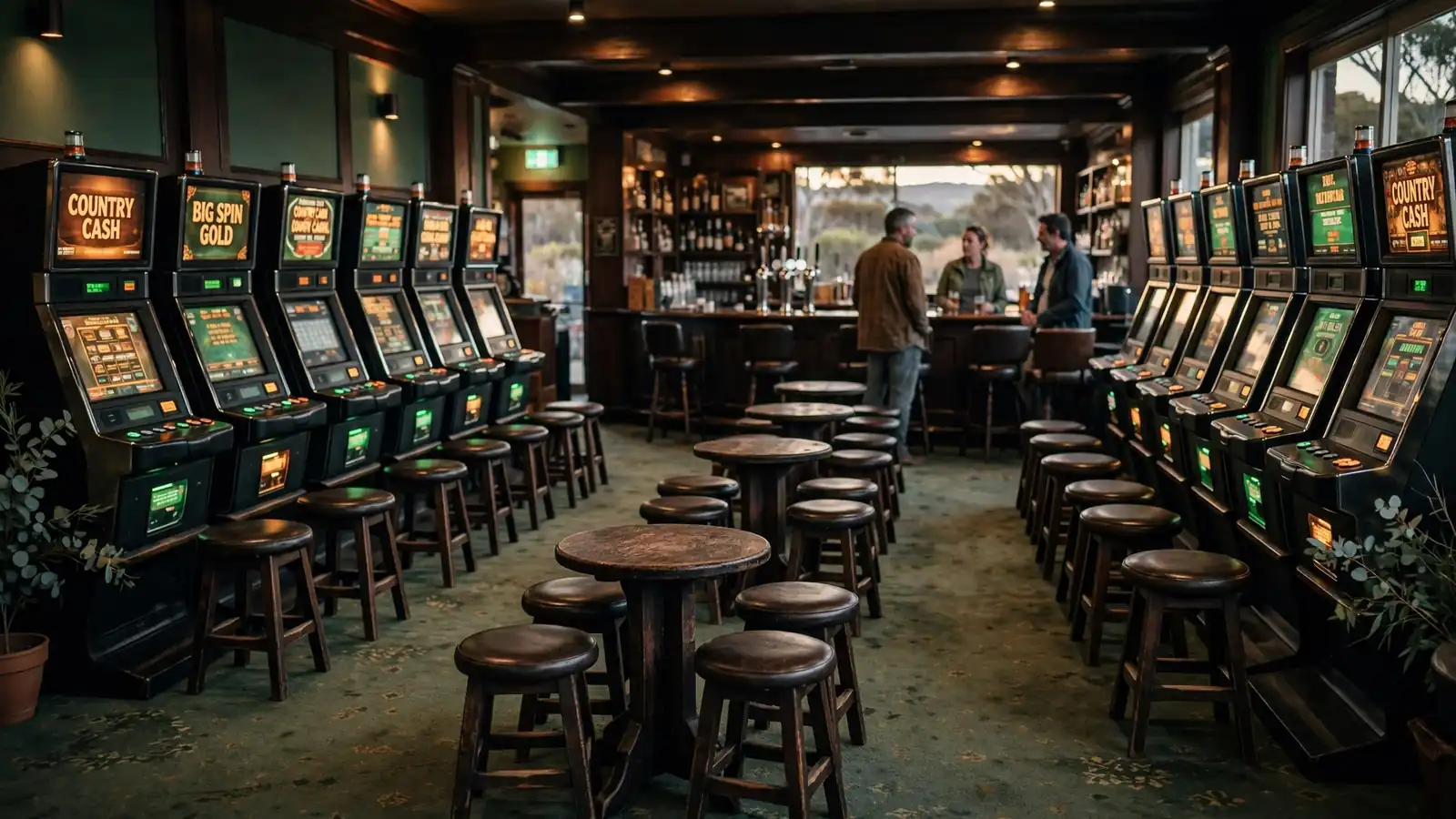
There is no single opening schedule that applies to every gaming venue in Tasmania. A venue’s hours are set and published individually, so a general statement about when “Tasmania’s pokies” open cannot establish whether a particular premises is accessible at a particular time. The practical check is venue-specific: confirm the location, the date and the part of the premises being used.
Start with the venue’s own current information. Its website or official social channels may publish opening hours, special closures or changes to the usual schedule. If those details are absent, unclear or inconsistent, contact the venue directly before travelling. A map listing or search-result summary can be a useful starting point, but it may not reflect a recent change. For an early-morning or late-night visit, relying on an old listing is a weak basis for a trip.
Check the date as well as the day of the week. A schedule shown for an ordinary weekday may not describe a public holiday, a special event or a temporary closure. Where the venue publishes separate hours for different dates, use the entry that matches the planned visit. If no date-specific information is available, direct confirmation is more reliable than assuming the regular schedule applies.
The wording of the hours matters. “Open” may refer to access to a bar, dining area, accommodation desk or another part of the premises; it does not by itself confirm that the gaming area is open or that pokies are operating. Likewise, a venue may be accessible while particular services or areas are unavailable. If the purpose of the visit is to use gaming machines, confirm that point explicitly rather than treating the venue’s general opening time as the machines’ operating time.
That distinction is important when comparing a posted opening time with an intended arrival. A notice that gives the venue’s hours may not specify the operating arrangements for its gaming area. If the venue provides separate information about those arrangements, check it. Otherwise, ask the venue whether pokies will be available at the time in question. This avoids treating two different pieces of information—premises access and machine operation—as though they were one schedule.
A careful check can be kept simple:
The last step is useful because a schedule is information about a planned opening, not a guarantee that every part of a venue will be available throughout that period. A direct confirmation can settle whether the premises are expected to be open and whether the gaming area is operating, without inferring one from the other.
Opening hours also do not determine what responsible-gambling tools are available. Deposit limits, loss limits and session time limits are standard tools, and self-exclusion is another option. These concern managing gambling activity, not the hours of access to a venue. They should not be read as evidence that a venue is open, nor should a venue’s published hours be read as a statement about the terms of those tools.
The useful answer to “when does this venue open?” is therefore a dated, venue-specific one. General listings can help identify where to check, but the venue’s own information or a direct confirmation provides the relevant schedule. For pokies, the separate question is whether the machines are operating during the period when the premises can be entered. Keeping those checks separate is more reliable than treating a single opening time as a complete answer.
Choosing online pokies for Tasmania in 2026 calls for checking the details that are available about each operator. This list highlights stated licensing and, where provided, deposit or payout information.
Roby Casino
Roby Casino is listed with a Curacao eGaming licence held by Roby Games Ltd.
Playfina Casino
Playfina Casino is licensed by Curacao eGaming through Hollycorn N.V., which has held the licence since 2017. The minimum deposit is A$20–30, depending on the offer.
WinSpirit Casino
WinSpirit Casino is listed under Curacao eGaming licence OGL/2024/923/0383, issued by Antillephone N.V. Its minimum deposit is A$30.
Lucky Dreams
Lucky Dreams is listed with a Curacao licence. Its minimum deposit is A$20 when using POLi.
Bizzo Casino
Bizzo Casino is listed with a Curacao Gaming Control Board licence held by TechSolutions Group N.V.
House of Pokies
House of Pokies lists an international iGaming licence, though the source does not name the jurisdiction. PayID payouts are stated as taking 1–24 hours; the minimum deposit is A$30, or A$10 when using PayID.
7Bit Casino
7Bit Casino is listed as operating under a Curacao licence, with Dama N.V. as its operator.
Golden Pokies
Golden Pokies is listed with a Curacao licence.
SkyCrown
SkyCrown is listed with a Tobique Gaming Commission licence and a minimum deposit of A$30. Stated payout speeds are around 10–15 minutes for crypto and 1–5 days for fiat.
Ricky Casino
Ricky Casino lists crypto payouts in under an hour and PayID payouts in 1–3 business days. Its minimum deposit is A$20, or A$30 to qualify for the bonus.
“Best” is not a single measurable property. A comparison might focus on a game’s published return setting, its features or its volatility, but those measures answer different questions. None establishes what a particular session will pay, and a title that appears attractive on one measure is not automatically the strongest choice across the others.
Return figures can also be an unstable basis for comparing the same pokie across venues. A specialist review reports that some game providers give casinos a choice of return settings for a particular game. If that option is used, the same title may operate with a different return percentage at different casinos. A familiar name or identical screen design, therefore, does not establish that the underlying setting is identical.
That distinction matters when comparing Tasmania casino pokies or looking for the best-paying games in Tasmania. A figure displayed for a game needs context: it may describe a particular configuration, rather than a universal property that follows the title everywhere. Without confirming that two versions use the same setting, a side-by-side comparison can appear more precise than it is.
“Best paying” also needs a defined measure. A return percentage describes a long-run theoretical relationship between wagers and payouts under the relevant configuration; it is not a forecast of the amount returned during a short visit. Nor does it rank the likely result of the next spin. A game’s features may affect how its results are experienced, but they do not turn a published return into a promise of a particular outcome.
The mechanics of each spin explain why recent results are not a reliable ranking tool. A pokie uses a Random Number Generator, and each spin is treated as a separate random event. The result of an earlier spin does not make a particular result due, nor does a run of wins establish that another win is more likely next. A sequence of losses does not create a compensating obligation either. The machine does not keep a personal account of what has already happened in a session.
This makes stories about a game “warming up” or “being due” poor evidence for choosing among pokies. They interpret a random sequence as if it were a schedule. The account balance can rise or fall, but that movement does not reveal what the next spin will produce. Past outcomes can be recorded; they cannot be used to calculate a guaranteed next result.
For comparisons, the useful distinction is between a game-level description and a session-level expectation. A published setting may help describe a configuration. It cannot identify which game will produce the best result for one person at one venue, or establish that a particular pokie in Hobart or elsewhere in Tasmania is currently paying better. Claims based on recent winners, visible payouts or a machine’s apparent quiet spell do not replace evidence about the setting—and still do not predict an individual result.
The same reasoning applies when considering pokies in a city or central area. Venue location does not, by itself, tell anything about a game’s return setting or the outcome of a spin. Comparing games should therefore begin with the specific information available for the version being considered, not with assumptions based on a title, a venue’s reputation or someone else’s recent session.
The phrase “best pokies in Tasmania” can describe a search for a higher published return, a preferred style of play or simply a game someone enjoys. Those are separate criteria. A return setting is a technical comparison; personal preference is not a payout measure; and neither predicts a particular session. Keeping those meanings apart prevents a marketing label or a short run of results from being mistaken for a dependable financial calculation.
A venue described as “near the airport” may be close in straight-line distance but awkward to reach from the terminal. The useful measure is the route from the actual arrival point to the venue entrance. A map can show the address and route, but travel time depends on the selected transport option and current conditions; it should not be treated as a fixed property of the venue.
For an airport-area visit, check the venue’s street address against the terminal, not simply against the airport label on a map. Confirm that the route ends at an entrance accessible to visitors, then compare the available transport choices for the intended time of travel. If the trip involves a hire car, a transfer or public transport, the relevant question is whether that option serves both ends of the route. A nearby pin does not establish that a walk is practical or that a direct connection exists.
The same distinction applies to central areas. “CBD” describes a broad district, not a precise starting point. A venue may be on one side of the central area while the hotel, station, workplace or meeting point is on another. Comparing routes from the actual destination is more useful than measuring distance from a generic city-centre marker. It also avoids treating every venue within a district as equally convenient.
Before setting out, match the venue name and street address across the map listing and the venue’s own current information. Check that the listing refers to the intended physical venue, rather than a business with a similar name or a pin placed at a nearby building. If the address or entrance is unclear, confirm it directly before making the trip. This is a basic location check, not a guarantee that access will be available on arrival.
The same approach works for searches around Tasmania, the airport or a northern part of the state: define the starting point first, then compare the route to a specific address. “Near me” changes with the device’s location, while “north” can cover a wide area. Neither phrase identifies a single destination or establishes how straightforward the journey will be. A shortlist based only on labels such as “airport” or “CBD” can therefore conceal substantial differences in route and access.
Location and eligibility are separate checks. The legal age for gambling in Australia, including online pokies, is 18. A nearby address does not change that requirement. For a physical visit, the practical decision is whether the route to the stated entrance suits the trip; proximity alone says little about the rest of the visit.
A venue’s reputation or range of pokies does not show how gambling-related duties are handled on the floor. A more concrete measure is whether the required oversight is in place when machines are operating, and whether incidents involving possible gambling harm are recorded.
A report by regionriverina.com.au describes a requirement taking effect from 1 July: a venue operating more than 20 gaming machines must have a dedicated responsible gambling officer (RGO) on duty during machine operating hours. The threshold matters. The reported requirement applies to venues above it, and the officer’s duty is tied to the period when the machines are running, not simply to whether the broader premises are open.
The date should be read alongside the transition arrangement. Venues have a one-month grace period to introduce RGOs and remove signage. That allowance is a period for making the changes, not a permanent exemption from them. Nor does it alter the operating-hours condition: once the requirement applies, the RGO must be on duty while the relevant machines are operating.
The same report describes a gambling incident register as an additional venue obligation. It is intended to document occurrences, including situations in which a patron’s behaviour indicates possible exposure to, or effects of, gambling harm. The register makes the response more accountable than an informal conversation alone: an occurrence is recorded rather than left solely to staff recollection. The stated purpose is to capture relevant incidents, not to rank venues or certify that a venue is free of risk.
For someone comparing pokies venues in Tasmania, these requirements are a separate question from which games are available or which venue seems preferable. An RGO requirement concerns staffing during machine operation; the register concerns how certain incidents are documented. Neither establishes that every venue has the same machine count, operating schedule or on-floor arrangement. The threshold also means the dedicated-officer rule should not be treated as applying identically to every venue.
These details are best understood as operational safeguards, not a promise about individual outcomes. They do not establish that a particular pokie will pay, predict a session’s result, or make one venue “best”. They describe duties attached to venue operation and the handling of incidents. A comparison based only on a venue’s appearance or its selection of machines would leave those distinct responsibilities out of view.
The effective date and grace period are material when assessing whether the requirements are in force at a particular time. The report’s wording places the change from 1 July and allows one month for the specified adjustments; it does not support treating that transition as open-ended. For a venue-level assessment, the relevant questions are therefore whether the operating threshold is met, whether an RGO is present during machine operation where required, and whether incidents indicating possible gambling harm are entered in the register.
A search for pokies aboard the Spirit of Tasmania concerns what is available on a particular vessel. It does not establish that gaming machines are installed there, and the vessel’s name alone is not evidence of gaming access. Any claim about onboard facilities needs confirmation from current, official vessel information rather than an assumption based on the ship’s route or destination.
A separate question is whether online pokies can be played from Tasmania. The fact that a service is accessible on a phone or computer does not make it an Australian-licensed casino. Under the Interactive Gambling Act 2001, operators cannot legally provide real-money online casino games to people in Australia without a domestic licence; no such licences have been issued. That prohibition concerns the operator. An individual player is not subject to a fine or criminal prosecution simply for using an offshore site, but that does not make the service locally regulated or provide the protections of an Australian casino.
The financial exposure is more direct. If an offshore casino refuses to pay winnings, there is no legal recourse in Australia to recover them. A displayed balance is therefore not equivalent to money held under an Australian gambling licence. The risk is not limited to whether a game produces a win: it also includes whether a withdrawal will be honoured and whether any dispute can be pursued through an Australian avenue.
Online offers described as “no deposit” do not remove those concerns. The absence of an initial payment does not create a domestic licence, guarantee that winnings can be withdrawn, or give an Australian player a local remedy if payment is refused. The terms attached to an offer can also determine whether winnings are withdrawable at all; a promotional label is not a substitute for enforceable local protections.
BetStop does not close this gap. It applies to Australian-licensed operators and does not bind offshore sites. Self-exclusion from an Australian service should not be treated as a block on an offshore account or as evidence that an offshore operator is supervised here.
References to a casino in Tasmania and searches about the Spirit of Tasmania should also remain separate. A casino name appearing alongside Tasmania does not verify a venue’s location, its facilities, or any connection to the vessel. Those are factual questions about physical premises; online access is a different legal and financial matter. Availability on a screen answers neither question.
A venue showing as open now is reporting a current status, not promising continuous access to pokies. The premises may be open while gaming machines are unavailable, or a listing may not reflect a change to the venue’s hours. Neither result establishes that pokies operate around the clock.
That distinction matters when interpreting claims about 24-hour pokies in Tasmania. An “open” label can refer to the venue as a whole; it does not necessarily describe the hours for a gaming area or machines. A search result can also lag behind a venue’s own updates. The label is a snapshot, not an operating schedule.
For a particular venue, its published hours are a starting point. Confirmation from the venue is more useful where the timing of gaming access matters, because opening hours alone may not specify when machines are operating. A listed closing time should not be read as proof that pokies remain available until then, and an open status should not be treated as evidence of all-night access.
There is no basis for treating Tasmania’s pokies opening hours as uniform across venues. A claim of 24-hour access needs to be checked against the specific premises and the machines’ operating times. Without that distinction, “open now” answers only whether the venue is reported to be open at that moment.
Operating time also has a staffing implication. A report by regionriverina.com.au says that, from 1 July, venues with more than 20 gaming machines are required to have a dedicated responsible gambling officer (RGO) on duty while those machines are operating. The condition is tied to machine operation, not simply to whether the building is open. It therefore does not establish the hours of any venue, or show that machines run continuously.
For a practical check, the relevant details are the venue’s current status, its stated hours and whether it confirms that pokies are operating at the time in question. These are separate pieces of information. A venue can be open without machine access, and a current opening status cannot establish a regular schedule. Continuous access should be treated as a specific claim requiring confirmation, not inferred from a listing that says “open”.
A return-to-player figure is a stated setting for a pokie, not a promise about what a particular player will receive. It can help describe a game’s published return profile, but it is not a cash-out quote, a maximum payout, or a measure of the largest permitted bet. Those are separate terms and need separate information.
A comparison is only meaningful when the figure applies to the version available at the venue being considered. A specialist review reports that some providers give casinos a choice of RTP settings for the same pokie. As a result, identical game titles can carry different return percentages at different casinos. A figure attached to a title in a general review should not automatically be treated as the setting in use at a particular venue.
The useful details are the exact game version, the stated RTP setting and the casino or venue to which that setting applies. If those details are not supplied together, the percentage is incomplete for comparison. A higher published figure may look preferable on that measure, but it does not settle every question about the game or its terms.
The distinction matters when comparing pokies in Tasmania. A title may be familiar across venues while its configured return differs. Conversely, two different titles with published figures cannot be ranked reliably if one figure is tied to a specific setting and the other is not. The name alone does not establish that the settings match.
RTP also says nothing by itself about maximum bet conditions or maximum cash payout. Someone comparing those limits needs the relevant game or venue terms, rather than inferring them from a return percentage. Treating one measure as a substitute for another turns a partial specification into a conclusion it cannot support.
Because some providers allow casinos to choose between different return settings for the same game, identical titles can have different RTP percentages at different venues.
For a practical comparison, record only figures that are explicitly attributed to the version in question, and keep the source and venue context beside them. If a listing gives a percentage without identifying the applicable setting, it is not a dependable basis for deciding that one pokie has a better return than another. An unqualified figure is still a figure; it is not necessarily the figure in force at the venue.
Tasmania does not have a separate online-casino licensing system that changes the national rules. Under the Interactive Gambling Act 2001, companies must not provide real-money online pokies to people in Australia without a domestic licence. No such licences have been issued, so there is no Australian-licensed online casino.
That distinction matters when “online pokies” is used to mean a real-money casino service rather than a game played without cash stakes. The legal restriction concerns the company providing the service. It does not impose a fine or criminal penalty on an individual merely for playing. Australians may access offshore services that accept them, but that does not make those services licensed or legally supplied in Australia.
The practical position is less open than a website appearing on a screen might suggest. Australian authorities block access to illegal offshore gambling sites, and internet service providers must comply with the relevant blocklist. A site’s availability at a particular moment is not evidence of Australian authorisation, and a blocked address is not a dependable basis for assessing the service behind it.
For someone in Tasmania comparing local venues with online play, the useful distinction is therefore not whether a site uses the words “casino” or “pokies”. It is whether a domestic licence exists for the service. In this market, there is no such online-casino licence. Offshore operators remain outside the domestic licensing framework, and Australian players have no legal recourse in Australia if one refuses to pay winnings. That leaves a material difference between an advertised balance and money that can actually be recovered.
BetStop does not close that gap. It applies to Australian-licensed operators and does not bind offshore sites. A person who has self-excluded through the service should not treat that registration as a restriction on an offshore operator.
Terms such as “best paying”, “high limit” or “near Tasmania” do not alter the legal position. They describe claims or features, not domestic approval. Nor does a page’s presentation establish that its operator may lawfully offer real-money play to people in Australia. For online services, the central fact remains that Australian law prohibits operators from supplying real-money casino games to local customers without a domestic licence, and no online-casino licences have been issued.
This is a provider-side prohibition, not a statement that individual players face prosecution for playing. It is also not an assurance of payment, dispute resolution or protection when an offshore service accepts Australian customers. Those are separate risks, and a local-looking label cannot convert an offshore service into an Australian-licensed one.
Searches for clubs with pokies in a Tasmanian CBD combine two separate issues: access to a physical venue and the minimum age for gambling. The legal age is 18 across Australia for every form of gambling, including pokies played online. A city-centre location does not change that threshold, and a club’s setting does not create a different age rule.
The age limit is an eligibility boundary, not a description of what a venue offers or when it operates. It also applies beyond club floors: online gambling is not exempt from the national minimum. Self-exclusion is a separate responsible-gambling tool; it does not alter the age rule or determine whether a person is legally old enough to gamble.
Federal oversight of online gambling sits with the Australian Communications and Media Authority (ACMA). ACMA enforces the *Interactive Gambling Act 2001*. That role concerns compliance with federal rules for online services, rather than day-to-day decisions about access to a local club. The distinction matters: a regulator’s remit over online gambling should not be read as a guide to the location, opening hours or facilities of CBD venues.
The federal framework also gives ACMA a practical enforcement role. It blocks access to illegal offshore gambling sites, and Australian internet service providers must comply with its blocklist. That is a measure directed at access to prohibited services; it is not a substitute for the national age threshold, nor does it make an offshore site a locally regulated option.
For searches about Tasmania CBD pokies, the reliable points are therefore limited but useful: the minimum gambling age is the same nationwide, while ACMA is the federal regulator responsible for enforcing the Interactive Gambling Act. Neither point establishes that any particular CBD club has pokies, or that a venue is suitable for a particular person. A search phrase such as “best” cannot override those legal boundaries or turn a location into a guarantee of access.
Age eligibility and self-exclusion address different questions. The first sets the legal minimum for gambling; the second is a tool for restricting participation. Treating them as interchangeable would confuse a rule about who may gamble with a measure intended to help manage gambling behaviour.
“Cashless” describes how money moves, not what a payment recipient is authorised to offer. PayID is an alias layer on Australia’s New Payments Platform (NPP): a transfer can be addressed using an email address, mobile number or Australian Business Number (ABN), rather than bank account details. The NPP is supported by all major banks and uses end-to-end encryption. Those features concern the payment system; they do not assess a merchant’s gambling services.
That distinction matters when cashless payments are discussed alongside pokies in Tasmania. A transfer option does not establish that a venue has a particular machine, that an online service is lawful, or that a game’s return figures are disclosed or accurate. It is not evidence of fairness, licensing or a player’s ability to recover money if a dispute arises. A familiar payment name can make a transaction appear routine; the underlying service still requires separate scrutiny.
PayID’s presence, or the absence of a cash counter, therefore cannot settle questions about legitimacy. Payment infrastructure processes transfers. It does not certify gambling operators, verify game settings or guarantee that a recipient will honour a withdrawal. The payment method and the service receiving funds are separate parts of the transaction.
BetStop has a separate scope: it applies to Australian-licensed operators and does not bind offshore sites. Its availability should not be read as protection that extends to an offshore service. This is another reason not to treat a payment route as a substitute for legal or consumer protections.
For a cashless transaction, the relevant fact is the destination and the service attached to it—not simply whether a bank transfer can be made. A transfer alias can make routing easier; it cannot turn payment access into proof of legitimacy.
You must be 18 or older to gamble online in Australia.
No Australian-licensed online casino can offer real-money pokies: no domestic licences have been issued. The law targets operators, not players, so Australians can play at offshore sites that accept them, but they have no legal recourse in Australia if a site refuses to pay winnings.
Each spin is an independent random event determined by a Random Number Generator, so previous results do not determine what comes next. The same game can also have different return settings at different casinos.
Published by the Norco Casino team.