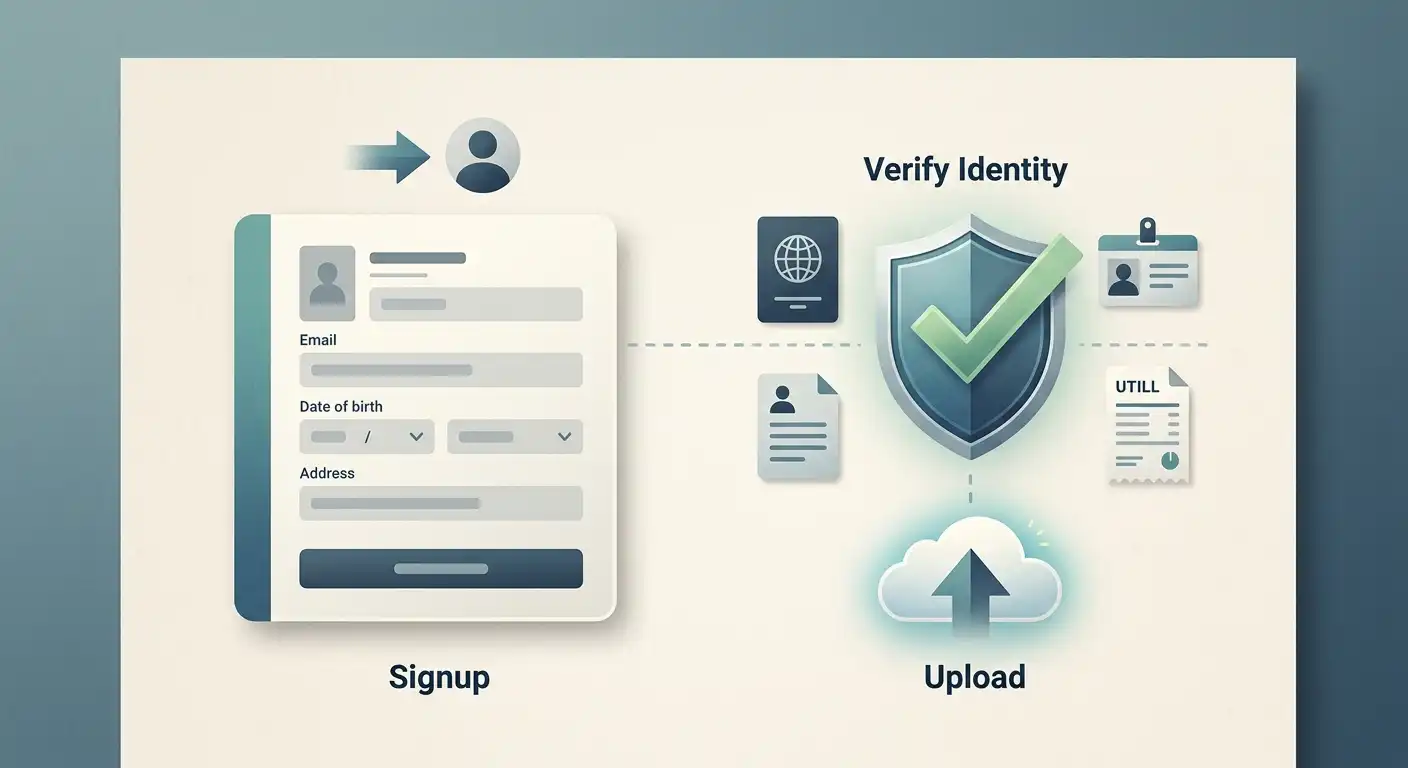
A usable deposit must meet both the casino’s rules and the payment route’s threshold, which can make the practical minimum higher than advertised.

A low advertised minimum and a low deposit that can actually be made are not necessarily the same thing. The operator may set no minimum at all, while the payment method or its processor still refuses a transaction below its own threshold. The practical floor is therefore the higher of the limits that apply: the operator’s rule, if there is one, and the payment route’s rule.
That distinction matters when assessing what “low” means. A page may describe an account as having no minimum deposit, but that does not establish that every available payment method will accept a token amount. The payment route can set the effective minimum even where the operator imposes none. A deposit amount is usable only if it meets the conditions of both parts of the transaction.
For Australia, a specialist review reports that the effective minimum for a usable deposit commonly falls between A$10 and A$20. That is a reported range, not a fixed rule for every operator or payment method, and it may change as payment arrangements change. It is more informative than an operator’s headline figure only when the payment method being considered is also specified. Without that detail, a low-minimum claim does not tell much about the amount that can actually be deposited.
An operator-set minimum is the amount its own terms require for a deposit. It may be absent, or it may vary by payment method. A payment provider’s minimum is separate: it is the smallest transaction that provider will process. Where both apply, satisfying the lower figure does not override the higher one.
This is why a low minimum deposit casino should not be assessed from a single number alone. The relevant question is not just whether the operator advertises a small deposit. It is whether the specific payment route accepts that amount and whether any separate transaction condition changes the total charged. The displayed minimum, payment method and amount debited should be treated as related but distinct details.
Payment methods illustrate the difference. Neosurf vouchers have a minimum purchase of A$10, which in practice sets the deposit floor at that level when the voucher is used. The operator could state a lower minimum, but that would not make a smaller Neosurf voucher available. The payment instrument determines the amount that can be brought into the account.
Skrill and Neteller can also have their own transaction conditions. A specialist review reports that gambling-site deposits through these services often have a A$10 minimum transaction amount, and that fees may apply. Those details can affect the cost of a small deposit: the amount credited and the amount paid are not necessarily identical if a fee is charged. The reported amount is not a guarantee for every account or transaction, so the provider’s current terms remain material.
A useful comparison separates three figures: the operator’s stated minimum, the payment method’s transaction minimum and the amount that will be debited after any applicable fee. If the first figure is lower than the second, the payment method—not the operator’s headline—sets the practical floor. If fees apply, the cash cost may exceed the credit received.
This approach also prevents a “no minimum” statement from being read too broadly. It can describe the operator’s own rule without saying that every payment route permits any amount. Conversely, a payment method with a small transaction floor does not prove that the operator accepts that amount. Both conditions have to align before the deposit is feasible.
The range reported by a specialist review should be used as a point of orientation, not as a promise that a particular account will accept a particular amount. Payment availability and terms can differ. A stated A$10 threshold, for instance, is not enough on its own to establish that a deposit of that size will be processed: the selected method must also support it, and fees must be considered separately.
The phrase “low minimum deposit” therefore has a narrow, practical meaning. It describes the lowest amount that can pass through the full deposit route under its applicable terms, rather than the smallest figure printed beside an operator’s payment page. For Neosurf, the voucher purchase floor sets a clear constraint. For Skrill and Neteller, reported transaction minimums and possible fees are relevant. For other routes, the same operator-versus-provider distinction applies, but the threshold must be checked for that method rather than inferred from another one.
Finally, a low deposit threshold is a payment description, not evidence that an online casino service is lawful or available to Australian residents. The Interactive Gambling Act 2001 prohibits operators from providing real-money online casino games to people physically located in Australia. Deposit terminology does not alter that legal position, and describing a threshold does not amount to a recommendation to use an offshore service.
The central distinction is between a licence issued overseas and permission to provide an online casino service in Australia. The Interactive Gambling Act 2001 is the federal framework for interactive gambling. It makes it illegal for operators to provide real-money online casino games to people physically located in Australia. That category includes casino-style games such as poker, blackjack, roulette and pokies. An overseas licence does not displace that prohibition.
Many websites using “Australia” in their branding operate under licences issued elsewhere, with Curaçao, Malta and the Isle of Man among the jurisdictions named in this context. Such a licence relates to the operator’s regulatory position in the issuing jurisdiction; it is not an Australian casino licence and does not make the service lawful to provide to people in Australia. Branding, currency display or a localised page does not alter the federal rule.
The legal exposure described by the Act falls on the service provider, not on an individual for placing a bet with an offshore operator. That distinction does not convert the service into a lawful Australian casino product. It separates the operator’s prohibited act of providing the service from the customer’s act of betting. It also does not mean that a site is endorsed, locally supervised or protected by Australian consumer regulation.
The Australian Communications and Media Authority (ACMA) is the federal agency responsible for enforcing the Act and monitoring compliance with federal interactive gambling laws. Its enforcement tools include asking Australian internet service providers to block websites that provide prohibited interactive gambling services or advertise them in Australia. A blocked address may therefore be an enforcement outcome, rather than an ordinary technical interruption. Conversely, a site remaining accessible at a particular time is not evidence that its service is lawful.
ACMA’s published enforcement totals indicate the scale of this activity. Since November 2019, the authority has blocked more than 1,455 gambling and affiliate websites it identified as illegal, following enforcement action. Counts of services that have left the Australian market since enforcement began in 2017 are reported differently: one figure is more than 210, while another is more than 190. The totals are not consistent, so neither should be treated as an exact, uncontested count.
Blocking is directed at access to websites; it does not amount to an Australian licence being issued, nor does a site’s absence from a blocked list establish that the operator may lawfully serve Australian customers. The applicable question remains whether the service offered is prohibited under the federal framework. The regulator’s actions also cover advertising of prohibited interactive gambling services, not only the sites on which the games are hosted.
A licence from Curaçao, Malta or the Isle of Man may indicate that an operator is subject to rules in the named jurisdiction. It does not establish that the operator has permission under Australian law to offer real-money casino games to people located here. The word “licensed” needs a jurisdiction attached to it: without that distinction, it can imply local approval that the overseas licence does not provide.
Nor does a foreign licence settle every practical question about a site’s status. It is separate from ACMA’s enforcement of Australian law, and it does not prevent access restrictions. For a low-deposit casino advertised to Australian customers, a small entry amount has no bearing on this legal framework. Deposit size describes a payment condition; it cannot change whether the underlying service may be provided in Australia.
The resulting position is not a system of locally licensed online casinos competing under Australian casino rules. The federal law prohibits operators from supplying real-money online casino games to people in Australia, while enforcement can include website blocking and action against advertising. An offshore licence describes an operator’s status elsewhere; it should not be read as Australian authorisation.
A low entry amount says little about the value of an offer. The relevant comparison is between the amount required to qualify and the conditions attached to any bonus: its wagering multiplier, which games count towards that requirement, the maximum permitted stake while it is active, and any cap on cashing out. A smaller threshold can sit beside more restrictive terms; the headline figure does not settle the calculation.
For Australian readers, this is an assessment of published terms, not a recommendation to use an online casino. The Interactive Gambling Act 2001 prohibits operators from providing real-money online casino games to people in Australia. Comparing conditions does not change that legal status.
The minimum deposit for a promotion and the minimum needed to open or fund an account are not necessarily the same condition. A bonus may require a deposit above the amount advertised as the account’s entry threshold. The offer’s terms should state the qualifying deposit plainly. If they do not, the bonus value cannot be compared reliably.
The next check is whether the stated deposit is enough to activate the offer or whether another condition applies. A promotional amount that cannot be claimed at the deposit being assessed is not part of that deposit’s value. It is packaging with an unmet condition.
A wagering multiplier measures required betting against the amount specified in the terms, often the bonus amount. The calculation should be based on that stated amount, not on a casual reading of the advertised bonus. For instance, a $1,000 bonus subject to 35× wagering entails $35,000 in total bets before bonus winnings can be cashed out. That is turnover, not a prediction of how much a player will lose; it is still the amount of betting required by the condition.
Wagering Calculation
Identify the bonus amount
Determine the bonus provided, for example, $1,000.
Apply the multiplier
Multiply the bonus by the wagering requirement (e.g., 35×).
Calculate total turnover
$1,000 × 35 = $35,000 in total bets required before winnings can be cashed out.
Some low-deposit offers have wagering requirements in the 35× to 50× range, according to specialist casino reviews. Those figures are not a fixed market standard, and a particular offer’s written terms take precedence. A lower multiplier can still produce a substantial workload if it applies to a larger qualifying amount.
Game weighting determines how much each eligible bet contributes towards wagering. Pokies may count at 100%, while blackjack and roulette may contribute only 10% or 20%. A bet on a table game can therefore make much less progress than the same-size bet on pokies.
The weighting should be read alongside any exclusions. A game’s availability does not establish that it contributes fully, or at all, to the requirement. Where the terms give different rates by game, each rate belongs in the comparison. An offer that appears generous on its bonus amount may be less useful if the games intended for play contribute only a small share of the required turnover.
The maximum bet during wagering is a separate condition from the minimum deposit. If a promotion sets a maximum stake per spin, exceeding it can void winnings. The permitted stake should be checked before play, rather than treated as a minor detail after a balance has built up.
A maximum cashout cap also limits what can be retained from an offer. A comparison that records only the deposit and bonus amount omits the final ceiling. The relevant figure is the amount that can be cashed out under the promotion’s rules, after the wagering requirement and other conditions are satisfied.
A useful comparison therefore records the qualifying deposit, the basis and multiplier for wagering, game weightings, maximum stake during wagering, and cashout cap. If any of those terms is unclear, the offer cannot be assessed on its headline amount alone.
A low starting balance does not make bonus wagering proportionally easier. The deposit amount and the wagering requirement are separate conditions: the first determines how much money enters an account, while the second determines how much qualifying play must be recorded before bonus-related winnings can be cashed out.
Pokies can count fully toward a wagering requirement, while blackjack and roulette may contribute only a fraction. The stated weighting matters because a bet does not necessarily add its full value to the qualifying total. At 100% contribution, an eligible pokies bet counts in full. At 10% or 20%, a table-game bet adds only that share. A game’s contribution rate therefore affects how quickly the requirement is met, not the size of the requirement itself.
That distinction is particularly relevant when the balance is small. A limited balance can support only a limited amount of play before it is spent, and wagering conditions do not disappear when funds run out. A bonus may make the displayed balance look larger, but the amount available to cash out can remain conditional on completing the required play. The accounting is straightforward: funds shown in an account are not necessarily funds that can be withdrawn.
Maximum-stake rules add a separate constraint. A promotion may specify a maximum amount per spin while wagering is in progress. If the permitted stake is $5 per spin, a larger spin can breach the promotion’s terms and void winnings. Staying within the stated maximum is therefore not merely a way to conserve a small balance; it can determine whether winnings remain eligible for cash out.
The relevant limit is the one attached to the specific promotion and the period in which its wagering requirement applies. A general game limit or ordinary account setting does not replace a bonus rule. The condition should be checked alongside the game weighting: one controls how much of each bet counts, while the other controls the largest permitted stake. Treating them as one rule leaves a gap in the calculation.
A useful way to read a pokies promotion is to separate the figures into three categories: the amount deposited, the wagering amount still outstanding, and the maximum permitted stake. Those amounts serve different purposes. A low deposit does not reduce a stated wagering multiplier, increase the contribution rate, or override a maximum stake. Nor does a high contribution rate make a bonus automatically cashable; it only affects how eligible play is credited.
These are descriptions of bonus mechanics, not an endorsement of real-money online pokies. Under Australia’s Interactive Gambling Act 2001, providing real-money online casino games to people in Australia is prohibited. Promotional terms do not alter that legal position.
PayID is a bank-payment route, not a casino-specific product. A deposit is sent using the PayID details supplied by the receiving service, while the practical minimum depends on the service’s payment settings and the bank transfer process. The amount that can be sent is therefore not necessarily the amount that a particular site will accept.
A specialist review puts the minimum for PayID or instant bank transfer at AU$10–AU$20. That is a reported range, not a fixed PayID rule or a guarantee that every service will accept a deposit within it. The operator’s own cashier terms remain decisive: a payment can be valid through the bank yet fall below the receiving account’s minimum.
The same distinction matters when funds are returned. A specialist review identifies PayID among the faster cash-out routes at Australian-facing online casinos and reports that payouts can arrive on the same day. This is not a guaranteed processing time. Account checks, the operator’s handling of a request and the bank transfer itself can affect when funds appear. “Same-day” describes a reported outcome, not a deadline that applies to every cash-out.
Deposit speed and cash-out speed should also be treated as separate measures. A rapid deposit does not establish how quickly a cash-out request will be reviewed or sent. Before any payment is made, the relevant terms are the PayID deposit floor, the available cash-out route and any conditions attached to cashing out. A payment method shown on a cashier page does not, on its own, confirm that it can be used in both directions.
POLi is not a current alternative in Australia: the service shut down on 30 September 2023. Any payment information that still presents POLi as available is out of date. Its closure also means that older comparisons between POLi and PayID should not be read as a description of present payment options.
PayID may appear in searches alongside PayPal or prepaid vouchers, but these are different payment routes and their minimums cannot be inferred from PayID’s reported range. The same applies to a low-deposit label: it says nothing by itself about whether a payment method supports cash-outs, how long they take or what conditions apply.
These payment details do not amount to an endorsement of offshore gambling services. In Australia, the provision of real-money online casino games to people in the country is prohibited. PayID’s presence as a bank-payment method does not change that legal position.
A small qualifying deposit does not make a bonus inexpensive. The relevant figure is the wagering requirement and the amount to which it applies. A specialist review reports low-deposit offers with requirements ranging from 35× to 50× the bonus amount; those figures describe reported terms, not a fixed market standard.
The calculation is direct. A $1,000 bonus subject to 35× wagering creates $35,000 in required bets before bonus winnings can be cashed out. The multiplier applies to the bonus in this example, not automatically to the deposit. That distinction matters: a large-looking bonus can create a substantial turnover obligation even when the initial payment is small.
The advertised bonus amount is therefore not the amount available to cash out. Until the stated wagering requirement is completed, winnings remain subject to the promotion’s conditions. A low deposit does not, by itself, establish eligibility either. The minimum deposit required for activation and the amount used in the wagering calculation are separate terms, so both need to be read before the offer is assessed.
Bitcoin is a different funding choice, not a bonus condition. Some offshore operators have been reported by specialist reviews to accept cryptocurrency deposits as low as $5 AUD, but that reported threshold is not a general market rule and does not show that any particular promotion will accept or qualify such a payment. A deposit method and a bonus offer have separate rules; using Bitcoin does not remove a wagering requirement or guarantee bonus eligibility.
The practical comparison is between the cash committed and the conditions attached to any promotion. For a bonus, the nominal amount should be set against its multiplier and the resulting turnover figure. For Bitcoin funding without a bonus, there is no bonus wagering obligation to calculate, although the deposit remains subject to the operator’s payment terms. These are not equivalent offers: one adds conditional bonus funds, while the other is simply a way to fund an account.
The useful figure is not the smallest advertised deposit or the largest bonus. It is the amount that can be accessed without leaving a larger wagering obligation outstanding.
A low opening amount is only one part of the cost of moving money. Bank transfers can be poorly matched to small balances: processing may take several business days, while the sending bank may charge a fee. If that fee is fixed rather than proportional, it takes the same amount from a small transfer as from a larger one. The net amount credited can therefore be lower than the amount sent, and the delay leaves the funds unavailable while the transfer is processed.
The relevant cost is not just the operator’s stated deposit threshold. It is the amount leaving the bank, any sending-bank charge, the amount credited, and the time before that credit is usable. Those details depend on the bank and payment route; a displayed deposit amount does not establish that the transfer is fee-free or immediate. Where the bank’s charge is not clear before confirmation, the final cost is not yet known.
Cash-out limits create a separate constraint. Specialist reviews report minimum withdrawal amounts in the A$20–A$50 range, but this is not a universal or permanent rule. The applicable floor depends on the operator’s terms and the selected payment method, so the amount shown for deposits cannot be assumed to apply to cash-outs as well.
A withdrawal floor can make a small balance inaccessible as a payout until it reaches the stated minimum. That is a practical distinction between having funds recorded in an account and being able to request a cash-out. The difference matters especially when a balance is close to, but below, the applicable floor: the amount is not necessarily available for transfer merely because it appears in the account.
Before a transfer is treated as a low-cost option, the relevant figures are the bank’s fee, the processing time, and the payment route’s minimum cash-out amount. These should be checked separately. A small deposit paired with a slow transfer and a higher withdrawal floor may be low in nominal value but still inefficient to move in either direction.
A small starting balance does not change the legal status of a real-money casino service. The relevant distinction is between what the operator is prohibited from providing and whether an individual is criminalised for placing a bet with an offshore operator. Those are separate questions, and treating them as interchangeable produces a misleading picture of the law.
The Interactive Gambling Act 2001 prohibits operators from providing certain online gambling services to people in Australia. That prohibition covers real-money online casino games. An offshore address or foreign licence does not turn a service prohibited under Australian law into a locally authorised one.
The Act does not, however, criminalise an individual merely for placing a bet with an offshore operator. That point is narrower than an endorsement: it does not make the operator’s service lawful, establish that the service is authorised in Australia, or remove the distinction between the operator’s conduct and the player’s act.
This matters when assessing claims about low-deposit real-money play. A small deposit is a payment condition, not a legal status. It cannot confer approval on a service, and describing a site as Australian-facing does not establish that it may legally provide casino gambling to people in Australia. The same applies when an offer is framed around an Australian casino or a low-cost first deposit: the wording of the offer does not alter the governing rule.
The practical assessment therefore has two separate parts. The deposit amount describes how an account might be funded; the law describes whether the operator may provide the underlying service to someone in Australia. Conflating them makes a low entry price sound like evidence of legitimacy. It is not.
This distinction also avoids overstating the consequences for an individual. The Act’s prohibition on provision should not be restated as though the act of betting itself were a criminal offence for the player. At the same time, the absence of that individual criminal liability does not mean the service is legal to offer or locally regulated.
For Australian residents considering real-money online casino play, “low deposit” answers only a narrow commercial question. It says nothing by itself about the operator’s legal position. The service and the individual act must be described separately; neither proposition cancels the other.
A cryptocurrency deposit threshold is a platform setting, not a measure of how much can be used effectively. A specialist review reported that some offshore operators accept crypto deposits from A$5. Another specialist review described casino-set minimums as sometimes reaching the equivalent of A$1. These are reported examples, not a dependable current rate for Australian users.
Even where a stated minimum is that low, the amount credited may be affected by the transfer itself. Network costs can reduce the value received, while the amount needed to place a game bet depends on the game’s own minimum stake. A deposit can therefore meet the account threshold yet leave little practical balance for play. The nominal entry point answers only whether a transfer may be accepted; it does not establish the cost of moving funds or the usable balance afterward.
The relevant calculation has three parts: the amount sent, any transaction cost, and the amount remaining after the credit is received. The operator’s displayed minimum should be checked against the selected coin and network, because the deposit route determines how the transfer is handled. A low figure shown in Australian dollars may also represent a conversion from a cryptocurrency amount, rather than a fixed local-currency charge.
Bitcoin and other crypto options should not be treated as cost-free simply because a platform sets a small minimum. The deposit threshold says nothing by itself about network charges or game stake floors. Those costs can make a nominally low deposit inefficient, especially when the remaining balance cannot support the game’s minimum bet.
These mechanics do not make offshore online casino services lawful in Australia. The Interactive Gambling Act 2001 prohibits operators from providing real-money online casino games to people in Australia. Crypto changes the funding method, not that legal position. A low-deposit claim is therefore a description of a reported payment threshold, not a recommendation to use the service.
Low-deposit offers can make it easier to start playing without committing a large amount upfront. Use this list to check the available deposit details and licensing information before choosing an online casino.
Roby Casino
Roby Casino is listed with a Curacao eGaming licence held by Roby Games Ltd.
Playfina Casino
Playfina Casino has operated under a Curacao eGaming licence held by Hollycorn N.V. since 2017. Its minimum deposit is A$20–30, depending on the offer.
WinSpirit Casino
WinSpirit Casino holds Curacao eGaming licence OGL/2024/923/0383, issued by Antillephone N.V. Its minimum deposit is A$30.
Lucky Dreams
Lucky Dreams is listed with a Curacao licence and has a A$20 minimum deposit via POLi.
Bizzo Casino
Bizzo Casino is listed with a Curacao Gaming Control Board licence held by TechSolutions Group N.V.
House of Pokies
House of Pokies has an international iGaming licence, though the source does not name the jurisdiction. Its minimum deposit is A$30, or A$10 via PayID, and PayID payouts take 1–24 hours.
7Bit Casino
7Bit Casino is operated by Dama N.V. and is listed with a Curacao licence.
Golden Pokies
Golden Pokies is listed with a Curacao licence.
SkyCrown
SkyCrown is listed with a Tobique Gaming Commission licence and a A$30 minimum deposit. Its stated payout times are around 10–15 minutes for crypto and 1–5 days for fiat.
Ricky Casino
Ricky Casino has a A$20 minimum deposit, rising to A$30 to qualify for the bonus. Crypto payouts take under an hour, while PayID payouts take 1–3 business days.
“Top” is a label, not a measurable deposit condition. For low-deposit casino comparisons in Australia, the useful question is whether a stated minimum applies to the account, to a particular payment route, or to both. An operator may set no minimum itself while the payment processor still refuses a smaller transaction. A headline figure alone therefore cannot establish the amount needed to make a usable deposit.
One specialist review describes the common effective minimum in Australia as between A$10 and A$20. That is a reported range from one review, not a fixed market standard; payment terms can vary by method and change over time. A ranking that presents the range as universal would claim more than the figure supports.
A defensible “top” claim would need to show the relevant payment method and its stated floor, distinguish that floor from any operator-set minimum, and make clear when the information was checked. Without those details, a low figure may describe only one route or a nominal account threshold. It does not demonstrate that the same amount can be deposited through every method.
The label also cannot establish overall suitability. A small entry amount says nothing by itself about whether the service is lawful to provide in Australia or whether it is accessible in practice. For that reason, “top low-deposit casinos” should not be read as an endorsement. It is meaningful only as a narrow comparison of documented deposit conditions, not as proof that an operator is recommended or available to Australian residents.
No. The Interactive Gambling Act 2001 prohibits operators from providing real-money online casino games to people physically in Australia, regardless of whether the casino advertises no minimum deposit.
A usable deposit commonly has a practical minimum of A$10–A$20, even when the operator sets no minimum. Some offshore operators accept cryptocurrency deposits as low as A$5, but payment-method limits and transaction costs can affect what works in practice.
Cryptocurrency can allow the lowest nominal deposits, with some offshore operators accepting the equivalent of A$5. Transaction costs can make very small deposits less practical; Neosurf vouchers typically start at A$10, while Skrill and Neteller often have a A$10 minimum and may charge fees.
The practical minimum deposit is commonly A$10–A$20, though some cryptocurrency deposits may be as low as A$5. Low-deposit bonuses may require wagering 35–50 times the bonus amount before bonus winnings can be withdrawn.
Yes. Low-deposit bonuses may have wagering requirements of 35x to 50x the bonus amount; slots usually count fully, while blackjack and roulette may count only 10% or 20%.
A low deposit does not by itself prevent withdrawal, but a minimum withdrawal of A$20–A$50 is common. Bonus winnings may also need to meet wagering requirements before they can be withdrawn.
The Interactive Gambling Act 2001 prohibits operators from providing certain online gambling services to people in Australia, but it does not criminalize an individual for placing a bet with an offshore operator. An overseas licence does not make the operator permitted to provide online casino games in Australia.
Written by the editors at Norco Casino.