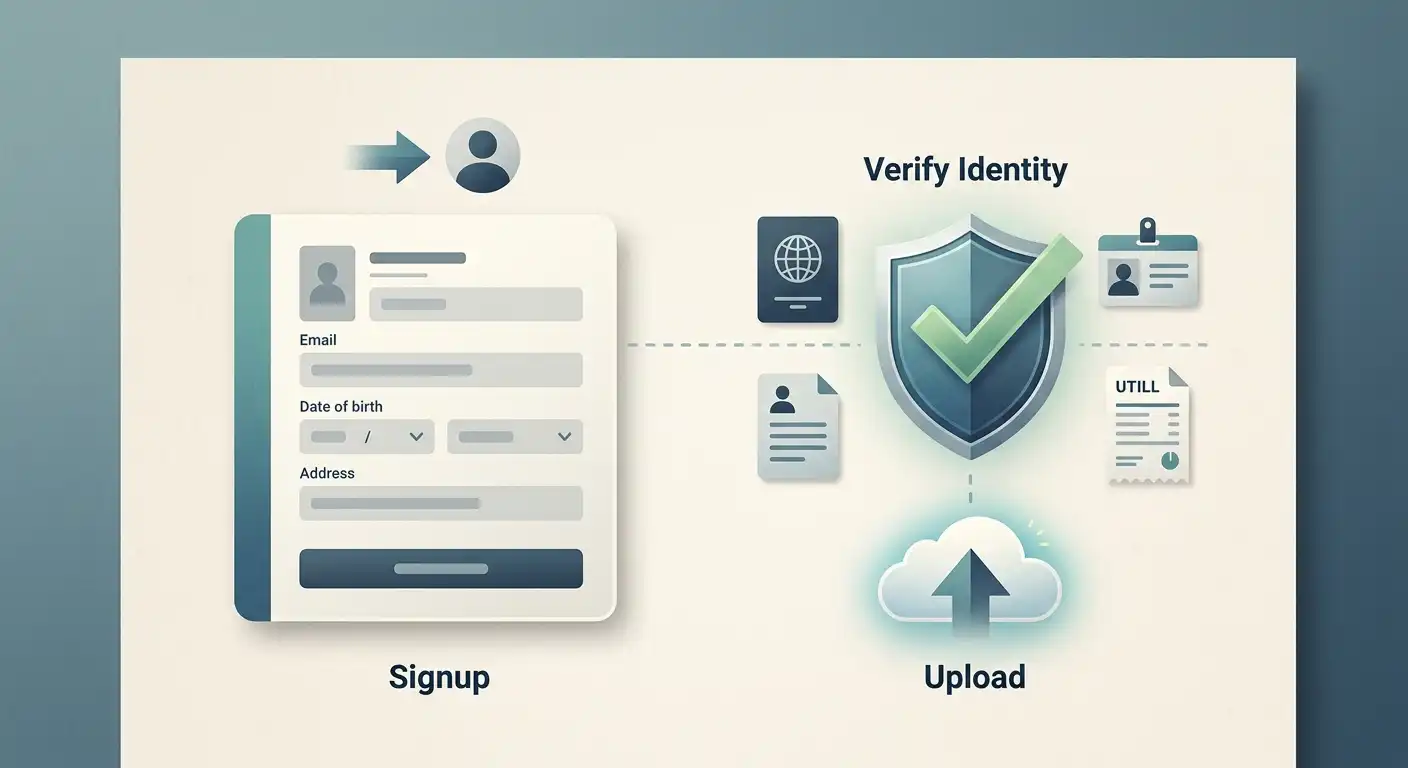
The guide separates bonus credit from cash and explains how playthrough, restrictions, verification and withdrawal caps affect potential winnings.

A no-deposit bonus describes a starting benefit supplied without an initial deposit. In the account, that benefit may take the form of casino funds or free spins, according to a specialist review. The label alone does not establish how much usable value is provided: the offer’s terms determine the amount or number of spins and the playthrough attached to them.
Casino funds and free spins are different forms of credit. Funds give a stated balance to use under the bonus terms. Free spins provide a set of chances to play, with any resulting winnings subject to their own conditions. Neither description, by itself, means that an equivalent amount of cash has been added to a withdrawable balance. The bonus is an opportunity to play under defined terms, not cash in hand.
The distinction matters when comparing offers described as “newest” or “new.” Recency says nothing about the financial value of a bonus. A newly listed offer could provide funds or spins, and the amount shown beside it is only the starting point for evaluating the terms. The playthrough requirement determines how much qualifying betting must be completed before bonus money or free-spin winnings can be withdrawn. A larger starting figure can therefore carry a larger turnover obligation.
A no-deposit offer can be a useful way to explore a casino before committing funds, but the terms and available payment details still matter. This list highlights the verified information available for each option.
Roby Casino
Roby Casino is listed with a Curacao eGaming licence held by Roby Games Ltd.
Playfina Casino
Playfina Casino is licensed by Curacao eGaming through Hollycorn N.V., which has held the licence since 2017. The minimum deposit depends on the offer and is A$20–30.
WinSpirit Casino
WinSpirit Casino has a Curacao eGaming licence, OGL/2024/923/0383, issued through Antillephone N.V. Its minimum deposit is A$30.
Lucky Dreams
Lucky Dreams is listed with a Curacao licence and a A$20 minimum deposit for POLi.
Bizzo Casino
Bizzo Casino is listed with a Curacao Gaming Control Board licence held by TechSolutions Group N.V.
House of Pokies
House of Pokies lists an international iGaming licence, though the jurisdiction is not named. PayID payouts are stated as taking 1–24 hours, and the minimum deposit is A$30, or A$10 when using PayID.
7Bit Casino
7Bit Casino is listed as Curacao-licensed and operated by Dama N.V.
Golden Pokies
Golden Pokies is listed with a Curacao licence.
SkyCrown
SkyCrown is listed with a Tobique Gaming Commission licence. Its stated payout times are around 10–15 minutes for crypto and 1–5 days for fiat; the minimum deposit is A$30.
Ricky Casino
Ricky Casino lists crypto payouts in under an hour and PayID payouts in 1–3 business days. The minimum deposit is A$20, rising to A$30 to qualify for the bonus.
Playthrough is calculated by multiplying the relevant bonus amount by the stated requirement. If the offer gives a bonus amount and sets a multiplier, the product is the total qualifying bets required. The multiplier is not a fee charged once, nor is it the amount that will necessarily remain after play. It is a turnover target: bets are counted towards it under the offer’s rules. The balance can change while that turnover is being completed, so the required betting total should not be mistaken for a promised return.
A specialist review reports no-deposit bonus playthrough figures in a range from 25x to 70x the bonus amount. That is a reported range, not a fixed term shared by every offer. The applicable multiplier is the one attached to the individual promotion. Comparing two bonuses by their headline amounts alone ignores this difference; comparing their multipliers alone also leaves out the starting amount. Both figures are needed to calculate the turnover obligation.
For example, the arithmetic is simply the bonus amount multiplied by its playthrough multiple. This calculation gives the required total bets, not a prediction of how much the account will hold when play ends. Even where the multiplication is straightforward, the result can make a modest-looking bonus less substantial than its headline value suggests. The practical value depends on the amount supplied and the amount of play required against it.
The wording of the offer also determines which balance the multiplier applies to. A requirement based on the bonus amount is not interchangeable with one based on a deposit or on winnings. Where free spins are involved, the spins themselves are not the same thing as a cash bonus balance; the eventual winnings may have a playthrough condition. The terms need to identify the relevant amount and the basis of the calculation before a headline figure can be assessed.
A useful comparison therefore begins with the unit being offered. Funds should be read as a stated bonus balance, while spins should be read as chances to play whose value depends on the offer’s terms. Then comes the playthrough multiple and its calculation base. Without those elements together, the apparent value is incomplete. “No deposit” describes the absence of an initial deposit as the condition for receiving the benefit; it does not describe the amount that can ultimately be kept.
This is why a newest online casino no-deposit bonus cannot be judged by novelty or by the largest number displayed. The relevant calculation is the starting bonus amount multiplied by its stated playthrough multiple, with the result understood as required turnover rather than cash received. A lower multiplier can still apply to a larger bonus amount, while a smaller starting amount can have a higher multiplier. The arithmetic, not the promotional label, shows the scale of the obligation.
Bonus Turnover Calculation
Identify the bonus amount
Determine the starting bonus amount provided by the offer.
Find the playthrough multiplier
Locate the stated multiplier (e.g., 25x to 70x) in the bonus terms.
Calculate total wagering
Multiply the bonus amount by the multiplier to find the total qualifying bets required before withdrawal.
For any no-deposit casino offer, the starting benefit and the playthrough are the two figures that define its basic structure. One states what is credited; the other states how much qualifying betting is attached to it. Their relationship gives a more accurate measure of the offer than either figure in isolation. A bonus can be described as free because it does not require an initial deposit, but the playthrough remains a material condition of its value.
A free-chip balance does not necessarily function as a general-purpose casino balance. A specialist review reports that such offers can be restricted to selected high-variance slots, while excluding live dealer games and high-return table games such as Blackjack. That is a reported pattern, not a rule that can be applied to every offer. The operative condition is the individual offer’s eligible-game list.
This distinction matters when comparing newer casino sites or their game catalogues. A site may present many game categories, but the presence of a game in its catalogue does not establish that a free chip can be used on it. The bonus can have a narrower scope than the account’s wider game selection. A review of the site’s catalogue alone therefore cannot settle whether a particular game qualifies.
The restriction also affects how the balance can be used, rather than how large it appears. If the terms limit play to a specified group of high-variance slots, a free chip cannot simply be moved to a live dealer table or a Blackjack game because those options are available elsewhere on the site. A visible balance and an accessible game are separate things; the terms determine whether the balance is accepted for that game.
High-variance games and high-return table games are not interchangeable categories. The reported restriction points to an offer that may permit one type of play while excluding others. That can narrow the practical value of a free chip for someone whose intended game is outside the eligible category. The relevant comparison is not the number of games listed, but whether the bonus terms identify the games on which the balance can be used.
Game labels can also be less useful than the actual eligibility wording. A general category such as slots may appear broad, while the terms may identify only particular games or otherwise narrow the permitted selection. Conversely, the fact that a game appears to fit a category does not prove that it is eligible. The stated terms, rather than a category heading or a site-wide game count, control the assessment.
This is why “new” does not settle the question. A newly launched casino site may have a recent catalogue or a fresh presentation, but that says nothing by itself about which games accept a free chip. Nor does a catalogue’s range establish that the bonus balance is available across that range. Novelty describes the site’s position in the market; eligibility describes the offer’s conditions. They are separate measurements.
The distinction is especially material for live dealer games and table games such as Blackjack, which the specialist review’s reported pattern identifies as excluded categories. A free chip should not be treated as playable there unless the terms expressly include the relevant game. The same caution applies in the other direction: the reported focus on selected high-variance slots does not establish that every slot is eligible.
A clear game restriction is therefore more informative than a broad description of the bonus. If the terms name eligible games, that list defines the usable scope. If they describe a category but do not resolve whether a particular game is included, the availability of that game elsewhere on the site is not a substitute for confirmation. In financial terms, an unconfirmed game is not part of the usable balance.
Descriptions of new slot games or a large slot catalogue can distract from this point. They may indicate what is available to account holders in general, but not what is available under a specific free-chip condition. Treating the two as equivalent can overstate the offer’s reach. A game’s presence in a catalogue is evidence of catalogue access, not evidence of bonus eligibility.
The practical assessment is narrow: identify the games the free chip can be used on, then separate those from the games that are merely listed on the site. A specialist review’s account of restrictions is useful as a warning about possible limits, not as a substitute for the terms of a particular offer. Where the permitted games are narrow, the balance is narrow too, regardless of how extensive the surrounding catalogue appears.
Australia’s legal position separates the conduct of casino operators from that of individual players. The Interactive Gambling Act 2001 prohibits Australian companies from offering online casino games to residents. The restriction covers services such as online slots, poker and table games; it is not a rule that makes every person who encounters an offshore casino liable for using it.
For individuals, the position is different. Playing at an offshore casino is not a criminal offence in most Australian states. That distinction does not make the service locally authorised or give it the protections associated with a domestic consumer framework. The law places the primary prohibition on providing the service to people in Australia, while the player’s position is not generally one of criminal liability.
This matters when a site describes itself as an Australian online casino or presents an offer to Australian players. Those phrases do not establish that an operator is an Australian company, that it may lawfully provide casino games to residents, or that local consumer protections apply. The location and branding of a website cannot change the underlying distinction between an operator’s conduct and an individual’s use of an offshore service.
The absence of local consumer protection is a practical issue, not a technical footnote. A dispute with an offshore operator does not sit within the same domestic framework that would apply to a locally regulated consumer service. An Australian player may therefore have fewer local avenues for resolving a disagreement or seeking assistance if the operator does not honour its stated terms. The fact that individual play is not a criminal offence in most states does not fill that gap.
The same distinction applies to searches for new casino sites, online pokies or payment options. A site’s apparent accessibility, Australian-facing language or advertised payment method does not alter the Act’s restriction on operators providing online casino games to residents. Nor does the legality of an individual player’s conduct in most states amount to approval of the service. Accessibility and lawful provision are separate questions.
The legal assessment is therefore narrower than a simple “legal” or “illegal” label suggests. The Act prohibits Australian companies from offering online casino games to residents; individual players using offshore casinos are generally not criminally liable in most states; and those players lack local consumer protection. Each point concerns a different part of the arrangement. Treating them as interchangeable would turn a limited statement about player liability into an endorsement of an offshore service, which it is not.
Free spins are not necessarily usable across a casino’s full game catalogue. The terms may name one eligible game or a small selection, leaving other titles outside the offer. The number displayed in an account therefore says little about where the spins can be used: eligibility depends on the game list attached to the promotion.
That restriction affects the practical value of the spins. A balance allocated to a specific title cannot simply be transferred to another game if the designated one is unavailable or unwanted. The offer’s terms should identify the eligible game before the spins are used. If they do not, the uncertainty concerns access to the spins themselves, not just the result of a spin.
A specialist casino review describes some offers as locked to a pre-selected game, with a minimum stake of either 10 or 20 cents per spin. Those figures are not a universal setting; they describe terms reported for particular offers. The minimum bet matters because a spin below the stated threshold may not qualify, while staking more can use the available spins faster without changing the eligibility rules.
A higher stake is not a way around a game restriction. If the promotion is tied to one title, raising the bet does not make other titles eligible. The relevant checks are separate: the permitted game, the minimum stake, and the period in which the spins remain available. Each can determine whether the allocation can be used as intended.
Expiry adds a time limit to those conditions. A specialist review reports that some no-deposit offers remove unused free spins after 24 hours. That is a specific reported term, not a deadline that applies to every promotion. Where such a window applies, a delay can reduce the usable allocation to zero even if none of the spins has been played.
The clock should be read alongside the activation terms, rather than assumed to begin at a convenient moment. The offer’s wording determines when the expiry period starts and whether unused spins are removed at its end. A short window leaves little room to postpone checking the eligible game or the minimum stake.
For a straightforward comparison, the usable portion of an offer is the number of spins that can be played on the permitted game, at a qualifying stake, before expiry. A large headline allocation does not compensate for a game that is not eligible or a deadline that has passed. The listed terms, rather than the display balance, establish what remains available.
A bonus balance is not the same as withdrawable cash. Even when winnings appear in an account, the terms may impose separate conditions before a withdrawal can be processed. The relevant calculation is therefore not just the displayed balance: identity checks, any deposit condition and a cashout ceiling can all affect the amount that reaches a player.
Identity verification is one possible delay point. A specialist review notes that completing checks before a win can help prevent payout delays. That does not mean a withdrawal is automatic once documents have been supplied; it means the account check need not first become an obstacle at the point when a payout is requested. The operator’s stated process determines what must be verified and when.
A further condition may be a minimum deposit. Some casino terms require a deposit before no-deposit bonus winnings can be withdrawn. In that case, the bonus is not simply converted into cash after the other conditions are met: access to a withdrawal is tied to spending additional money. The required amount and the point at which it applies need to be read in the specific offer terms; neither should be assumed from the label “no-deposit bonus”.
A cashout cap can reduce the payable amount even after a balance has been earned. A specialist review describes limits from $10 to $100 for some no-deposit bonuses. That range is a reported feature of certain offers, not a promise that a particular offer uses one of those limits. The cap may apply to winnings rather than to the account’s entire balance, so the wording matters. A balance above the ceiling does not necessarily mean the excess can be withdrawn.
The path to a payout can also carry a spending risk. A specialist review warns that attempting to meet playthrough conditions may lead to spending real money that was not planned. The bonus can therefore have a cost beyond the initial deposit question: if extra bets or a qualifying deposit are required, the eventual cash result has to be weighed against the money spent to reach it. A large displayed win is not a useful measure of value when the conditions require further expenditure or restrict the amount payable.
A practical assessment should separate three figures or conditions: the amount potentially payable, any deposit required to unlock withdrawal, and the cap on the cashout. Verification is a separate operational step, not extra winnings. If the terms do not make these conditions clear, the final amount cannot be calculated reliably from the promotional balance alone.
A completed playthrough does not necessarily make the whole bonus balance payable. A cashout cap sets a ceiling on the amount that can be withdrawn from qualifying winnings. Once that ceiling applies, the remaining balance has no effect on the permitted payout: the amount retained is limited to the lower of the eligible balance and the cap.
The arithmetic is straightforward. If qualifying winnings sit below the cap, the ceiling does not reduce them. If they exceed it, the permitted withdrawal stops at the stated limit. Completing every playthrough condition can therefore produce a result well below the displayed balance. The cap is not another wagering hurdle; it is a separate restriction on the final amount.
The figures reported in specialist review material illustrate how widely stated limits can differ. One such review describes a no-deposit bonus with a maximum withdrawal of $50, while also reporting that caps on these winnings can reach A$1,000. These are reported terms, not a reliable range for every current offer or a guarantee that any particular cap applies. The currency notation matters too: an amount shown with a dollar sign should not be assumed to mean Australian dollars unless the offer’s terms specify that.
The practical comparison is between the balance after playthrough and the maximum cashout, not between the original bonus and the headline winnings. A small ceiling can reduce a much larger qualifying balance to a fraction of its displayed value. A higher ceiling leaves more room for withdrawal, but still does not promise that the balance will reach it.
Before assigning value to a no-deposit bonus, the cap should be read as part of the payout calculation. A large bonus balance paired with a low ceiling may have a smaller possible cash result than a modest balance with a more generous limit. The advertised amount alone cannot show that difference.
The wording of the cap also matters. It may apply specifically to winnings generated from the no-deposit bonus rather than to every balance in an account. The relevant clause should identify which funds are covered and whether the limit is expressed in Australian dollars or another currency. Without that distinction, comparing figures can give a false impression of the amount available to withdraw.
For a simple assessment, treat the cap as the maximum payable amount, not as an expected return. The actual result can be lower if qualifying winnings do not reach it. A ceiling is a limit, not a target.
A mobile label describes how a service is presented, not whether a no-deposit offer is ready to use. A specialist review reports that an account may need to be registered and verified before free spins are credited. The relevant condition is therefore not the size of a screen or the style of a page, but whether the offer is conditional on account checks.
Registration and verification are separate steps. Creating an account establishes the account; verification checks the details supplied for it. An offer’s terms may make one or both steps a prerequisite to receiving free spins. If the condition applies, opening an offer page on a phone does not itself satisfy it. Nor does seeing a bonus mentioned establish that spins have been added to an account.
That distinction matters when comparing claims about a newly launched mobile casino or its pokies. A mobile presentation does not, by itself, establish that a bonus is available, that an account has passed checks, or that free spins have been credited. Those are separate questions. The offer conditions should state whether registration and verification are required and when the crediting decision occurs.
Registration creates the account, while verification checks the supplied details. Some offers require one or both of these steps to be completed before free spins are credited.
The sequence can affect expectations. If verification must happen before crediting, the account may remain without the advertised spins until the check is complete. If the terms do not make the sequence clear, the offer cannot be treated as immediately usable merely because it appears on a mobile page. The distinction is procedural, but it determines whether the benefit is present at all.
The same reasoning applies to searches for the newest online pokies on a mobile service. A game listing and a bonus entitlement are not interchangeable: the presence of a game does not establish that free spins have been credited for it. Account checks concern access to the offer, while game conditions determine how any credited spins can be used.
For a financial assessment, the useful record is the offer’s stated prerequisites and the account’s resulting status, not the device used to view them. Registration, verification and crediting should be treated as distinct stages unless the terms explicitly combine them. A mobile interface can display the information, but it does not replace the conditions attached to the offer.
A no-deposit bonus can be attached to registration in more than one way. A specialist review describes offers that are credited automatically after sign-up, alongside others that require a bonus code. In some cases, the code is entered during registration; in others, the relevant field is in the cashier. The activation route is part of the offer, not a minor administrative detail.
The first check is whether the promotion is automatic or code-based. If it is automatic, the account may receive the bonus after registration. If a code is required, the terms should identify where it must be entered. A code entered in the wrong place, or omitted when required, may leave the bonus unclaimed. A specialist review notes that entering the correct code at the wrong stage can still mean missing the benefit altogether.
That distinction matters when comparing newest online casino bonuses. The advertised value does not establish how the offer is activated. Two promotions described as no-deposit bonuses may have different sign-up steps, and the same label does not mean the same procedure. The bonus terms need to be checked before registration is completed, because the code field may appear only at a particular point in the process.
A practical comparison can be reduced to three checks:
These are activation questions, separate from the rules governing use of the bonus or any later withdrawal. A bonus that appears attractive on a promotion page has no usable value if its required activation step is missed. Conversely, where crediting is automatic, entering a code that is not required is not a substitute for understanding the offer’s actual instructions.
Descriptions of newest no-deposit casino bonuses should therefore be read as conditional, not as a promise that every new account receives funds or spins without further action. A specialist review identifies registration, code entry and automatic crediting as possible routes; the terms for a particular offer determine which route applies. If the instructions do not make the point clear, the activation method remains uncertain rather than safely assumed.
The relevant comparison is procedural: automatic credit, code during sign-up, or code in the cashier. Confirming that distinction before completing registration reduces the risk of losing an offer through a missed step. The bonus itself may be called new, but the activation condition is what decides whether it reaches the account.
Free spins are not cash. Any amount produced by using them may be credited as winnings, but a playthrough condition can keep that balance unavailable for withdrawal until the required turnover is complete. The distinction matters: the spins are the starting benefit, while the resulting winnings are subject to a separate calculation.
A specialist review describes one offer with a requirement to wager free-spin winnings 30 times before they become withdrawable. In practical terms, the qualifying winnings are multiplied by 30 to establish the total amount of bets required. If the credited winnings change as play continues, the applicable terms determine which balance is used in the calculation. The important figure is therefore not simply the amount initially credited; it is the turnover required against the winnings under the offer’s rules.
That condition also has a fixed time limit: the stated playthrough must be completed within 5 days. The clock makes the turnover requirement more restrictive than the multiplier alone suggests. A balance can remain visible while still being ineligible for withdrawal, and an unfinished requirement at the deadline may mean the winnings no longer qualify. The relevant deadline is the one specified for that offer, not an assumed general period.
The calculation should be read as a paired condition: a 30-times turnover and a 5-day completion window. Neither term cancels the other. Meeting the turnover after the deadline would not satisfy a deadline-bound offer; finishing within the time limit without reaching the required turnover would also leave the condition incomplete.
A useful way to assess the balance is to separate three states: spins available to use, winnings generated by those spins, and winnings that have cleared the playthrough condition. Only the last state is eligible to proceed towards withdrawal, subject to any other applicable terms. Treating all three as one cash figure overstates what is available.
The terms attached to a particular offer govern the calculation and deadline. A headline that describes free spins does not, by itself, establish that their winnings are immediately withdrawable. The multiplier, the balance to which it applies and the expiry time determine whether the resulting amount can pass from a conditional credit to a withdrawable one.
PayID, pay-and-play access and a bonus’s deposit condition describe different parts of a transaction. A payment method identifies how funds might be transferred. Pay-and-play generally refers to an account or payment flow that reduces separate registration steps. A bonus condition states what must happen for an offer to apply. One does not prove the availability of another.
A specialist review lists a minimum deposit of 20 AUD for one offer. That figure is a condition attached to that offer, not evidence that PayID is accepted, that pay-and-play is available, or that either feature activates the bonus. Treating the deposit threshold as proof of a particular payment route would add a term that is not stated.
The distinction matters in cost calculations. A minimum deposit describes the amount required to meet a condition; it does not identify the payment channel or explain whether a separate account process applies. Likewise, seeing PayID mentioned in a payment context would not, by itself, establish that a no-deposit bonus can be claimed through it. Payment access and bonus eligibility need to be assessed as separate terms.
For any offer, the relevant wording should connect the method, the deposit condition and the bonus explicitly. If those details are not linked, the only supported conclusion is narrow: the listed offer has a 20 AUD minimum deposit requirement. No specific claim about PayID or pay-and-play follows from that amount.
Yes. A free chip gives you a bonus balance to use under its terms, while free spins give you a set number of plays; any winnings from those spins may have separate conditions.
Yes, but you generally need to meet the wagering requirement first, and the casino may require identity verification or a minimum deposit before paying out. A cashout cap may also limit the amount you can withdraw.
Sometimes. Casinos may require account registration and verification before crediting free spins; completing verification early can also help avoid payout delays.
Written by the editors at Norco Casino.