The guide distinguishes operator restrictions from player liability and examines payment, withdrawal, verification and account-security limits.

The starting point for assessing online casino play in Australia is the Interactive Gambling Act 2001. The law targets the supply of prohibited services: domestic operators cannot offer online casino games to Australian residents. Casino-style games such as slots and table games fall within this restriction when provided to people in Australia. A website’s availability, presentation or use of Australian-facing language does not alter the underlying legal position.
The distinction between the operator’s conduct and an individual player’s position matters. The Act does not explicitly criminalise an individual for using an offshore casino site. That is narrower than saying every offshore service is lawful, approved or safe to use. The prohibition on operators offering casino games to people in Australia remains in place; the absence of an explicit player offence does not turn the service into an authorised Australian casino.
A search for a safe online casino in Australia therefore cannot be answered simply by checking whether a site accepts local customers. Access and legal authorisation are separate questions. A service may be reachable without being permitted to provide online casino games to Australians. Nor does an offshore operator’s own licence establish that it is licensed in Australia. The relevant legal boundary concerns the offer of the service to people in Australia, not the operator’s description of its status elsewhere.
Use this list as a starting point for checking the details of an online casino, not as a guarantee that a site is safe or available to players in Australia. Verify the licence and terms independently before depositing.
Roby Casino
Roby Casino is listed with a Curaçao eGaming licence held by Roby Games Ltd.
Playfina Casino
Playfina Casino is listed with a Curaçao eGaming licence held by Hollycorn N.V. since 2017. Its minimum deposit is A$20–30, depending on the offer.
WinSpirit Casino
WinSpirit Casino is listed with Curaçao licence OGL/2024/923/0383, issued to Antillephone N.V. The minimum deposit is A$30.
Lucky Dreams
Lucky Dreams is listed with a Curaçao licence and has a A$20 minimum deposit when using POLi.
Bizzo Casino
Bizzo Casino is listed with a Curaçao Gaming Control Board licence held by TechSolutions Group N.V.
House of Pokies
House of Pokies is described as holding an international iGaming licence, though the jurisdiction is not named. Its stated PayID payout speed is 1–24 hours; the minimum deposit is A$30, or A$10 with PayID.
7Bit Casino
7Bit Casino is listed as Curaçao-licensed and operated by Dama N.V.
Golden Pokies
Golden Pokies is listed with a Curaçao licence.
SkyCrown
SkyCrown is listed with a Tobique Gaming Commission licence. Its stated payout speed is around 10–15 minutes for crypto and 1–5 days for fiat; the minimum deposit is A$30.
Ricky Casino
Ricky Casino lists crypto payouts under an hour and PayID payouts in 1–3 business days. The minimum deposit is A$20, or A$30 to qualify for the bonus.
ACMA is Australia’s primary online gambling regulator. It can act against operators that breach the Interactive Gambling Act, including by blocking websites and issuing fines. These measures are directed at enforcement of the rules governing services, rather than creating an explicit criminal offence for an individual player who uses an offshore site.
Blocking has practical consequences: access to a website may be disrupted as part of regulatory action. A block is not a judgement about whether a particular player has broken the law. It is a mechanism ACMA can use against a service that falls within the prohibited category. Likewise, the possibility of fines concerns operators that breach the Act; it should not be recast as a player penalty.
This distinction is important when claims about a “safe casino” mix legal status with other assurances. A site might describe its security or refer to regulation in another jurisdiction, but those statements do not change the Australian rule on offering online casino games to people here. Security claims and the legal permission to serve Australian customers are different matters. Treating one as proof of the other confuses two separate risks.
The law also does not make the operator’s location the only relevant factor. The statutory position concerns services offered to people in Australia. An offshore base, foreign licence or accessible website does not, by itself, create permission to offer casino games to Australian residents. In practical terms, the legal question is not settled by the fact that a player can open an account or reach a site.
For individuals, the careful conclusion is limited: the Interactive Gambling Act does not explicitly criminalise using an offshore casino site. That should not be stretched into a guarantee about every possible circumstance, or into a claim that an offshore casino is approved by Australian authorities. For operators, the rule is more direct: offering online casino games to Australians is prohibited, and ACMA has enforcement powers that include blocking websites and issuing fines.
This is the legal baseline for evaluating any claim that an online casino is safe in Australia. The player’s lack of an explicit offence under this Act and the operator’s prohibition are not contradictory; they address different parties. A service’s technical features, payment arrangements or customer-facing claims cannot erase that distinction. The legal status depends first on what the operator offers and to whom, while ACMA’s role is to enforce the restrictions applying to the service.
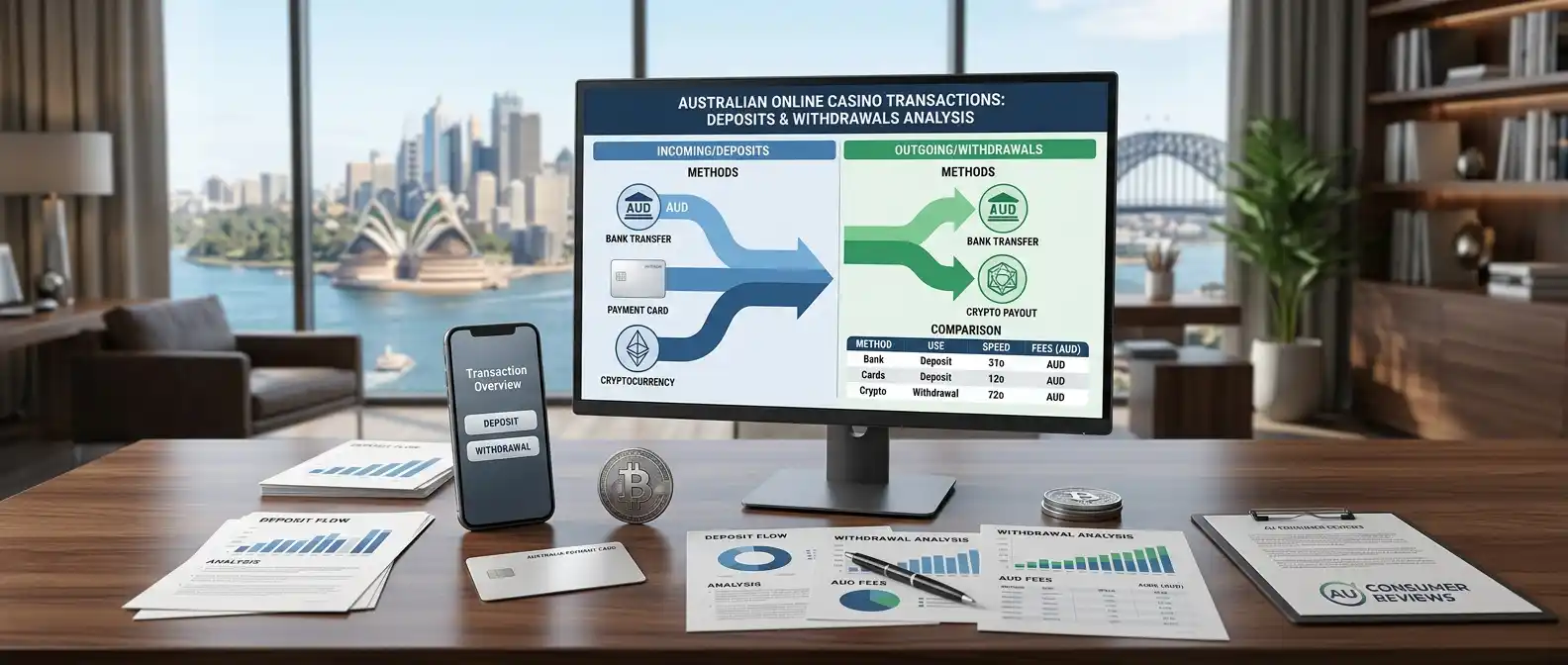
PayID describes a way to send money, not a safety rating for the service receiving it. A transfer can be processed through the banking system without establishing that an online casino is authorised to offer real-money games in Australia, or that a balance shown on its screen can be withdrawn. The Interactive Gambling Act 2001 prohibits operators from providing online casino games to people in Australia. That legal distinction remains in place regardless of the payment method displayed at checkout.
Payment-method descriptions should therefore be read narrowly. A PayID option may indicate how a deposit is requested; it does not certify the operator, guarantee that the funds will be returned, or settle what happens if a withdrawal is disputed. A “no-deposit” offer does not change that calculation. The label concerns an offer, not the status of the service or the reliability of its payment process.
PayID transfers run through the New Payments Platform, and specialist payment reviews describe them as capable of clearing quickly, sometimes within minutes once released. That timing refers to the transfer itself. It does not establish how quickly a service credits the funds, approves an account transaction or processes a withdrawal. A deposit may leave a bank account before any later account-side step is complete.
Specialist payment reviews also describe PayID and some e-wallet payments as potentially quick after approval, while bank transfers and card payments can take several business days. These are reported timing patterns, not a promise that a particular payment will follow them. The timing can depend on the stage being measured: a transfer to a recipient, an account’s internal approval, or a payment sent back to a bank or payment provider. Treating all three as one event makes a fast deposit sound like a fast cash-out. It is not.
A displayed status such as “pending” or “processing” should not be confused with a completed withdrawal. Equally, a deposit confirmation says nothing about whether a later payment will be approved or which route will be used to return funds. The payment terms need to identify both the deposit and withdrawal methods; a method appearing in one list does not prove it is available in the other.
POLi is described in specialist payment reviews mainly as a deposit method. That is not a basis for assuming that withdrawals can be sent through POLi. The withdrawal route may be different, and the relevant terms should be checked separately. If the available return method is unclear, the uncertainty is material: the deposit method alone does not answer how funds could be retrieved.
Card withdrawals also depend on the processor. Specialist payment reviews note that they can be slower or unavailable, so a card being accepted for a deposit does not establish that it can receive a withdrawal. This is a practical distinction, not a technical footnote. A payment method can work in one direction and fail to provide the same route in the other.
No payment rail removes the wider risks attached to an unlawful service. Australian law does not explicitly criminalise individual players for using offshore casino sites, but that does not make an offshore site authorised in Australia. Unlicensed services lack Australian consumer protections, and Australian laws may not assist if winnings are withheld. Using a VPN to access a casino may also result in voided winnings, account closure and loss of a deposit.
For any payment, the amount sent and the amount recoverable are separate figures until a withdrawal has actually been completed. PayID can describe the movement of a deposit; it cannot establish the legal status of the recipient, the availability of a withdrawal route, or the outcome of a payment dispute.
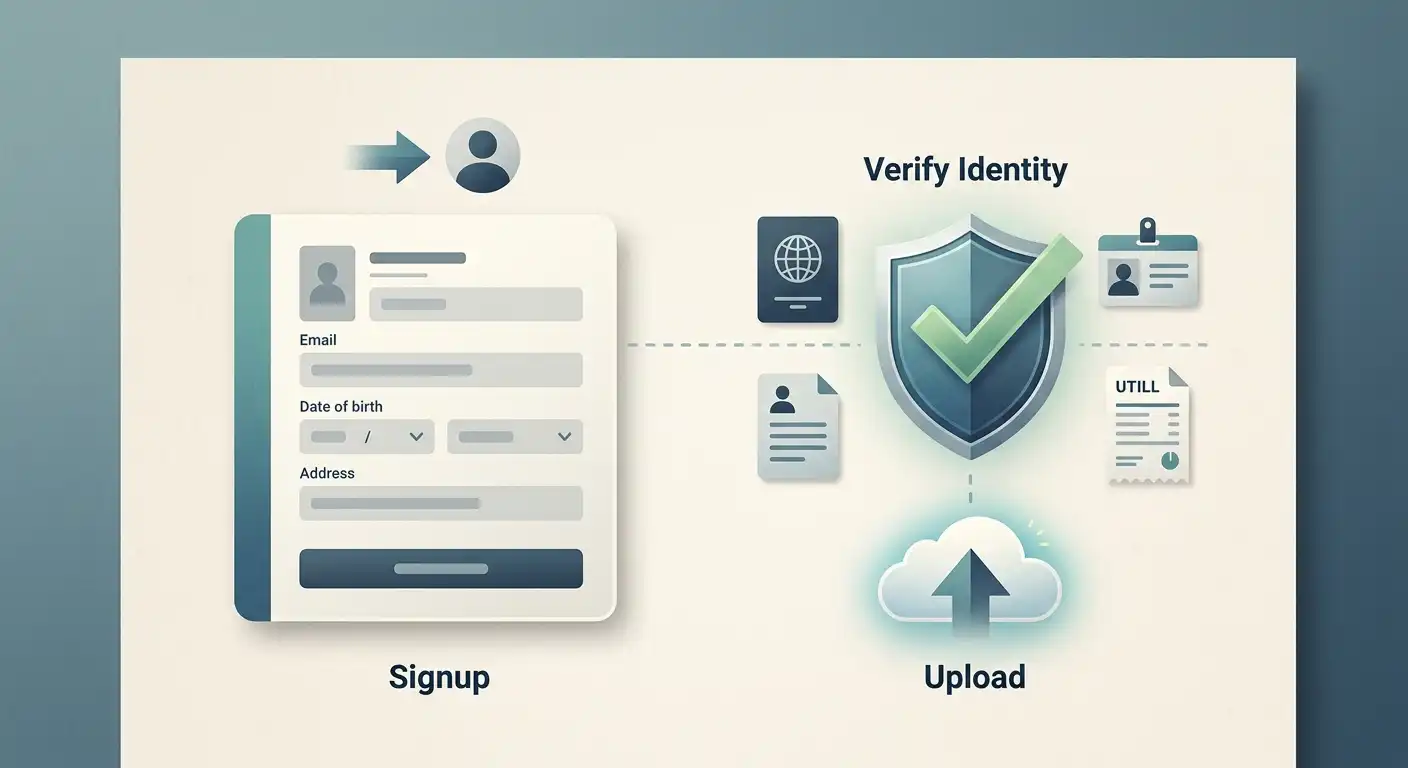
Identity checks are a separate stage from moving money. A transfer can reach an account without establishing who controls that account or whether the person requesting a withdrawal is the account holder. Casinos conduct know-your-customer checks and require identity verification before withdrawals. Until the check is completed, access to a balance may be delayed.
That process does not make an online casino a safe or authorised option in Australia. The Interactive Gambling Act 2001 makes it illegal for operators to offer real-money online casino games to people in Australia. An offshore site’s request for identity documents is an operational procedure, not evidence that it is licensed in Australia or that Australian consumer protections apply.
Verification commonly includes a request for photo identification, proof of address and proof that the payment method used belongs to the account holder. Each item addresses a different question: who the account holder is, where they live, and who controls the funding method. A request for these documents is therefore not interchangeable with a simple account password or payment confirmation.
The precise instructions come from the service requesting the documents. A careful review of those instructions matters: the required document type, acceptable format and submission route should be stated before personal information is sent. If the instructions are unclear, that is a reason to pause rather than guess which records will be accepted.
The documents should be treated as sensitive financial information. A site asking for them does not, by that fact alone, establish how they will be handled or whether the service is lawful. Nor does completing a check guarantee that a withdrawal will be approved. Identity verification confirms information for the operator’s process; it is not a promise about the final outcome.
A withdrawal request may be held while the operator reviews the submitted information. Missing documents, unreadable images or a mismatch between the requested evidence and the account details can lead to further requests. These are practical possibilities, not a timetable: the stated requirement is verification before withdrawal, and the review period can depend on the operator’s process.
That distinction matters when assessing a balance. A displayed figure is not the same as money already released. Before any account is funded, the verification and withdrawal conditions should be read together. If documents are required only after a withdrawal is requested, the account holder may face a review at the point when access to funds matters most.
Proof of payment-method ownership is particularly relevant where the payment account and casino account are not clearly connected. The request is not just a second identity check; it is evidence about control of the method used. Sending documents that do not answer the stated request can add another exchange without resolving the issue.
For Australian residents, these checks cannot turn an offshore casino into a service licensed in Australia. ACMA can seek to block websites offering prohibited interactive gambling services to Australian customers. An offshore licence is not Australian authorisation, and an unlicensed gambling service lacks Australian consumer protections; Australian laws may not assist if winnings are withheld.
Using a VPN to reach a casino may result in voided winnings, account closure and loss of the deposit. That is a material account risk, not a workaround for the legal position. A verification request should therefore be assessed as a condition attached to an offshore service, not as proof that real-money casino play is safe for Australians.
A safety check is useful only when its limits are clear. It can help establish whether a website protects information in transit and whether its claims are specific enough to examine. It cannot turn an online casino into a service authorised to offer real-money games in Australia. A polished interface, Australian-dollar display or offshore licence is not evidence of Australian authorisation.
Casinos use SSL encryption to protect transactions and sensitive information as it moves between a device and a website. A secure connection is one relevant technical measure: it reduces the risk of intercepted data during transmission. It does not establish how the operator stores information, handles complaints, pays winnings or responds to a security incident. Nor does it establish that the service is lawful in Australia.
The same distinction applies to badges, security statements and claims about independent checks. Their presence is not proof by itself. The wording should identify what was checked and by whom; a logo with no verifiable explanation has little evidentiary value. Even a genuine technical assessment would concern the scope of that assessment, not every risk associated with using the service.
A service can have a secure connection and still be unavailable legally to Australian residents. Online casino games offered for real money to people in Australia are prohibited under Australian law. An offshore licence does not substitute for Australian authorisation, and a safety review cannot change that position.
This matters financially as well as legally. Unlicensed gambling services do not provide the consumer protections attached to an authorised Australian gambling service. If winnings are withheld, Australian laws may not assist in recovering them. A claim that a site is “safe” should therefore not be treated as a promise that funds can be recovered or that a dispute will have an effective remedy.
Using a VPN to reach a casino does not resolve the legal issue. It may also lead to winnings being voided, an account being closed or a deposit being lost. Those are material risks, not technical footnotes.
ACMA can ask internet service providers to block websites that offer prohibited interactive gambling services to Australian customers, as well as unlicensed services offered to adults in Australia. Where customer safety is considered at risk, ACMA can seek a blocking order as a last resort. A site’s current accessibility is therefore not proof that its service is authorised or that access will continue.
A practical assessment separates three questions: whether the connection is encrypted, whether the safety claims can be independently substantiated, and whether the service is legally available in Australia. A positive answer to the first question does not answer the other two. In this market, technical security is a narrow finding; it is not a licence, a consumer-protection guarantee or a reliable basis for calling an online casino safe.
An offshore licence and authorisation to offer casino games in Australia are different things. A site may display a licence issued elsewhere, but that does not make it licensed in Australia or permit it to offer online casino games to people in Australia. The distinction is about the service and the market it serves, not the wording on its homepage.
Online slots and casino games such as blackjack are illegal to offer to customers in Australia. A claim that a site is a “safe Australian casino” cannot alter that position. Nor does describing a service as secure, reputable or suitable for Australian players establish that it is authorised to provide casino games here. Those labels describe the operator’s presentation; they do not establish its legal status.
ACMA’s public register is a practical way to check whether a wagering service holds a valid Australian licence. ACMA has urged Australians to consult its website and the national register when checking which legal gambling products are available. The check can help establish whether a wagering service is licensed in Australia; it should not be treated as a route to identifying an authorised online casino.
That distinction matters because a register entry is not a general endorsement of every product associated with a company. A licensed wagering service and an online casino are not interchangeable categories. If a business operates different services, the status of one does not automatically establish the status of another. The name, licence details and service type need to match the claim being assessed.
A foreign regulator’s licence may indicate that an operator is subject to rules in another jurisdiction. It does not replace an Australian licence, and it does not make a prohibited casino offer lawful for Australian customers. An offshore licence therefore cannot serve as proof that an online casino is authorised here.
Descriptions such as “safe and secure” are not evidence of Australian authorisation. Reviews that call a site safe may discuss its appearance or service claims, but that wording cannot resolve whether the operator may offer casino games in Australia. A positive review is not a licence, and a foreign licence is not an Australian one.
The same caution applies to claims about Australian access. A site being visible online, accepting Australian registrations or displaying Australian currency does not establish permission to provide casino games to people in Australia. Access and authorisation are separate questions.
Using a VPN to reach a casino does not change the operator’s legal status or turn an offshore service into one licensed in Australia. It may also lead to winnings being voided, an account being closed or a deposit being lost. These are material risks, not technical details to set aside.
Unlicensed gambling services do not provide the consumer protections associated with an Australian-authorised service, and Australian laws may not assist if winnings are withheld. The register is useful for checking licensed gambling services, but it does not certify an offshore casino as safe or lawful. A claim of safety cannot substitute for a status that the service does not hold.
Payment speed is only one part of the time between requesting a transaction and seeing funds move. A specialist review describes PayID transfers through the New Payments Platform as potentially clearing within minutes once released. The same review characterises PayID and some e-wallets as capable of being quick after approval, while bank transfers and card transactions may take several business days. These are reported timing patterns, not a service standard or a promise that a particular transaction will arrive by a fixed time.
The stages matter. A payment method may transmit funds quickly after a service releases them, but that does not establish how long the service takes to approve a payment or when it will release a withdrawal. Nor does a fast deposit demonstrate that withdrawals will be equally fast. The figures describe different parts of the process; treating them as one clock makes the delay look smaller than it is.
Card withdrawals have an additional uncertainty. A specialist review notes that they can be slower than other routes or unavailable, depending on the payment processor. If a card is accepted for deposits, that alone does not establish that the same card can receive withdrawals. The available withdrawal route and its stated processing conditions therefore need to be considered separately from the deposit option.
A practical comparison should distinguish at least three points: when a withdrawal request is submitted, when it is approved and released, and how long the chosen payment rail takes after release. A stated transfer time that begins only after approval cannot account for time spent waiting before approval. Likewise, an estimated arrival time cannot guarantee that the payment method is supported for a particular transaction.
Speed also says nothing about whether a service is legally available in Australia. The Interactive Gambling Act 2001 prohibits operators from providing real-money online casino games to people in Australia. An offshore service’s payment options do not make it licensed in Australia. Unlicensed gambling services lack Australian consumer protections, and Australian laws may not assist if winnings are withheld. Using a VPN to access a casino may result in voided winnings, account closure and loss of the deposit; a faster payment route does not reduce those risks.
The cost of waiting is therefore not simply the time shown beside a method. It includes any approval period, the transfer period after release, and the possibility that a route—particularly a card withdrawal—will not be available. Where the service itself is unlawful, a short payment estimate is packaging, not protection.
A pokie’s return to player (RTP) is a game setting, not a verdict on whether a casino is safe. It describes the game’s theoretical return across play, not what an individual session will produce. A displayed RTP therefore cannot predict a particular result or establish that a platform is trustworthy.
The stated figure can be found in the game’s information or help screen, often opened through an “i” icon or a menu. The location and layout vary, but the relevant detail belongs to the game information itself. If the screen does not make the RTP clear, the figure should not be inferred from the game’s title or from a description elsewhere on the site.
One complication is that a provider may release the same game in several RTP versions. The operator selects which version to run. Two sites showing the same pokie can therefore offer different versions, even though the game name and general presentation match. A comparison based only on the title misses the setting that matters.
That makes the displayed information more useful than a broad claim that a game is fair or safe. The figure should correspond to the version actually available in the game, rather than a generic description of another version. Where the version is not identified, a confident comparison has no sound basis.
RTP also answers a narrow question. It says nothing by itself about account handling, payment security, withdrawal terms, customer support or whether the service is authorised to operate in Australia. A game can display an RTP figure without that figure resolving any of those separate risks. “Safe” is doing too much work when it is used to describe a game setting.
Free-play access, where offered, does not change that distinction: a practice mode can show game information, but it cannot certify the operator or establish the terms that apply to real-money play. Likewise, a generous welcome offer has no bearing on the RTP version selected. The relevant checks remain separate: identify the game version, read its stated information, and do not treat the return figure as evidence about the wider service.
RTP is a technical detail with a defined scope. It can support a comparison between versions when the figures are disclosed, but it is not a safety badge, a promise of a particular outcome or proof that an online casino is safe.
A mobile casino login combines two separate risks: exposure of account information and control over money leaving the account. An encrypted connection addresses only the first part. Casinos use SSL encryption to protect transactions and sensitive information as it moves between a device and the service. That safeguard does not establish that a service is authorised to offer casino games in Australia, or that funds will be protected if a dispute arises.
Encryption is not a substitute for careful account access. A login page that appears professional, or a connection shown as secure by a browser, cannot by itself verify who operates the site or what protections apply. The same distinction holds for a mobile app: access through an app rather than a browser does not change the service’s legal status or the terms governing an account. A safe mobile casino cannot be identified from the screen design alone.
Deposit controls concern a different part of the calculation: how much can be committed. A specialist review of casino features describes operators offering deposit limits that can be set daily, weekly or monthly. This is a description of a feature, not an established Australian market standard. The presence of a limit does not make an online casino legally available to Australian residents, and a limit is useful only if its operation and effect are clear in the account terms.
The practical check is whether a stated control applies to deposits, when a change takes effect, and whether it can be reversed or removed. Those conditions determine whether a limit constrains spending or merely records a preference. A label such as “responsible gambling” is not a substitute for the actual terms.
Bitcoin or another payment label does not change these checks. A digital wallet or mobile-friendly payment flow does not certify the operator, improve consumer protection, or make an unlawful service lawful. Payment technology is packaging; the legal and contractual position remains the substance.
Australian law prohibits operators from providing real-money online casino games to people in Australia. Offshore services do not become safe or authorised because they use encryption, offer mobile access or display spending controls. Unlicensed gambling services lack Australian consumer protections, and Australian laws may not assist if winnings are withheld. Using a VPN to access a casino may lead to winnings being voided, account closure and loss of the deposit. A secure connection can protect data in transit; it cannot repair those risks.
A polished website, encrypted connection or confident safety statement cannot establish that an online casino is lawful to use in Australia. The Interactive Gambling Act 2001 bars operators based domestically from providing online casino games to people in Australia. The legal issue is therefore not resolved by how professional a platform looks or where its licence was issued.
ACMA can ask internet service providers to block sites that supply prohibited interactive gambling services to Australian customers, as well as unlicensed services aimed at adults in Australia. Access can therefore be interrupted. A site remaining reachable at a particular moment is not proof that it is authorised to serve the Australian market.
That distinction matters when assessing claims about safe online casinos in Australia. Technical protections may reduce particular risks, but they do not create Australian authorisation or guarantee that a service will honour a balance or resolve a dispute. Unlicensed gambling services lack Australian consumer protections, and Australian laws may not help if winnings are withheld. A foreign licence does not change that position.
Using a VPN to reach a casino may breach the platform’s terms and can lead to winnings being voided, an account being closed or a deposit being lost. It does not turn an offshore service into one authorised in Australia. The added step changes the route of access, not the legal status of the operator.
Responsible-gambling information is another limited signal. Reputable platforms provide information about gambling-related harm and direct users to professional support services in Australia. That material can be useful, but its presence does not certify that the casino is lawful or that funds are protected.
There is consequently no reliable list of safe online casinos in Australia based simply on appearance, security claims or an offshore licence. Where real-money casino games are offered to people in Australia, the central risk is structural: the service may be unlawful here, subject to blocking, and outside local consumer safeguards. Technical features can address narrow account or data risks; they cannot remove that exposure.
An account displayed in Australian dollars is a currency setting, not evidence that the casino is authorised to serve people in Australia. The same applies to an AUD wallet label, an Australian-facing interface or an app that accepts a local address. These details describe how an account is presented; they do not change the legal status of the service.
Under the Interactive Gambling Act 2001, online casino games cannot lawfully be offered to people physically located in Australia. A balance shown in AUD does not create an exception to that boundary. Nor does describing a site as a safe Australian casino establish that it is permitted to provide casino games to Australian residents. Currency and legality are separate questions, and only the latter determines whether the service may be offered in this market.
A wallet can still hold a displayed balance while the underlying service remains outside the Australian legal framework. If an offshore operator withholds winnings, Australian laws may not provide the protections available for a service authorised to operate locally. The practical value of a displayed balance therefore depends on more than its currency label; the label alone says nothing about whether funds can be recovered through Australian consumer protections.
Using a VPN to reach a casino does not resolve the legal issue. It may lead to winnings being voided, an account being closed or a deposit being lost. Changing the apparent location of a connection does not turn a prohibited offer into an authorised one.
ACMA may seek a blocking order as a final measure where it considers customer safety to be at risk. A blocked site can become inaccessible through Australian internet services, so access should not be treated as a stable feature of an offshore account. That possibility is separate from whether the account balance is denominated in Australian dollars.
The useful distinction is simple: AUD is a unit of account; it is not a licence, a safety certification or legal permission to provide online casino games in Australia. A wallet’s local appearance cannot move the service across that boundary.
The Interactive Gambling Act 2001 does not explicitly criminalise individuals for using offshore casino sites. However, that does not make those services authorised in Australia; ACMA can take action against operators, including blocking websites and issuing fines.
Methods mentioned include PayID, some e-wallets, bank transfers and cards. POLi is mainly used for deposits, while card withdrawals may be slow or unavailable; a payment method does not establish that a casino is authorised or guarantee a withdrawal.
After approval, PayID and some e-wallet payments can be quick, while bank transfers and card payments can take several business days. PayID transfer speed does not itself indicate how long account approval or withdrawal processing will take.
Verification commonly requires photo ID, proof of address and proof that you own the payment method used. Identity checks may be required before a withdrawal.
Written by the editors at Norco Casino.