Australia’s offshore casino market involves distinct legal, bonus, payment and withdrawal considerations, even when a foreign site accepts local players.

Australia’s rules draw a clear distinction between the person using an online casino and the company providing it. Under the Interactive Gambling Act 2001, a company operating from within Australia cannot provide real-money interactive casino games to people in the country. The restriction concerns the service provider; it does not make an individual player’s use of a foreign-licensed casino a criminal offence.
That distinction matters because a website’s availability and its legal status are not the same thing. A foreign operator may accept Australian customers, but that does not make it a locally authorised casino or bring it within Australian consumer protections for gambling services. Nor does the absence of criminal liability for a player amount to official approval of the operator’s service. The law places the principal prohibition on providing the service to people in Australia.
The Act applies to real-money online casino activity, rather than only to one familiar game format. An online casino offering games for money falls within the regulatory issue whether its catalogue is described as pokies, table games or another form of casino play. The central question is who provides the service, where that provider operates, and whether the service is being supplied to people located in Australia.
The restriction on operators explains why Australian residents cannot choose from a domestic market of locally licensed online casinos offering real-money play. This is not simply a case of a small number of local sites or a temporary gap in a list of providers. Australia does not have domestic licences under which online casinos can lawfully offer real-money casino games to residents.
As a result, the phrase “Australian online casino” can be misleading when it refers to a site that accepts Australian customers. The site may be aimed at Aussie gamblers or display Australian currency, but those features do not establish that it is licensed in Australia. A locally directed website and a locally authorised service are different things.
The legal framework also explains why comparisons of real-money casino sites cannot be treated as comparisons of Australian-licensed operators. A foreign licence is not an Australian licence, and the fact that a company holds authorisation overseas does not remove the Australian prohibition on providing the service from within Australia. The operator’s location and the scope of its licence matter; so does the fact that Australian law does not provide a domestic licensing route for this activity.
For the operator, the legal line is direct: providing real-money interactive casino games to Australian residents from within Australia is prohibited by the Interactive Gambling Act 2001. For the individual, the position differs. The Act does not criminalise an Australian resident merely for playing on a foreign-licensed casino site.
That difference should not be stretched into a broader assurance. It does not mean that every offshore site is authorised by Australian regulators, that every dispute can be handled through Australian gambling channels, or that a foreign operator is subject to the same oversight as a domestic gambling business. Player protections available through domestic regulators such as the Australian Communications and Media Authority do not extend to offshore platforms.
The practical consequence is a market with a legal boundary rather than a domestic choice of licensed providers. Australian law prohibits companies from supplying real-money online casino services to people in Australia, while individual use of foreign-licensed sites is not itself an offence under the Act. Those positions can coexist: one concerns the conduct of the provider, the other the liability of the player.
For searches about the best real-money online casinos in Australia, the legal context therefore comes before any comparison of sites. A casino may be accessible or advertise an overseas licence, but neither fact changes the domestic rule governing the provision of real-money casino services. Equally, the fact that a player is not criminalised does not convert an offshore platform into a locally regulated service.
The distinction is important because “licensed” can refer to different legal systems. A licence issued outside Australia may be relevant to the operator’s status in the issuing jurisdiction, but it does not create Australian authorisation. There is no domestic real-money casino licence for such a site to hold. The legal description is consequently more precise than a simple label such as legal or illegal: the provider’s activity is prohibited under Australian law, while the player is not made a criminal merely by participating.
This framework sets the terms for understanding the offshore market without confusing operator rules with player liability. It also prevents a common category error: treating a foreign licence as evidence that an online casino is regulated in Australia. The law’s distinction is specific, and the two sides of it should remain separate.
The legal position separates the conduct of an operator from that of an individual. Under the Interactive Gambling Act 2001, an Australian resident does not commit an offence merely by playing at an offshore casino licensed in Curaçao, Malta or Anjouan. The Act does not criminalise individual Australian players for using foreign-licensed sites.
That distinction is narrow. It describes the player’s criminal liability; it does not make an offshore casino a locally authorised service, or extend Australian regulatory protections to it. A foreign licence is not an Australian licence. Nor does the fact that a site accepts Australian customers establish that domestic rules govern its relationship with them.
For someone considering whether to play online casino games for real money, “not an offence for the player” is the relevant legal distinction. It should not be expanded into a broader assurance that every aspect of an offshore service is approved, supervised or enforceable in Australia. The operator’s position and the player’s position are not interchangeable.
The Interactive Gambling Act 2001 concerns the provision of prohibited interactive gambling services to people in Australia. Its treatment of operators does not convert the customer into an offender simply for taking part. Equally, the absence of an offence for the customer does not create a local casino regulator responsible for an offshore account.
This matters when assessing statements that describe a site as “licensed” without identifying what that means. A licence issued abroad relates to the authority named in that jurisdiction; it does not, by itself, provide Australian regulatory status. A site’s foreign licence may be relevant to its own regulatory framework, but it does not change the Australian player’s limited position under domestic law.
Domestic player protections administered through regulators such as the Australian Communications and Media Authority do not apply to offshore casino platforms. A person using a foreign site therefore cannot assume that the protections available through Australian regulators for matters within their remit will also cover an account, dispute or transaction on that platform.
The practical consequence is a difference in recourse. Where an issue concerns an offshore operator, the existence of an Australian regulator does not mean that the regulator oversees that operator or can provide the same remedies that apply to domestic services. The player’s lack of criminal liability is not a substitute for oversight: one answers whether the individual is committing an offence, while the other concerns who supervises the service and what protection is available.
This is the point at which the phrase “online casino for real money” can conceal two separate questions. The first is whether an Australian player is criminally liable for using a foreign-licensed casino. The answer under the Act is no. The second is whether that player receives domestic regulatory protection when using the site. The answer is also clear: those domestic protections do not extend to offshore platforms.
Descriptions of a casino as foreign-licensed should be read as a statement about its overseas status, not proof of Australian approval. Likewise, the ability to register or play casino online for real money does not establish that the service is regulated locally. Availability and regulatory coverage are different matters.
The same distinction applies to claims about player protection. A site may describe its own rules or processes, but that is not the same as protection through an Australian regulator. The important question is not only what the operator says it provides, but whether domestic oversight applies. For offshore platforms, protections associated with regulators such as ACMA do not apply.
Accordingly, the legal position for an individual is more limited than either a blanket warning or a blanket reassurance suggests. Playing at an offshore casino with a licence from Curaçao, Malta or Anjouan is not, by itself, an offence for an Australian resident under the Interactive Gambling Act 2001. That does not make the service locally licensed, nor does it bring the player within domestic protections. Those are separate conclusions, and confusing them gives a foreign licence more weight than it carries in Australia.
A bonus attached to online pokies is not automatically withdrawable money. Wagering requirements set the amount of qualifying play that must be completed before bonus-related winnings become eligible for withdrawal. The multiplier is the part that changes the calculation: a larger multiplier means more turnover is required against the bonus amount.
A specialist review of casino offers reports wagering requirements of 30x–45x the bonus amount for pokies promotions. That range is a reported snapshot, not a fixed market rule. Each offer sets its own conditions, and the multiplier alone does not describe every restriction attached to the promotion.
The calculation can be written without a sample deposit: bonus amount × wagering multiplier = required turnover. If the bonus is represented by B and the multiplier by M, the qualifying turnover is B × M. The result is the total amount of eligible bets required, not the amount that must be lost. Turnover records the value wagered; it does not guarantee a particular balance or return.
For wagering purposes, slots generally count fully. In practical terms, each eligible unit staked on a qualifying slot adds the full unit to the wagering progress. If the promotion requires turnover of B × M, the player needs eligible slot stakes totalling that amount before the requirement is cleared.
That full contribution makes the arithmetic relatively direct, but it does not make every spin eligible. Promotion terms can define which games count, and a game may be excluded even if it is a slot. The relevant measure is therefore not simply total slot play: it is qualifying slot turnover under the offer’s rules.
The distinction matters when the displayed progress is lower than the sum of all bets placed. A stake on a game that does not qualify may add nothing to progress. A qualifying game may count differently if the promotion sets a special rule. The terms, rather than the game’s appearance or its placement in a casino lobby, determine whether a bet contributes.
Bonus Turnover Calculation
Identify the base
Determine the bonus amount (B) provided by the offer.
Find the multiplier
Identify the wagering multiplier (M) stated in the terms.
Calculate required turnover
Multiply the bonus amount by the multiplier (B × M) to find the total amount of eligible bets required.
A bonus headline can make an offer look simple: receive a bonus, then complete wagering. The underlying calculation depends on the amount used as the base and the multiplier applied to it. Where the terms define the requirement against the bonus amount, the bonus amount is the figure multiplied. A different base would produce a different turnover target, so the wording of the offer matters as much as the headline multiplier.
This is also why two promotions with the same multiplier may not require the same amount of play. Their bonus amounts can differ, and their qualifying rules can differ. The multiplier is a rate, not a final total. Without the bonus amount and the rule defining the base, it cannot by itself show the turnover required.
Progress should be understood as a running total of qualifying bets, not as a balance reserved for withdrawal. Betting through the required turnover does not mean the original bonus remains intact: the account balance changes with play. The wagering calculation measures whether a condition has been met, not how much money will be left when it is met.
For real-money casino slots, the useful comparison is therefore between the bonus amount, the stated multiplier and the eligible turnover rules. A large promotional figure has little meaning on its own. The arithmetic becomes clear only when the base and qualifying play are clear; otherwise, the advertised bonus is packaging around an unknown final requirement.
A wagering requirement sets how much qualifying betting must be completed against a bonus before winnings can be withdrawn. The amount shown is not necessarily the amount of money that must be staked across every game: a game’s contribution determines how much of each bet counts towards the requirement.
For a simple calculation, multiply a stake by the game’s contribution rate. If a table game contributes 10–20%, only that share of each qualifying bet is credited to the wagering total. The rest does not advance the requirement. This makes the same nominal wager less effective for clearing a bonus on a lower-contributing game than on a game that counts in full.
The distinction is between money wagered and wagering progress. A bet can be valid under the promotion’s rules while adding only part of its value to the required total. A balance may therefore decline faster than the wagering meter advances. That is a calculation issue, not a discrepancy in the displayed balance.
Game weighting is the percentage of a stake that counts towards the wagering requirement. The rate can differ across game categories, so the total qualifying play depends not only on the bonus condition but also on what is played. Table games typically contribute 10–20%, meaning a substantial portion of their stakes may not count.
A specialist casino review describes bonus offers as subject to wagering, game-weighting and maximum-bet rules. These conditions determine whether a bet qualifies and how much progress it records. The offer’s own terms remain the controlling reference; a contribution rate attached to one promotion should not be assumed to apply to another.
The practical comparison is straightforward. A higher contribution rate reduces the amount of total staking needed to record a given amount of qualifying play. A lower rate means more of the player’s activity is excluded from the wagering calculation. Where a game is excluded altogether, its bets do not move the requirement forward, so playing it can consume funds without reducing the outstanding target.
The wagering figure alone does not show the full cost of clearing a bonus. The contribution table must be read alongside it. A useful check is to identify which games qualify, find the stated rate for each category, and apply that rate to the intended stakes. The result is the amount credited towards completion, rather than the amount physically wagered.
For table games, the 10–20% range makes the effect especially visible: only a fraction of each eligible stake may count. Choosing a category with a lower weighting can therefore extend the amount of play needed, even when the nominal wagering requirement is unchanged. If the promotion’s terms do not clearly state how a game is treated, its contribution should not be presumed.
A bonus is not simply extra balance available for unrestricted play. Its usable value depends on the conditions attached to it and on how each game contributes to clearing those conditions. Comparing the required wagering with the contribution rules gives a more accurate measure of the work involved than the headline bonus alone.
A withdrawal has at least two separate stages: the casino’s approval and the payment provider’s transfer. A fast transfer method cannot remove a delay at the approval stage, so the advertised processing speed is only part of the time between submitting a request and receiving funds.
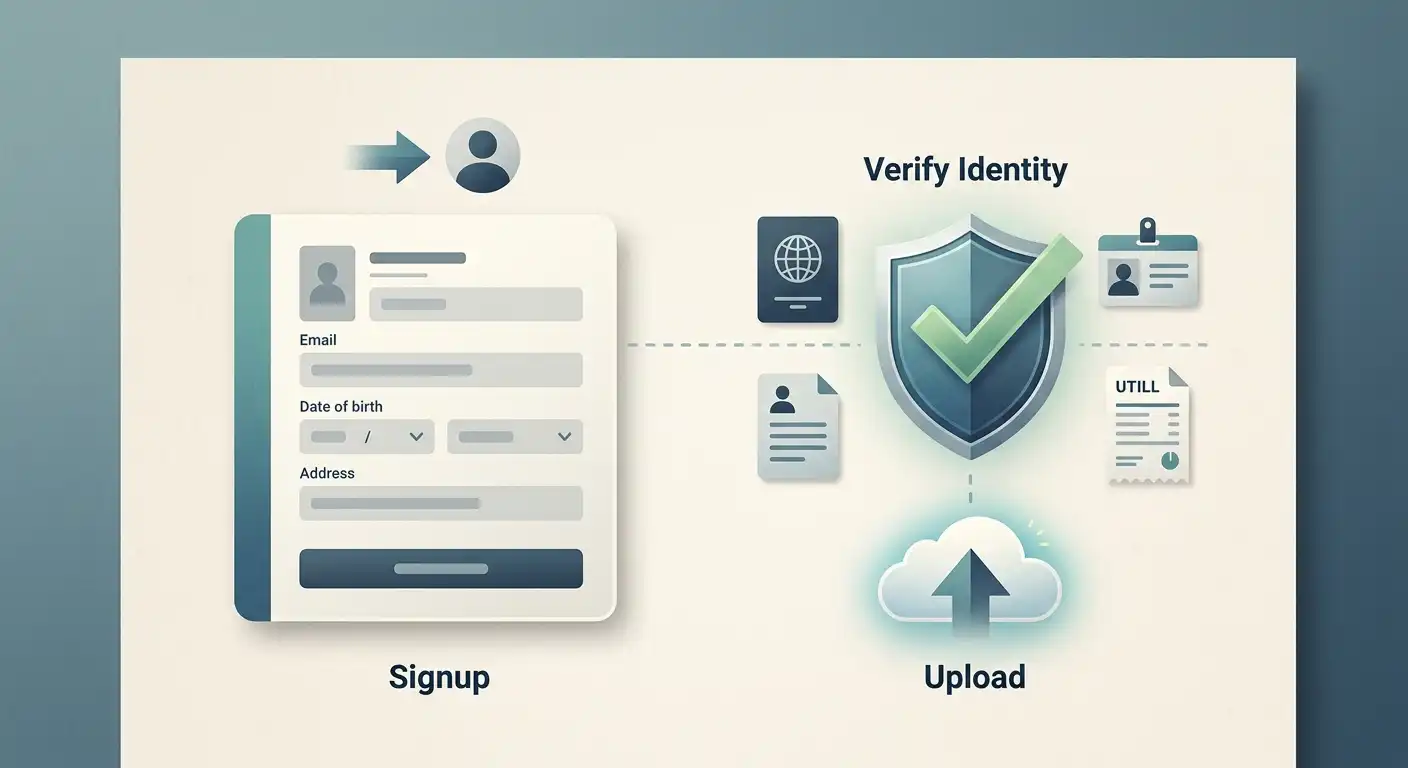
A specialist casino review reports that account verification is the most common trigger for withdrawal delays. The same review says casinos may request government-issued identification and proof of address when withdrawals exceed their stated thresholds. Those checks can leave a request waiting even when the payment method itself is quick. Completing identity verification before requesting a withdrawal reduces the risk of a preventable pause, although it does not determine how quickly the casino processes the request.
The timing of verification matters: submitting documents for the first time alongside a withdrawal can add a review step. The casino may need to confirm that the account holder’s details match the withdrawal request before releasing funds. Thresholds and document procedures vary by operator, so the relevant account and payment terms determine what is required. A request should not be treated as approved simply because it appears in the account’s transaction history.
A separate waiting period can occur before a casino sends the payment. According to a specialist review, some casinos keep withdrawal requests pending for a period ranging from zero to twenty-four hours. During that window, the player may be able to cancel the request and return the funds to play. That makes the pending stage a practical risk, not just an administrative delay: money shown as requested may not yet be safely on its way out.
Crypto is described as the fastest payment option at instant-withdrawal casinos in Australia by a specialist casino review. The distinction is between the casino releasing a payout and the blockchain confirming it; the two steps are not the same. Speed therefore depends on both the operator’s handling of the request and the network’s confirmation, rather than on the payment label alone. Any stated processing estimate should be checked against the operator’s current terms.
For a casino with real-money play, the useful comparison is not simply “fast” versus “slow.” It is whether verification is complete, whether a pending period applies, and how the chosen method is handled after approval. A win credited to an account is not equivalent to a completed withdrawal. The final measure is when the funds become available outside the casino, after every required review and transfer step.
Choosing a real-money casino involves more than the games on offer: licensing, deposit requirements and payout details can all help inform your decision. This list highlights the specific operator details available for Australian readers.
Roby Casino
Roby Casino is listed with a Curacao eGaming licence held by Roby Games Ltd.
Playfina Casino
Playfina Casino has operated under a Curacao eGaming licence held by Hollycorn N.V. since 2017. Its minimum deposit is A$20–30, depending on the offer.
WinSpirit Casino
WinSpirit Casino holds Curacao eGaming licence OGL/2024/923/0383, issued by Antillephone N.V. The minimum deposit is A$30.
Lucky Dreams
Lucky Dreams is listed with a Curacao licence and a A$20 minimum deposit via POLi.
Bizzo Casino
Bizzo Casino is listed with a Curacao Gaming Control Board licence held by TechSolutions Group N.V.
House of Pokies
House of Pokies lists an international iGaming licence, though the jurisdiction is not named in the source. Its minimum deposit is A$30, or A$10 when using PayID, with PayID payouts stated as taking 1–24 hours.
7Bit Casino
7Bit Casino is listed as operating under a Curacao licence, with Dama N.V. as its operator.
Golden Pokies
Golden Pokies is listed with a Curacao licence.
SkyCrown
SkyCrown is listed with a Tobique Gaming Commission licence and a A$30 minimum deposit. Its stated payout times are around 10–15 minutes for crypto and 1–5 days for fiat.
Ricky Casino
Ricky Casino has a A$20 minimum deposit, rising to A$30 to qualify for the bonus. Its stated payout times are under an hour for crypto and 1–3 business days for PayID.
“Top” is a ranking label, not a regulatory category. A position in a comparison can summarise selected criteria, but it does not establish that a casino is authorised to offer real-money games in Australia. The relevant distinction is between an offshore licence and permission under Australian law: a foreign licence does not make an online casino locally licensed.
Licensing should therefore be treated as a checkable fact, not a badge that settles every question. A specialist review reports that all four casinos in the accompanying comparison hold active licences from recognised offshore authorities. That is a time-sensitive report about those operators, not proof that every offshore casino has the same status or that the status will remain unchanged.
A useful comparison separates what can be verified from what is an assessment. For licensing, the record should identify the authority and the operating entity, and its current status should be checked against that authority’s information. The name on a casino site should match the entity named in the licence record. If those details cannot be reconciled, the licence claim is not independently clear.
The scope matters as much as the existence of a licence. An offshore authority’s oversight does not replace Australian authorisation, and it does not extend the protections available through domestic regulators such as the Australian Communications and Media Authority to an offshore platform. The Interactive Gambling Act 2001 prohibits companies from providing real-money interactive casino games to people in Australia. A ranking should not blur that legal distinction by presenting an offshore licence as local approval.
This makes a “top real-money online casino” label incomplete unless its basis is visible. A reader can distinguish a documented licensing claim from a promotional description by asking what entity is licensed, which authority issued the licence, and whether the status is current. Where a ranking gives a verdict, that verdict remains an editorial comparison; it is not a guarantee of legal status in Australia, a finding by an Australian regulator, or proof that every claim made by an operator has been independently confirmed.
The practical value of a top online casino comparison is thus limited but specific: it can organise available information and make the stated basis for a ranking easier to inspect. The ranking itself cannot turn offshore provision into a locally authorised service. For Aussie gamblers, that is the line the label must not conceal.
A mobile screen does not create a separate payment system. Casino deposit options fall into three broad categories: cards, e-wallets and cryptocurrency. Which options appear can vary by operator, and a payment label alone does not establish that the method is permitted for Australian online gambling. Credit-card payments for online gambling services must not be accepted in Australia.
The practical distinction is how each method is presented at the point of funding. A card option uses card details; an e-wallet routes the payment through an account with that service; cryptocurrency uses a digital-asset transfer. These are categories, not assurances that a particular provider, card or coin will be available. A mobile casino for real money may display only some of them, and the payment screen is where the stated options and any applicable conditions need to be reviewed.
Neosurf works differently from a general-purpose payment account. Its vouchers can be used to deposit, but not to withdraw. That makes it a one-way funding method: it may add funds to an account, but it cannot serve as the route for receiving money back. The distinction matters before selecting a method, not after a balance has been funded.
On a phone, the same checks apply as on a larger screen. The method name, currency, any stated fees and the operator’s payment terms should be visible before confirming a transaction. If the conditions are difficult to read on the mobile page, the payment should not be treated as settled merely because the deposit button is available. A real-money mobile casino interface can make the transaction easy to initiate; it does not remove the need to establish what payment is being made and what the method can be used for.
The useful comparison is therefore not a claim that one category is universally best. It is whether the payment option is lawful, clearly described and suitable for the intended direction of funds. Cards, e-wallets and cryptocurrency are distinct routes; Neosurf is specifically deposit-only. No interface changes those terms.
Live dealer games can be available in a real-money casino, but their presence does not mean that every stake counts fully toward an active bonus. The relevant figure is the game’s contribution rate: the share of a qualifying wager that is credited to the wagering requirement. Live-table play contributes less than slots, so the same stake can make substantially less progress when placed at a live table.
Live dealer games often contribute between 0% and 10% toward wagering requirements. At the lower end, a wager may add little or nothing to the required progress; at the upper end, only a small portion is credited. The rate is set by the promotion’s terms and can differ between games or game categories. The table itself does not establish the weighting.
This distinction matters because a bonus balance can appear available for play while the qualifying progress moves slowly. If a promotion assigns live games a low contribution, a long session at the tables may leave most of the wagering requirement untouched. A zero contribution means the play does not advance that requirement at all. The difference is contractual, not a feature of the live format.
Before playing live online casino games with a promotion active, the weighting for that format needs to be checked in the offer terms. The general label “casino games” is not enough to establish that blackjack, roulette or another live-table game qualifies, or how much it contributes. Where the terms list a specific contribution, that rate is the basis for calculating progress; where the category is excluded, the play does not count.
For real-money live casino play without an active bonus, bonus weighting is not the calculation at issue. With a promotion in force, however, the advertised bonus and the qualifying value of each wager are separate figures. A low contribution can make the practical cost of completing the requirement higher in time and turnover than the headline offer suggests. The table’s pace may be live; the wagering credit remains governed by the written terms.
A newly launched casino website is not necessarily a new kind of gambling service. In Australia, new names enter an offshore market in which most online casinos accepting Australian players are registered in Curaçao. A fresh domain or brand therefore says little, by itself, about where an operator is based, which authority oversees it, or what protections apply.
The distinction between registration and local authorisation matters. Curaçao registration is common among offshore casinos, but it does not make a site an Australian-licensed casino. No locally licensed real-money casino sites are available to Australian players. A site’s launch date cannot change that position, and novelty is not evidence of stronger oversight.
The listed operators have active licences issued by recognised offshore authorities, but that status should not be generalised to every new site. Licensing is specific to the operator and can change; a claim attached to one brand is not proof about another. The offshore market is not a single regulated group simply because many sites share a registration location.
For anyone assessing reports about a recently encountered casino, the useful questions are factual: which legal entity operates it, which authority issued its licence, and whether the licence can be verified with that authority. A logo or registration statement on a site is a claim, not independent confirmation. Even a valid offshore licence does not provide the protections available through Australian regulators such as ACMA.
The phrase “new online casino” often describes a site’s appearance in the market, not a change in its regulatory position. A new online casino in Australia may still be an offshore service, and a new brand may sit within an older operator’s business. Those distinctions are more consequential than launch timing. The market context remains the same: Curaçao registration is common, while local licensing for real-money casino play is absent.
An active casino promotion can affect whether a withdrawal request is accepted. If wagering is still in progress, the operator may decline the request; withdrawing before completion may also mean forfeiting the bonus and winnings linked to it. The balance shown in an account is therefore not necessarily an amount available to cash out.
The calculation depends on the promotion’s terms. Wagering requirements specify how much qualifying play is needed, while game weighting determines which bets count and to what extent. Maximum-bet rules set a ceiling on stakes during the promotion. Exceeding that limit, or using games excluded by the offer, can void bonus winnings. These conditions apply to casino play for real money when a promotion is active; the advertised bonus alone does not show the withdrawal conditions.
A specialist review describes a 60x requirement on the combined deposit and bonus as capable of locking up funds. The multiplier matters because it applies to a larger base than a requirement calculated on the bonus alone. The review’s figure is a specific reported offer, not a standard term across casinos. The practical point is to identify both the multiplier and the amount to which it applies before treating the balance as withdrawable.
The full terms should be read before play begins, including the rules on wagering, eligible games, maximum bets and withdrawal eligibility. Where the terms place a restriction on a wager or game, the consequence may extend beyond that round: bonus winnings can be removed, and an unfinished wagering condition can keep a cash-out request from being processed. A comparison of online casino offers is incomplete without those conditions. A larger headline bonus can have less usable value if its wagering base, game exclusions or bet rules make completion difficult.
The relevant figure is the amount that remains withdrawable after all promotion conditions are satisfied—not the promotional balance displayed during play.
Yes, Australian residents are not criminalised for playing at foreign-licensed online casinos. However, Australian law prohibits companies operating from within Australia from providing real-money online casino games to Australian residents, and offshore sites are not covered by domestic player protections.
The time depends on the payment method and whether your account is verified. Cryptocurrency can be released by the casino before blockchain confirmation, which usually arrives within an hour; PayID transfers are almost immediate once sent, while card refunds can take days and bank transfers averaged 3.2 business days in testing.
It varies by payment method: Bitcoin Cash withdrawals took under four hours across tested platforms, and cryptocurrency payouts are released by the casino before blockchain confirmation, which usually arrives within an hour. Withdrawal holds of 0–24 hours are common, and account verification is the most common cause of delays.
Published by the Norco Casino team.