The article separates offshore licensing from Australian authorisation and explains the limits of claims about access, security and consumer protection.

An offshore licence and permission to offer online casino games in Australia are different things. A licence issued outside Australia may describe the rules under which an operator is authorised in that jurisdiction. It does not, by itself, establish that the operator can lawfully provide those games to people located in Australia.
The distinction matters when assessing a Curaçao casino licence for Australian players. The licence may be relevant to the operator’s status where it was issued, but it does not override Australian law. Under the Interactive Gambling Act 2001, operators are prohibited from offering online casino games to Australian residents. A foreign licence therefore cannot be treated as Australian authorisation or as an exception to that restriction.
The law’s focus on operators should not be confused with a claim that an individual player commits a crime simply by using an offshore casino. The Act does not explicitly criminalise individual players for using offshore casino sites. That is a narrower point: it does not make the service lawful to provide in Australia, nor does it turn an offshore licence into local approval.
For Australian players considering casinos with a Curacao licence in 2026, this list offers a concise reference to the licensing and payment details available for each operator. Check the stated licence and any listed deposit or payout terms when deciding what to investigate further.
Roby Casino
Roby Casino is listed with a Curacao eGaming licence held by Roby Games Ltd.
Playfina Casino
Playfina Casino has operated under a Curacao eGaming licence held by Hollycorn N.V. since 2017. The minimum deposit is A$20–30, depending on the offer.
WinSpirit Casino
WinSpirit Casino lists Curacao eGaming licence OGL/2024/923/0383, issued through Antillephone N.V. Its minimum deposit is A$30.
Lucky Dreams
Lucky Dreams lists a Curacao licence and a A$20 minimum deposit via POLi.
Bizzo Casino
Bizzo Casino lists a Curacao Gaming Control Board licence held by TechSolutions Group N.V.
House of Pokies
House of Pokies lists an international iGaming licence, though the jurisdiction is not named in the source. PayID payouts are listed at 1–24 hours, and the minimum deposit is A$30, or A$10 via PayID.
7Bit Casino
7Bit Casino is listed as Curacao-licensed and operated by Dama N.V.
Golden Pokies
Golden Pokies is listed with a Curacao licence.
SkyCrown
SkyCrown lists a Tobique Gaming Commission licence rather than a Curacao licence. Its stated payout times are around 10–15 minutes for crypto and 1–5 days for fiat; the minimum deposit is A$30.
Ricky Casino
Ricky Casino has no licence information provided here. Crypto payouts are listed as under 1 hour and PayID payouts as 1–3 business days; the minimum deposit is A$20, or A$30 to qualify for the bonus.
For practical assessment, the two questions must remain separate. One is whether a service holds a licence in an overseas jurisdiction. The other is whether it is authorised to offer online casino games domestically. An answer to the first does not settle the second.
This distinction also limits what a licence label can establish. It is not proof that Australian rules apply to the service, and it does not amount to a guarantee of access or recourse in Australia. Those are separate issues, not consequences that follow automatically from the word “licensed”.
The useful starting point is therefore the jurisdiction named on the licence and the activity it covers. For Australian residents, an offshore licence should not be read as permission to offer online casino games under Australian law.
A licence associated with Curaçao and authorisation to provide a service in Australia are separate claims. The first may describe a regulatory status outside Australia; it does not establish that the operator is licensed in Australia or entitled to offer the same service to people here. Using the word “licensed” without stating the jurisdiction leaves out the detail that matters.
That distinction applies whether a site describes itself as a Curaçao-licensed casino, displays a licence badge or gives a licence number. Such material may identify what the operator claims about its offshore status. It is not, by itself, evidence of Australian authorisation. A foreign licence cannot be treated as a substitute for a local entry on the relevant register.
A licence claim should be read narrowly. It can point to a claimed relationship between an operator and an offshore licensing authority. It does not automatically establish that the operator named on the claim is the same legal entity running the service, that the claim is current, or that the service is authorised for Australians. Those questions need separate checks.
The distinction is not semantic. A page may use “Curacao licence” prominently while leaving the jurisdiction clear only in small print, or may present a licence reference without making its scope apparent. Neither the design of a badge nor the presence of a number changes which authority issued it. A licence number should be checked against the official register of the authority said to have issued it; a mismatch or an uncheckable claim does not prove Australian authorisation.
For Australia, the relevant question is whether a wagering service holds a valid Australian licence where local authorisation is required. ACMA encourages Australians to use its public register for that check. The register, rather than an operator’s own description of its offshore credentials, is the appropriate reference point for the Australian licensing claim.
The checks answer different questions:
| Claim or check | What it can establish |
|---|---|
| An operator’s Curaçao licence statement | The operator is making an offshore licensing claim |
| A licence reference checked with the named issuing authority | Whether that reference corresponds to a record there |
| An ACMA public-register check | Whether the service appears as holding a valid Australian licence |
A result in one column does not supply the result in another. In particular, an offshore licence record cannot be carried across and described as an Australian licence. Conversely, the absence of an Australian entry should not be explained away by pointing to a foreign certificate.
This is especially important because real-money online casino games are not authorised for operators to provide to people in Australia under the Interactive Gambling Act 2001. A foreign licence does not alter that Australian position. The term “licensed casino” therefore needs a jurisdiction attached to it; without one, it can imply more than the evidence shows.
The check should also be made against the service’s actual identity, not just a logo or a general statement about a group of companies. Names that differ, an unexplained licence reference or a register result that cannot be matched to the service are unresolved points, not confirmation. A licence claim can be accurate in one jurisdiction and still say nothing about Australian authorisation.
A clean separation keeps the decision factual: identify the jurisdiction named in the claim, verify any licence reference with the authority said to have issued it, then consult ACMA’s public register for the Australian status of the wagering service. The first check concerns an offshore claim; the second concerns whether the service holds a valid Australian licence. They should not be collapsed into a single “licensed” label.
If a site is blocked, using a VPN to reach it does not convert an offshore licence into Australian authorisation. Access through a VPN may lead to winnings being voided, an account being closed or a deposit being lost. That is a separate risk from whether a licence number matches an offshore record, and it does not improve the Australian status of the service.
A Curaçao licence claim is therefore limited evidence about the jurisdiction it names. It is not proof that a casino is licensed in Australia. Only the Australian register addresses that local licensing question; the wording on an offshore site cannot answer it on the register’s behalf.
A website’s availability in Australia is not fixed by the country named in its branding or by the location of its operator. ACMA, Australia’s online gambling regulator, can ask internet service providers to block access to sites offering prohibited interactive gambling services to Australian customers, as well as services offered to adults in Australia without the required licence. A request to block is an access measure: it does not depend on a site being physically hosted in Australia.
That distinction matters for a Curaçao-branded casino site. Its pages may load at one point and later become inaccessible through an Australian internet connection following enforcement action. A site appearing online is not evidence that it can continue to serve Australian users. Conversely, a blocked page does not by itself establish what happened to an account or any funds held by an operator; those are separate questions.
A blocking order targets access through internet service providers. ACMA may seek one when a service falls within the relevant prohibited or unlicensed categories, and it can use blocking as a last resort where customer safety is considered at risk. The order is directed at access to the website, not at deciding whether a foreign licence is valid or resolving an account dispute.
The practical result is uncertainty about continuity. A page that was reachable can stop loading through a particular connection, and links to it may no longer lead to a working service. That can interrupt access to account information or support channels. It is not a reliable basis for assuming that a site has closed permanently, either: the fact of a block concerns access, while the operator’s status is a different matter.
Using a virtual private network to try to reach a blocked casino does not remove the underlying risk. Access through a VPN may breach the site’s terms and can lead to an account being closed, winnings being voided or a deposit being lost. A workaround therefore does not restore the certainty lost when access is blocked; it can add a separate contractual risk.
Blocking is one tool available to ACMA. The regulator can also impose fines on operators that breach the Interactive Gambling Act 2001. The available measures therefore extend beyond making a site harder to reach: enforcement can also carry financial consequences for the operator.
The recorded scale is substantial. Since ACMA made its first blocking request in November 2019, it has restricted access to 1,369 illegal gambling and affiliate websites. That figure covers both gambling sites and affiliate sites, rather than casinos alone. It also describes restricted access, not a count of individual Australian users, accounts or losses.
The number illustrates why a website’s presence at one moment should not be treated as a durable access guarantee. A service connected to prohibited gambling can become subject to enforcement even if it has been accessible before. The regulator’s actions are not limited to the gambling operator’s own pages; affiliate sites can also be within the recorded category.
A site disappearing from an Australian connection can leave users without a dependable route back to the same pages. Bookmarks and previously working links do not override an ISP block. Nor does a site’s offshore identity provide assurance that its pages will remain available to Australian residents.
The financial point is not that every block produces a loss. It is that access and account outcomes are separate, and a block can make it harder to reach the service at the moment information is needed. A site’s prior availability says nothing conclusive about future access. The documented enforcement total makes that a practical risk, not a theoretical one.
ACMA’s public information and register are the appropriate places to check the status of gambling services and available legal products in Australia. That check is distinct from testing whether a particular Curaçao casino page happens to load. A working connection is a technical result; it is not an ACMA approval.
For Australian users, the operational calculation is therefore simple: offshore branding does not guarantee uninterrupted access, and a VPN is not a dependable substitute for it. ACMA can seek ISP blocking for services within its enforcement remit, and its recorded actions include more than a thousand illegal gambling and affiliate websites. A site that is reachable today may not remain so.
A licence claim and a practical remedy are separate things. Even where a Curaçao casino displays licence information, that does not by itself establish that Australian consumer protections apply or provide a route to recover money if a dispute arises. The relevant question for a player facing a withheld withdrawal is not how official the site looks, but which authority can require the operator to resolve the complaint and what remedy is available.
For an unlicensed gambling service, consumer protections may be absent. If winnings are withheld, Australian laws may not assist in recovering them. The financial exposure is therefore not limited to the amount staked: it can include a balance that the operator refuses to pay, with no effective local process for compelling payment. A licence badge, terms page or support chat cannot substitute for an enforceable remedy.
A withdrawal dispute can turn on an operator’s own terms: identity checks, account restrictions, payment rules or a claim that a condition was breached. Those terms may describe what the operator says it can do, but their presence does not guarantee an independent decision or a practical way to enforce the outcome in Australia.
This matters most when the operator controls both the account and the complaint process. It may be difficult to establish who made the decision, what evidence was considered or how to challenge it. Even a written explanation may not resolve the central issue: whether the player can make the operator pay. A support response is not the same as an enforceable order.
The cost calculation is simple. Money deposited is exposed when sent to a service outside the Australian consumer-protection framework; a displayed balance is not equivalent to cash already received. If the operator refuses a withdrawal, the player may have to absorb the loss rather than rely on Australian law to secure payment. That is a material difference between seeing a figure on screen and having control of the funds.
A Curaçao-related licence claim should not be treated as proof that an Australian authority supervises the service or can resolve a dispute with it. The operator’s location, the licence it names and the player’s location can all affect which complaint routes are realistically available. A foreign licence may describe an arrangement elsewhere; it does not create Australian authorisation or guarantee assistance under Australian law.
Nor does a polished website change the legal position. Terms written in clear English, responsive customer support and a visible complaints page may make a service easier to navigate, but they do not establish that an Australian body can compel the operator to honour a balance. In financial terms, presentation is not security for repayment.
The same distinction applies to assurances about fair treatment. A statement that complaints are reviewed internally says who handles the first review; it does not establish that an independent Australian body can enforce the result. Where local authorisation and applicable consumer protections are absent, the practical value of the promise depends on the operator’s willingness to comply.
Account records, transaction confirmations, correspondence and copies of the applicable terms can help document what happened. They may clarify the amount deposited, the balance shown and the reason given for refusing payment. They do not, on their own, provide a means to recover money from an operator that will not cooperate.
That distinction is worth keeping clear when deciding whether a displayed balance can be counted as available funds. Until the money reaches an account under the player’s control, it remains subject to the operator’s decisions and payment process. A stated intention to withdraw is not a completed transfer; a complaint submitted to the same operator is not an external ruling.
Using a VPN to reach a casino does not solve this problem. It may lead to winnings being voided, the account being closed and the deposit being lost. It can add another dispute about access or account conditions without creating a stronger route to payment. The apparent workaround therefore increases uncertainty rather than supplying protection.
Financial loss is not the only possible consequence of a weak protection framework. Reputable platforms provide information about gambling-related harm and direct people to professional support services across Australia. The presence of such information is a useful consumer-protection feature, although it does not guarantee the payment of winnings or settle a withdrawal dispute.
Gambling Help Online is a professional support service, and the National Debt Helpline can assist with debt concerns. These services address harm and financial difficulty; they are not substitutes for an authority able to enforce an operator’s payment obligations. Keeping those roles separate avoids mistaking help with the consequences for a remedy against the cause.
For a service without Australian authorisation, the downside is not merely an inconvenient complaint process. It is the possibility that deposited funds or a claimed win cannot be recovered through Australian law. A foreign licence claim, an account balance and a support channel do not remove that exposure.
Security checks cover separate stages: protecting information as it moves between a device and a site, confirming who owns an account, and reviewing a withdrawal. None of these checks establishes that a casino is licensed in Australia or that its terms are fair.
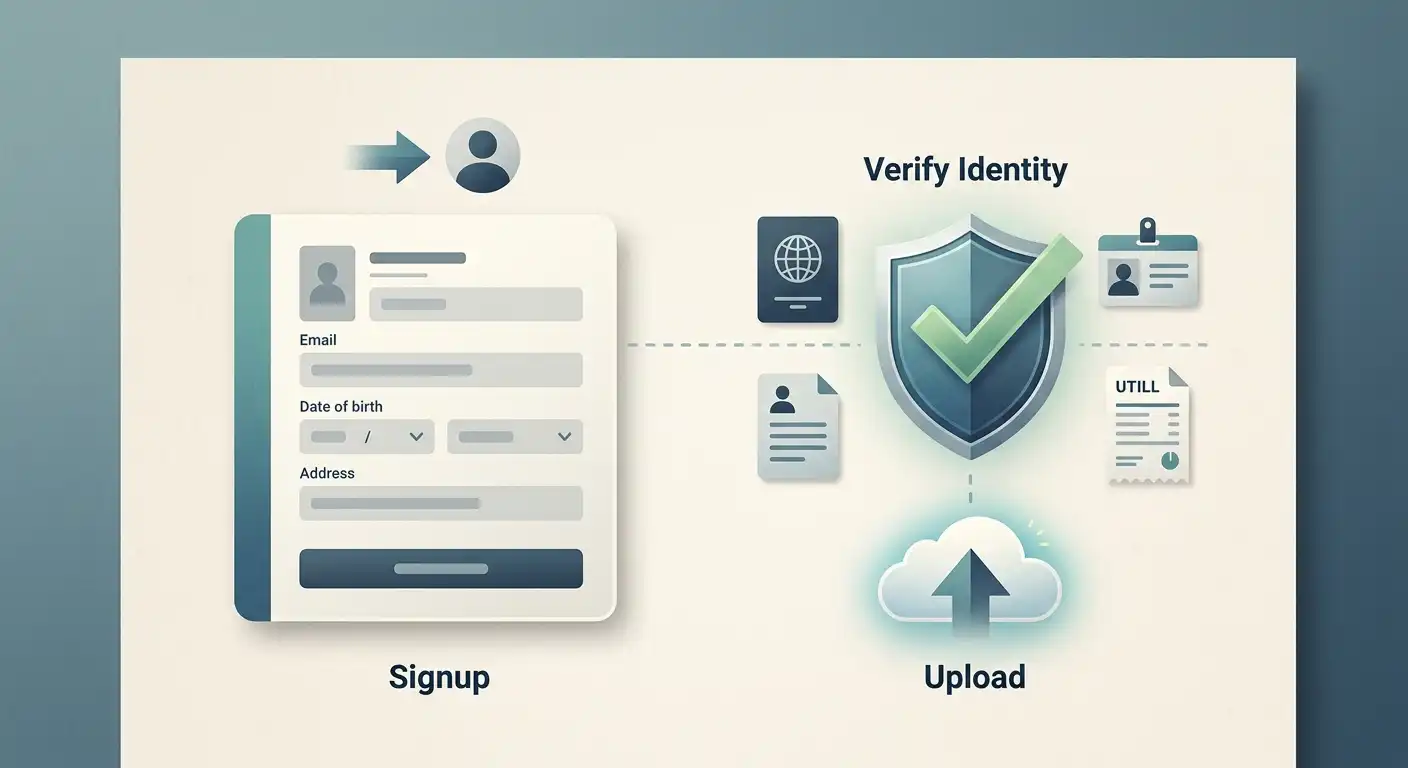
Casinos typically require photo identification, proof of residential address, and evidence that the payment method belongs to the account holder.
Casinos use SSL encryption to safeguard transactions and sensitive information. Encryption can help protect data in transit, but it does not show how an operator stores information, handles a dispute or processes a cash-out. A secure connection indicator is therefore a narrow technical signal, not a safety certificate. It says nothing about the legal status of the service or whether funds will be released.
Identity checks are a different control. Casinos conduct KYC procedures and require identity verification before withdrawals. Common requests include photo identification, proof of residential address and evidence that the payment method belongs to the account holder. The documents must match the account details closely enough for the operator to complete its review; mismatches can lead to further questions or a delayed withdrawal.
The timing matters financially. A balance shown on screen is not the same as a completed payment: verification may still be outstanding when a withdrawal is requested. The account terms should explain which documents are required, how they are submitted and what happens if additional checks are requested. If those conditions are unclear, the amount displayed in the account is not yet a reliable measure of money available outside it.
Document handling also deserves scrutiny. Before sending identity records, the operator’s privacy information should make clear what information is collected and how it is used. SSL encryption protects information in transit, but it cannot answer those questions on its own. Nor does a completed KYC check convert an offshore service into one authorised to offer online casino games in Australia.
Using a VPN to access a casino may result in winnings being voided, an account being closed or a deposit being lost. Concealing a location does not remove the underlying risk; it can add another dispute over account access or payment. Technical protections and identity verification are controls with limited jobs. Neither resolves the question of whether the service may legally provide gambling to people in Australia.
The Australian restriction concerns the games being offered, not the country named in a casino’s branding. Under the Interactive Gambling Act 2001, operators must not provide real-money online casino games to people located in Australia. Online slots and casino games such as blackjack are therefore prohibited services when offered to Australian customers.
The category is broader than slot machines. Blackjack, roulette, poker and other table games fall within the same prohibited interactive gambling framework when supplied online for money. Changing the game’s name, format or presentation does not alter the relevant point: it is an online casino game offered for real-money play to someone in Australia.
This also separates casino gaming from other online gambling products. The legal status of one product cannot be inferred from another. In-play online sports betting, for instance, is separately illegal; it is not a basis for treating online casino games as permitted. The restriction on casino games stands on its own.
The law addresses the operator’s provision of the service. It does not explicitly make an individual player’s use of an offshore casino site a criminal offence. That distinction does not turn the service into a lawful Australian casino product, nor does it create a local entitlement to play. The prohibition is on operators supplying the games to people in Australia.
An offshore label does not change the location of the customer or the nature of the game. A site describing itself as a Curaçao gaming casino may still be offering slots or table games to someone physically in Australia. The relevant question here is what is being offered and where the customer is located—not how the operator describes its games.
Using a VPN to reach a casino site does not remove the practical risk. Access through a VPN may lead to winnings being voided, an account being closed or a deposit being lost. Those are material possible outcomes, not a way to make the underlying offer lawful.
The cost calculation is therefore straightforward: an Australian resident is dealing with a game category that operators are prohibited from supplying for real-money online play in Australia. A foreign location in the site’s name, or a different route to the website, does not change that classification.
A licence claim is a statement to verify, not a conclusion. For services that may lawfully operate in Australia, the relevant check is whether the wagering service appears on ACMA’s public register as holding a valid Australian licence. ACMA also directs people to its website and the national register for information about legal gambling products available in the market.
The check needs to match the service, not merely a brand name. A website may use a trading name that differs from the company named in its terms or licence information. Compare the operator and service details shown on the site with the register entry. If those details do not correspond, the claim has not been established. A badge, certificate image or statement that a service is regulated overseas is not a substitute for an Australian register entry.
Verification Process
Identify the Operator
Note the exact service name and the company identified in the terms.
Check the Register
Consult ACMA’s public register for a matching wagering-service entry and valid Australian licence.
Assess the Result
Treat a missing entry, a mismatch in details, or an offshore-only claim as insufficient evidence of Australian authorisation.
The register has a specific purpose: identifying wagering services with a valid Australian licence. It is not a directory that makes every gambling product lawful if a business appears somewhere in it. In particular, an offshore licence does not authorise an operator to offer online casino games to people in Australia. A listing for a wagering service must not be read as approval for a different product or activity.
This distinction matters when evaluating pages presenting a Curaçao licence as proof that a casino is suitable for Australian customers. The claim may describe an offshore licence, but it does not answer the local-authorisation question. Searching for a list of Curaçao casino sites or a ranking of the best Curaçao casinos cannot replace checking the Australian register—and cannot alter the legal status of online casino games in Australia.
A practical verification record can be kept without ranking operators:
If a service is not shown as holding the relevant Australian licence, it should not be described as licensed in Australia. Nor does the absence of a player offence under the Interactive Gambling Act make an offshore casino authorised to provide its service. Those are separate questions: one concerns the operator’s permission, the other the player’s liability.
A VPN does not change the licence position. Using one to access a casino may lead to winnings being voided, an account being closed and deposits being lost. It can also obscure the actual location relevant to the service’s terms, without creating Australian authorisation.
The financial test is straightforward: if the Australian licence claim cannot be matched against ACMA’s register, its value as evidence is zero. An offshore certificate may have meaning in the jurisdiction that issued it; it does not supply the missing Australian entry.
A cryptocurrency payment option establishes only that a service says it accepts that payment method. It does not establish who operates the site, where the operator is authorised, which terms govern deposits and withdrawals, or whether the service may lawfully offer casino games in Australia. A wallet address or transaction record can show that a transfer occurred; it cannot, by itself, verify an operator’s licence or settle a dispute about an account balance.
The same distinction applies to claims about Curaçao. A reference to a Curaçao licence is not proof that a crypto casino is licensed in Australia. Nor does accepting digital assets create an exception to Australian gambling rules. Under the Interactive Gambling Act 2001, operators must not provide real-money online casino games to people in Australia. Online slots and table games such as blackjack are among the prohibited services.
Labels such as “top” or “recommended” are not evidence of suitability for Australian residents. A ranking may reflect editorial criteria, commercial relationships or a site’s own descriptions; none of those establishes Australian authorisation. The decisive point is not whether a service advertises cryptocurrency, but whether it is permitted to offer the relevant gambling service in Australia. ACMA and the public register are the relevant sources for checking Australian gambling services.
Payment terms require separate scrutiny from licensing claims. A cryptocurrency logo does not disclose the conditions for a withdrawal, the identity checks that may apply, or how a disagreement would be handled. Those details need to be stated in the operator’s terms, and promotional wording alone does not establish that a payment will be released. Without clear, applicable terms, the financial outcome cannot be calculated with confidence.
Unlicensed gambling services lack Australian consumer protections, and Australian laws may not assist if winnings are withheld. Using a VPN to reach a casino may also result in winnings being voided, an account being closed and the deposit being lost. A technical route to a website is not evidence that the service is authorised or that its payment promises are enforceable.
For a crypto casino claim, the useful distinction is therefore between evidence of a payment feature and evidence of legal authority. The first concerns how a site says funds move; the second concerns whether the operator may offer the service in Australia. Neither should be inferred from the other.
A newly opened website and legal permission to offer gambling in Australia are separate matters. A launch date can establish when a service began operating; it says nothing by itself about whether the operator may provide its games to people in Australia. The same distinction applies to casinos promoted as new Curaçao launches: the word “new” describes timing, not Australian status.
Under the Interactive Gambling Act 2001, operators cannot provide real-money online casino games to people located in Australia. The rule concerns the service offered and the customers it targets, not how recently the website appeared or where its business is based. An offshore licence does not convert a recent launch into authorisation under Australian law.
That matters because launch announcements often foreground features that are easy to advertise: a new site, games, payment options or an introductory offer. None answers the legal question. A claim about a launch should therefore be read as a claim about timing only; it is not evidence that the service is licensed in Australia or may lawfully offer online casino games here.
The practical test is not whether a site looks newly built, has a fresh brand or describes itself as newly established. For wagering services that require local authorisation, ACMA’s public register is the relevant place to check whether the service holds a valid Australian licence. A listing or claim connected to an offshore jurisdiction cannot stand in for that check.
The distinction is especially important when “new Curaçao casinos” is used as a label. It can refer to newly marketed online services, but that label does not establish a launch date, a local licence or permission to serve Australian customers. A recent launch is a business event. Australian authorisation is a legal status; one does not follow from the other.
“Casino in Curaçao” can describe an online service associated with the island or a physical venue there. Those are different things. A website’s Curaçao licence claim, even if genuine, does not establish that a land-based casino operates on the island; nor does a physical venue’s existence establish anything about an online operator’s status.
The distinction matters because online branding can make a location sound like a guarantee. It is not. A site may refer to Curaçao in its name, licensing information or terms without that wording answering whether visitors can attend a casino there. Conversely, the presence of a physical casino would not show that an online service is authorised to offer real-money games to Australians.
A definite answer about land-based casinos in Curaçao requires current, venue-specific information. The careful conclusion is narrower: an online casino claim and the existence of physical casinos are separate questions, and one cannot be used as proof of the other.
For Australians, the relevant local distinction remains the service being offered. Under the Interactive Gambling Act 2001, operators may not provide real-money online casino games to people in Australia. That rule concerns online services supplied to people in the country; it does not answer whether a visitor can enter a physical casino in Curaçao.
A Curaçao reference therefore cannot settle both questions at once. It may describe an online operator’s claimed licensing connection, but it is not evidence of a land-based venue, and it does not make online casino games lawful for Australians. Keeping those meanings separate avoids treating a place name as proof of a venue or as Australian authorisation.
The Interactive Gambling Act 2001 prohibits operators from offering online casino games to Australian residents, but it does not explicitly criminalise individual players for using offshore sites. An offshore licence does not authorise the service to offer those games in Australia.
Available methods may include PayID, e-wallets, bank transfers and cards. PayID and some e-wallets can be quick after approval, while bank transfers and card transactions can take several business days; POLi is mainly for deposits, and card withdrawals may be slower or unavailable.
Licensed operators provide deposit limits that can be set daily, weekly or monthly, and reputable platforms share information about gambling-related harm and direct players to professional support services in Australia.
PayID withdrawals can clear within minutes once released, and some e-wallet withdrawals can also be quick after approval. Bank transfers and card withdrawals can take several business days; cards may be slower or unavailable for withdrawals.
Casinos commonly ask for photo ID, proof of address and proof that you own the payment method used. Identity verification is generally required before withdrawals.
Written by the editors at Norco Casino.