Digital Plinko rounds follow a ball to an outcome zone, while slots use reels; labels alone do not establish a game's technical classification.

Plinko is often described alongside slots because online versions can share the same broad presentation: a player starts a round, an animated event unfolds, and the result is shown as a prize or multiplier. That resemblance is about how a game is packaged and encountered, not proof that every Plinko title is technically a slot or comes from a particular slot provider.
The familiar Plinko idea is a ball falling through a field of pegs before reaching one of several outcome zones. A digital version can turn that sequence into a self-contained round, with the landing point determining the displayed result. A slot, by contrast, is commonly represented through reels and symbol combinations. Both formats can use short rounds and chance-based outcomes, but their visual logic differs: one follows a descending path, the other presents symbols in a grid or reel layout.
That distinction matters when a title is called a Plinko slot or described as a slot machine. Such labels may reflect the category used by a website, a search result or a game lobby rather than a precise technical classification. They do not, by themselves, establish the game’s underlying mechanics, software supplier, return percentage or regulatory status. The label is a starting point for identifying the format, not a substitute for title-specific information.
When looking for Plinko casino options in Australia in 2026, it helps to check the available operator information before choosing where to play. This list provides a concise reference to the stated licensing, deposit and payout details.
Roby Casino
Roby Casino is listed with a Curacao eGaming licence held by Roby Games Ltd.
Playfina Casino
Playfina Casino is listed with a Curacao eGaming licence held by Hollycorn N.V. since 2017. Its minimum deposit is A$20–30, depending on the offer.
WinSpirit Casino
WinSpirit Casino is listed with Curacao eGaming licence OGL/2024/923/0383, issued to Antillephone N.V. The minimum deposit is A$30.
Lucky Dreams
Lucky Dreams is listed with a Curacao licence and a A$20 minimum deposit via POLi.
Bizzo Casino
Bizzo Casino is listed with a Curacao Gaming Control Board licence held by TechSolutions Group N.V.
House of Pokies
House of Pokies lists an international iGaming licence, though the jurisdiction is not named. PayID payouts are stated as taking 1–24 hours; the minimum deposit is A$30, or A$10 with PayID.
7Bit Casino
7Bit Casino is listed as operating under a Curacao licence, with Dama N.V. as its operator.
Golden Pokies
Golden Pokies is listed with a Curacao licence.
SkyCrown
SkyCrown is listed with a Tobique Gaming Commission licence. Its stated payout times are around 10–15 minutes for crypto and 1–5 days for fiat; the minimum deposit is A$30.
Ricky Casino
Ricky Casino lists crypto payouts in under an hour and PayID payouts in 1–3 business days. The minimum deposit is A$20, or A$30 to qualify for the bonus.
The same applies to branded names. A phrase such as “Gods of Plinko” may refer to a particular title, but the words alone do not confirm who developed it or whether it follows the mechanics of another game with a similar name. A title’s provider should be established from its own information panel or other direct documentation. It should not be inferred from the fact that the game resembles a slot, appears in a slot category or is discussed beside familiar slot products.
Provider-level figures need the same care. KA Gaming slot RTP percentages typically fall within a 94% to 96% range. That is a broad description of its slots, not a verified RTP for every game associated with the provider, and certainly not a figure that can be assigned automatically to a Plinko title. RTP is tied to a specific game and its published configuration. Without that title-level confirmation, applying a provider’s general range would turn a category statistic into a claim about an individual game.
RTP also describes a theoretical return over a very large volume of play, not a promised result for an individual round or session. It cannot show what a particular player will receive, and it does not identify the distribution of outcomes. Two games with the same stated RTP could present very different patterns of wins and losses. The percentage, where verified, is one term among several; it is not a forecast.
A useful description of a Plinko-style game therefore separates three questions. First, what does the player see and do during a round? Second, what specific title and provider are identified in the game information? Third, what mathematical details, if any, are published for that exact title? Answers to one question do not settle the others. A ball-and-peg animation identifies a visual format; it does not certify the provider or the RTP.
This is why a Plinko game may be grouped with slots in one catalogue and treated as a separate instant-win or arcade-style format elsewhere. Classification systems are not always consistent. Some categories are designed for browsing rather than technical accuracy, while others depend on the site’s own taxonomy. A label can explain where a game has been placed without explaining how its outcomes are generated.
The term “demo” describes another distinction, but not necessarily a separate game format. It commonly signals that a version is presented for play without a cash balance being involved. Whether such a mode exists, and what it contains, depends on the particular title and platform. The word alone does not establish that the demonstration reproduces every setting or feature of another version.
A careful Plinko slots review should consequently avoid treating visual similarity as evidence. It can identify the game’s round structure, describe its interface and report the information attached to the named title. It should keep provider-level statistics separate from title-level figures and mark the difference between a confirmed value and a general range. That approach leaves less room for a familiar slot label to imply more than it proves.
The legal issue with an online Plinko casino in Australia is not the game’s name or presentation. It is whether an operator is providing a real-money online casino service to someone in Australia. The Interactive Gambling Act 2001 restricts that service, and the law treats online casino-style games offered to Australian customers—including slots and table games—as prohibited interactive gambling services. A Plinko product presented within that category does not become permissible merely because its branding differs from a conventional casino game.
This distinction matters when a site describes itself as a Plinko venue, offers a casino-style game through a browser or app, or combines the game with other online casino products. Labels such as “live” or “pokies” do not, by themselves, settle the legal question. The relevant boundary is the provision of the prohibited service to people physically in Australia. Nor does an operator’s overseas location or foreign licence make the Australian restriction disappear. A licence issued elsewhere is not permission to provide a service that Australian law prohibits offering here.
The restriction is directed at operators, not at players as a class. Players are not criminalised simply for using offshore sites. That does not turn an offshore service into a lawful Australian online casino, or remove the practical consequences of enforcement. The distinction is straightforward: the law places the prohibition on providing the service to people in Australia, while the player is not made criminally liable merely for accessing it. A site’s availability at a particular moment should not be mistaken for approval under Australian law.
The Australian Communications and Media Authority, usually referred to as ACMA, administers enforcement of the Interactive Gambling Act 2001 and oversees compliance with federal interactive gambling rules. Its role is not limited to publishing the legal position. Where a website provides a prohibited interactive gambling service, or advertises one to people in Australia, ACMA can ask Australian internet service providers to block access. The same enforcement route can therefore affect a site promoting a casino service as well as one hosting the service itself.
Blocking is a practical measure, not a change in the underlying rule. A website may be inaccessible because an access restriction has been applied; another domain, brand name or presentation does not establish that the underlying activity is permitted. Equally, a site appearing in search results or opening at a particular time does not amount to an Australian endorsement. The legal boundary depends on the service being offered to people in Australia, not on how easily a page can be reached.
ACMA’s enforcement record gives scale to that activity. Since November 2019, the authority has blocked more than 1,455 gambling and affiliate websites it identified as illegal, following enforcement action. Those blocks span both gambling services and sites associated with promoting them; the total is not a count of Plinko products specifically. It indicates that enforcement can extend beyond a single operator’s main website and can include advertising or affiliate pages connected with prohibited services.
There is a discrepancy in the reported count of illegal services that have left the Australian market since ACMA began enforcing the rules in 2017. One account puts the total above 210, while another gives a figure above 190. Those figures should not be silently combined or presented as one settled total. Both describe withdrawals following enforcement, but the difference means the precise count is not consistent across the reported versions. The broader point is narrower: ACMA’s work has included action associated with services withdrawing from Australia, as well as website blocking.
For searches about online Plinko, the useful distinction is therefore between a game description and the legal status of the service carrying it. A casino-style game offered for real money to people in Australia falls within the restrictions applying to online casino services. A foreign operator’s branding, licence or claim about its audience does not override that boundary. ACMA can pursue compliance through enforcement action and requests to internet service providers, including action against websites that provide prohibited services or advertise them locally. This is the Australian context for online casino-style offerings, not an assurance that a particular site is lawful, available or approved.
A Plinko game presented for real-money play may look simple on screen, but a withdrawal depends on conditions outside the game itself. For Australian readers, that practical question sits within a clear legal boundary: the Interactive Gambling Act 2001 prohibits operators from providing real-money online casino services to people in Australia.
The first figure to check is the minimum withdrawal threshold. Offshore sites commonly set that floor between A$75 and A$150. A balance below the stated minimum may therefore be unavailable for withdrawal at that point, even if it appears in an account. The threshold is a condition for submitting a withdrawal request; it is not a promise that a request will be approved or that the full displayed balance will arrive.
That distinction matters when a search concerns Plinko played for real money, including a version labelled “2.0” or described as a slot. The game’s name does not determine the cashout rules. Those sit in the operator’s payment and account terms. A useful reading separates three amounts: the balance shown, the minimum amount eligible to request, and the amount ultimately paid. Treating them as interchangeable turns a payment condition into a misleading headline.
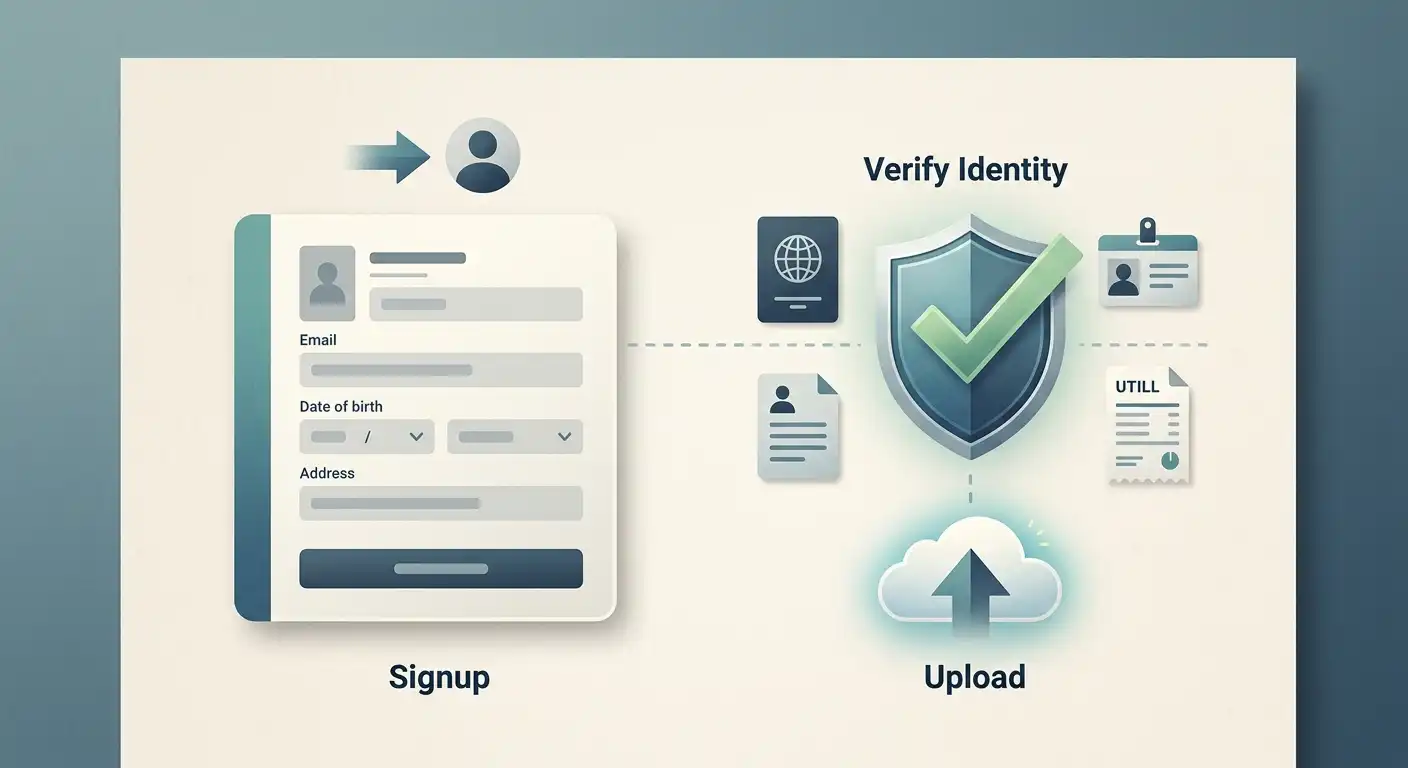
A first cashout commonly brings a KYC check. Documents requested can include a passport or driver’s licence and a utility bill. These establish identity and address; they are not optional extras merely because the account has already been used to play.
The timing of a check can affect when a withdrawal moves forward. A request may be subject to document review before payment, so the presence of a balance alone does not mean funds are immediately available. The practical sequence is account balance, eligibility under the stated withdrawal threshold, any required KYC, and then the payment process. Each stage is separate.
A document request also makes privacy a material consideration. Identity records and proof of address are sensitive information. Before any account is opened or personal material is sent to an offshore service, the handling of those documents becomes part of the risk assessment, alongside the cashout conditions. This is not a reason to assume that a service is safe because it asks for standard documents; a familiar KYC list does not establish the quality of an operator’s data practices.
Withdrawal Sequence
Balance Check
Verify if the account balance meets the operator's minimum withdrawal threshold (commonly between A$75 and A$150).
KYC Verification
Provide required identity documents, such as a passport, driver's licence, and a utility bill.
Payment Process
Once documents are reviewed and thresholds are met, the funds move through the final payment process.
A minimum withdrawal amount answers only whether the requested sum reaches the stated floor. It does not settle whether the account meets every other term. A balance can be above the threshold while a separate check remains outstanding. Conversely, a displayed amount below the floor may not qualify for a request under the site’s stated rules.
The distinction is particularly relevant to searches for a Plinko withdrawal in Australia. The amount shown in an offshore account is not equivalent to cash in an Australian bank account. The minimum is one condition in the process, while identity checks are another. Neither should be mistaken for a guaranteed payout.
Promotional balance creates a further accounting issue, but it belongs to a different calculation: bonus funds are not cash and can carry wagering requirements before bonus-derived winnings become withdrawable. A balance that combines different types of funds may therefore require more than a glance at the total. The relevant terms determine which amounts are eligible and what conditions apply.
Players are not criminalised for using offshore sites, but that does not convert an offshore operator into a locally authorised casino or remove the practical uncertainty around a cashout. Anyone aged under 18 must not gamble; for adults, the financial risk remains real, and gambling can cause serious harm to vulnerable people.
The cleanest way to read any withdrawal claim is to keep the figures and conditions separate: the balance displayed, the minimum cashout threshold, the documents required for a first withdrawal, and the status of any bonus-derived funds. A phrase such as “real-money Plinko” describes a payment context, not a payment guarantee.
A Plinko-style casino game and a progressive jackpot are separate mechanisms. The game’s ordinary result comes from its own rules; a jackpot is an additional prize feature with eligibility conditions. A ball landing in a particular place does not, by itself, establish that a progressive prize is available or that a bet qualified for it.
Progressive jackpots increase as play contributes to a shared prize pool. The pool may be local to one machine, or linked across a wider network. In pokie terms, a standalone progressive is attached to an individual machine, while a networked progressive draws contributions across multiple machines or, in an online setting, an operator’s fleet. The size of a network does not change the central condition: only eligible play contributes to, or qualifies for, the relevant prize under its rules.
That distinction matters when a game presents a jackpot beside its ordinary payout information. The jackpot amount is not an indication of the expected return from a regular round, and it is not automatically available to every player using the game. A Plinko title may have no progressive jackpot at all; the presence of a ball-drop format does not imply a linked prize pool. The terms for the specific game determine whether such a feature exists.
Where a progressive is offered, two figures deserve separate attention: the contribution rate and the minimum bet required to qualify. A specialist review recommends checking both, but the applicable conditions belong to the game’s own stated rules. A contribution rate describes how eligible play feeds the pool. The minimum bet defines the threshold for participation in the jackpot feature. Neither measure establishes the chance of winning, and meeting a threshold is not a route to a prize.
Some games set a minimum qualifying bet; A$1.00 is one example, not a universal requirement. A lower bet may still produce an ordinary game result while failing to qualify for the progressive. In that case, the player has paid for the round but has not met the jackpot condition. The distinction can be easy to miss when the interface places the prize prominently and the eligibility rule in separate terms.
A useful comparison therefore keeps the amounts in separate columns: the stake for the ordinary round, the minimum stake for jackpot eligibility, and the contribution rule for the pool. If the rules do not make clear whether every bet qualifies, whether qualification depends on stake size, or how contributions are calculated, the jackpot figure alone cannot fill those gaps. It is a displayed pool, not a complete description of the bet.
This is also why jackpot size should not be treated as a measure of value. A larger pool may reflect activity across linked machines or a network, but it does not tell how often a qualifying event occurs or what share of play reaches the pool. Those are different questions, and the displayed total answers neither.
For Plinko games in particular, the key check is whether the prize is part of the game’s mechanics or merely presented alongside them. A ball’s path and final position explain the round’s result; jackpot eligibility depends on the stated conditions attached to that prize. Without that distinction, ordinary play can be mistaken for participation in a progressive feature.
Casino gambling can cause serious harm, particularly for vulnerable people. In Australia, real-money online casino services are prohibited for operators to provide to people located in the country; this mechanics distinction is not an invitation to access such services.
A useful Plinko review is less a verdict than a record of what was checked. A star rating cannot establish which game was examined, whether its rules match the description, or what conditions attach to any advertised bonus. Those points need separate evidence.
Names such as Plinko Rush, Plinko Verde and Plinko Deluxe can appear in titles, promotional material or descriptions of different products. A review should identify the specific game and the operator associated with it, rather than treating a familiar name as proof that two pages refer to the same thing. The same applies to claims connecting Plinko with a public figure or a “free” version: the label alone does not show who provides the game or whether any balance is withdrawable.
The most useful details are testable. A review can state when it checked the page, quote the relevant rule accurately and distinguish what it observed from what the operator claims. If a term cannot be located or confirmed, a confident rating does not fill the gap. “What is Plinko?” is answered more reliably by identifying the actual rules and conditions than by repeating a promotional description.
Bonus arithmetic is one point where a review can be precise. A specialist review gives an example of a $100 bonus carrying a 40x wagering requirement: the required turnover is $4,000 in bets before bonus-derived winnings can be withdrawn. That is an illustration of the stated terms in that review, not a universal condition for Plinko or every casino offer. The calculation also does not mean that the bonus is cash: it remains subject to the wagering condition, and the amount wagered is not the amount received.
Bonus Calculation
Determine Turnover
Multiply the bonus amount by the wagering requirement (e.g., $100 bonus × 40x = $4,000 required turnover).
Apply Contribution Rate
Calculate how much a bet counts toward the total (e.g., a $100 blackjack bet at a 10% contribution rate adds $10 to the turnover).
Withdrawal Eligibility
Complete the total required turnover before bonus-derived winnings can be withdrawn.
A sound review therefore separates the game description from the offer attached to it. It should make clear which balance is being discussed, what the wagering multiple applies to, and what event permits withdrawal. If the terms are incomplete, ambiguous or detached from the specific offer, the resulting rating has limited financial value.
The same standard applies to broad claims about a Plinko casino experience. Specific rules and conditions can be checked; adjectives such as “best” or “trusted” cannot substitute for them. A review that shows its working gives a clearer basis for judging its claims than one that relies on a score alone.
Plinko may be presented as a casino-style game, but the label does not change the rules governing online gambling in Australia. Under the Interactive Gambling Act 2001, operators cannot provide real-money online casino games to people physically located in Australia. The restriction applies to online casino services, not merely to a particular game name or format.
Offshore casino sites may accept Australian payments while operating under licences issued elsewhere. That arrangement does not make the service locally authorised or remove the Australian restriction on operators. ACMA enforces the federal rules, including by seeking website blocks. The distinction matters: players are not criminalised simply for using an offshore site, but that does not mean the service is lawful for an operator to provide in Australia or that a player has local consumer protections equivalent to those of a regulated domestic casino market.
The financial risks also need to be kept in their proper category. A reported figure for Victorian poker-machine losses is not evidence about Plinko, online or otherwise. Gamble.com.au reported that Victorian players lost $2.6 billion on pokies over the year covered by its report, more than $44.7 million above the 2015 figure. Those amounts describe poker-machine losses in Victoria; they cannot establish how much people lose on a different game, or how many Australians play it.
The same caution applies to policy proposals. Gamble.com.au reported that Senator Nick Xenophon and MP Andrew Wilkie had proposed limiting poker-machine bets to $1. A proposed limit is not the same as an enacted rule, and a proposal about pokies does not establish a limit for Plinko. Treating the two as interchangeable would blur both the policy status and the games being discussed.
For any form of gambling, money set aside for play remains money at risk, not an income plan. Gambling can cause serious harm, particularly for vulnerable people. Australian residents must be at least 18 to gamble; age eligibility does not change the legal boundary for online casino services.
A free-play label can describe more than one arrangement. A demo may use a display balance that exists only inside the game; it can show how a Plinko-style game behaves without creating money that can be withdrawn. A promotional credit or free spin is different: it may be attached to an account and governed by conditions that restrict whether any resulting balance can be paid out.
The distinction is accounting, not cosmetic. A demo balance is not a deposit, a prize or a claim against an operator. A displayed win in that mode therefore has no cash value. Promotional funds may appear alongside a cash balance, but the figures should not be treated as interchangeable. The terms determine which funds are eligible for withdrawal and whether play must be completed first.
Free spins also do not necessarily mean unrestricted play. They may apply only to specified games, expire under stated conditions or produce winnings subject to wagering checks. One specialist review describes bonus-derived funds as carrying wagering requirements in the 30–50x range; that is a report of the terms it examined, not a fixed rule for every offer. The relevant calculation depends on the specific offer and its wording.
A “free” label does not establish that a demo or free-spin feature is available at any particular site. Nor does it turn an online casino service into a lawful offering to people in Australia. The Interactive Gambling Act 2001 restricts operators from providing real-money online casino games to people physically located in the country, and ACMA enforces those rules.
The useful comparison is between the balance shown and the balance that could actually be withdrawn, if any. Where a mode is genuinely a demo, there is no cash-out value to calculate. Where promotional credit is involved, the withdrawal conditions, eligible games and treatment of resulting winnings define the economic value. If those terms are unclear, the displayed balance alone answers nothing.
Free play is not a risk-free substitute for real-money gambling for everyone: gambling-related harm can be serious, particularly for vulnerable people. Anyone under 18 must not gamble.
A Plinko game’s payment method and its game mechanics are separate matters. Searches for crypto-funded Plinko or a Plinko casino script can mix those ideas: a script concerns software, while a crypto withdrawal concerns how a balance is transferred and converted. Neither label establishes the amount that will reach a recipient.
A specialist review reports that crypto withdrawals can clear faster than other methods, but speed is only one part of the settlement. Network fees may be deducted during transfer, and a conversion spread can reduce the value when crypto is exchanged for another currency. The amount shown before withdrawal is therefore not necessarily the amount received.
The calculation is straightforward in structure, even when the terms are not: start with the balance eligible for withdrawal, subtract any stated transfer fee, then account for the exchange rate and conversion spread applied to the transaction. If the displayed rate differs from the rate used to convert the funds, the difference is a cost. A quick transfer can still produce a smaller net amount.
The relevant terms are the asset being sent, the destination asset or currency, who pays the network fee, and how conversion is priced. A quoted processing time does not answer those questions. Nor does a statement that a payment is made in crypto establish that the entire displayed balance will arrive unchanged.
For Australian readers, this is a payment calculation, not an endorsement of an online casino service. The legal restrictions on providing real-money online casino games to people in Australia remain separate from the choice of payment rail. Crypto does not alter the nature of the service or remove the need to distinguish a displayed balance from net proceeds.
Crypto Net Proceeds
Identify Eligible Balance
Start with the total balance eligible for withdrawal.
Deduct Fees
Subtract any stated network transfer fees.
Convert Currency
Apply the exchange rate and conversion spread to determine the final amount that arrives.
The useful comparison is therefore not simply “crypto versus bank transfer.” It is the final amount after fees and conversion, alongside the stated processing conditions. Without those terms, speed alone is an incomplete measure of value.
A bonus is a conditional credit, not cash available for withdrawal. Any winnings derived from it may remain subject to wagering checks, and the stated requirement determines how much qualifying stake must be recorded before withdrawal eligibility begins. A specialist review describes requirements in the range of 30–50 times the bonus amount; that is a reported range, not a universal rule.
The arithmetic is direct when the terms specify the base. A 40-times requirement applied to a $100 bonus means $4,000 in bets must be made before bonus-derived winnings can be withdrawn. That total is turnover, not a fee and not a target return. It does not establish that the balance will survive long enough to complete the requirement.
The calculation can also depend on which game contributes. A specialist review reports blackjack contributing only 10% toward wagering requirements. Under that condition, a $100 blackjack stake would count as $10 of qualifying turnover. The nominal bet and the amount credited against the requirement are therefore not necessarily the same figure. A lower contribution rate stretches the required play; the advertised multiple alone does not show the full cost.
Terms should be read for the wagering base, eligible games, contribution rates, expiry conditions and treatment of winnings. If a no-deposit offer is described, the absence of an initial deposit does not turn restricted bonus funds into withdrawable cash. A title such as Gods of Plinko does not change the accounting: only the applicable written terms determine whether any credited amount can be released.
These conditions are especially important in Australia, where real-money online casino services are prohibited for operators serving people in the country. An offshore bonus description is not an invitation or a guarantee of access. The useful figure is not the headline credit, but the turnover required, the games that count, and the amount—if any—that becomes eligible for withdrawal after the conditions are met.
A Plinko page attached to a lucky-themed name or a review-site label is not, by itself, evidence that the game, its rules or the operator have been checked. The useful material is specific: the game’s stated provider, the published rules, the return information for that particular title and the conditions attached to any feature. A general figure for a provider’s other slots does not establish the return of a Plinko game.
A review written for another country also has limited value in Australia. A UK-facing page may describe a market’s services or protections that do not apply to someone located in Australia. Likewise, a review carrying a familiar editorial brand does not change the legal position of the service it discusses. The Interactive Gambling Act 2001 prohibits operators from providing real-money online casino games to people in Australia.
Access claims need the same scrutiny. The Australian Communications and Media Authority (ACMA) can seek website blocking by Australian internet providers, and has used that power against offshore gambling services. It reports blocking more than 1,455 illegal gambling and affiliate websites since November 2019. Its enforcement history is also described with differing totals for services that withdrew from Australia: one account gives more than 210, while another gives more than 190 since 2017.
The practical test is whether a claim can be matched to the exact game and the relevant market, rather than repeated across review pages. A title’s branding, a favourable rating or a country label cannot establish that an offshore casino is authorised to offer it in Australia. ACMA blocking activity is a further reason to treat availability claims as conditional, not as proof of dependable access.
Published by the Norco Casino team.