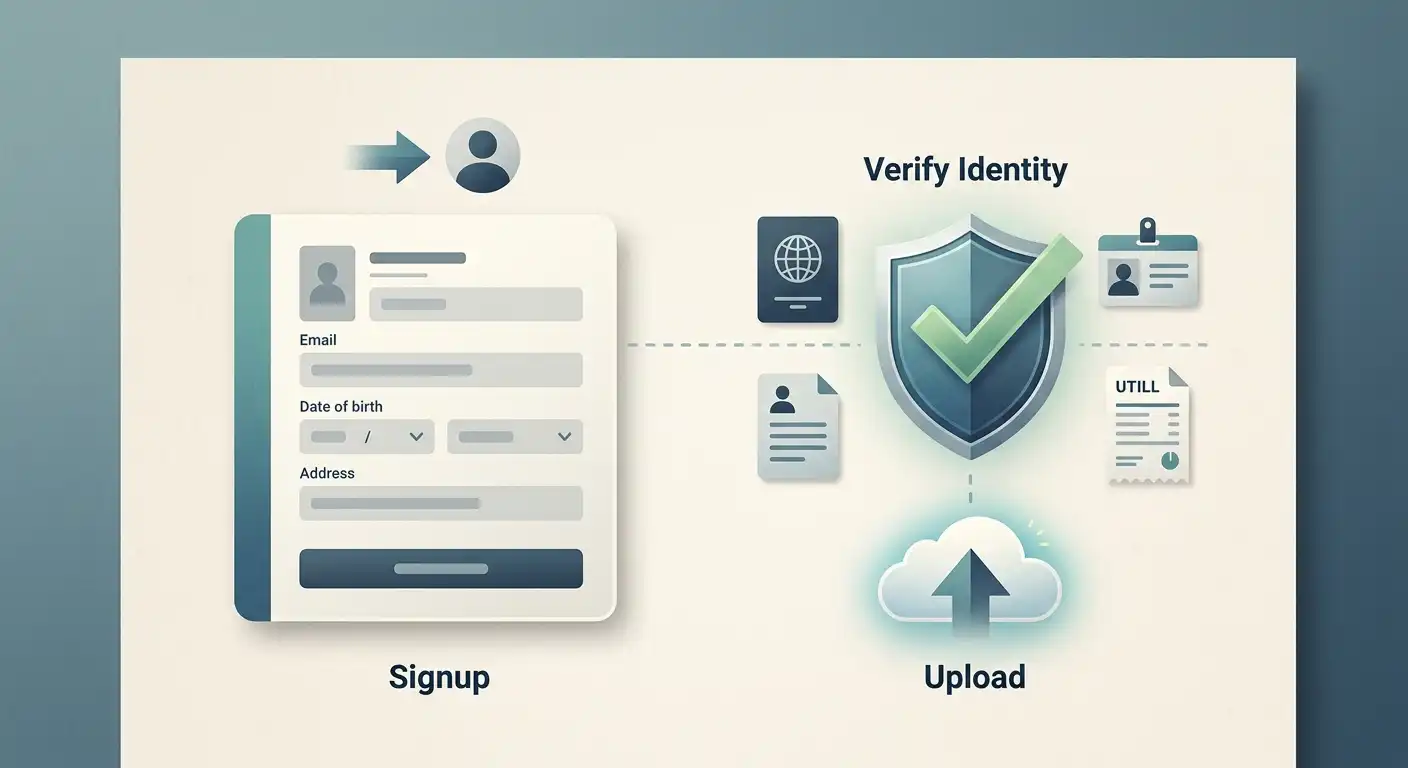
The payment method depends on whether funds come through a mobile carrier account or are confirmed from a bank account in an app.

“Pay by phone” can describe two different payment routes. Phone-bill billing means a purchase is charged through a mobile carrier, such as being added to a phone account or deducted from prepaid credit. PayID is not that kind of charge: it is a bank payment started and confirmed in a banking app. The fact that both routes may involve a mobile phone does not make them interchangeable.
That distinction matters when a payment page uses broad labels such as “mobile payment” or “pay by phone”. Those words alone do not establish whether a transaction will appear on a telecommunications bill, come from a bank account, or use another method. The payment route should be identified by the action required: carrier billing involves the mobile account; PayID involves a bank-linked payment confirmed in the banking app.
For PayID, the deposit sequence is straightforward in outline. The account holder selects PayID on the payment page, enters the intended amount, then opens the banking app and confirms the transfer. The transfer is initiated from the bank account, not authorised as a charge through the mobile carrier. A phone may be used to access both services, but the source of funds and the payment instruction are different.
PayID deposits can reach a casino account within seconds; the stated arrival range is typically 3 to 15 seconds. That timing applies to the PayID transfer, not to a phone-bill payment. It also describes the transfer arriving, not every step that may occur on a payment page or account. A quick bank transfer cannot be taken as evidence that a carrier-billed purchase is available or that it would be processed on the same schedule.
A useful test is to look at what the final confirmation screen asks for. If it directs the payer to a banking app to approve a PayID transfer, the payment is bank-based. If it proposes adding a charge to a mobile account, that is carrier billing. A page that merely displays a mobile-friendly layout, accepts a phone number as an identifier, or can be opened on a smartphone does not thereby offer phone-bill billing. Device, identifier and funding source are separate details.
The distinction is especially important for searches about mobile casino games, online slots or paying a casino bill through a phone. Those phrases describe an intended use or device, not proof of a payment option. PayID’s use of identifiers such as a mobile number can also cause confusion: an identifier links a payment to a bank account, while the money still moves through the banking system. It is not a charge to the phone account associated with that number.
No carrier-billing availability should be inferred from PayID instructions. Conversely, the existence of a mobile payment page does not confirm PayID acceptance. A payment method needs to be named and presented at the point of payment; a vague “mobile” label is not enough to establish its mechanics. Where the payment method is unclear, treating it as equivalent to PayID—or assuming that PayID means a phone-bill charge—would misstate how the money is funded.
There is a separate legal issue in Australia. Under the Interactive Gambling Act 2001, operators are prohibited from providing real-money online casino games, including slots, poker and table games, to people located in Australia. This applies regardless of whether a payment page refers to a phone bill, PayID or another method. Payment terminology does not change the status of the underlying service, and this distinction is not an endorsement of using an online casino.
For a financial comparison, the relevant question is therefore not simply whether a casino can be accessed by phone. It is whether the stated payment is a carrier charge or a bank transfer, what account funds it, and what the confirmation step actually authorises. PayID has a defined bank-app process and a transfer arrival time; those details should not be presented as the mechanics of phone-bill billing. A mobile screen is only the interface. The payment route is determined by where the money comes from and how the transaction is approved.
Paying by phone can make casino deposits more convenient, but available payment options and cash-out details vary. Use this list as a starting point and check the current payment terms before depositing.
Roby Casino
Roby Casino is listed with a Curacao eGaming licence held by Roby Games Ltd.
Playfina Casino
Playfina Casino has operated under a Curacao eGaming licence held by Hollycorn N.V. since 2017. The minimum deposit is A$20–30, depending on the offer.
WinSpirit Casino
WinSpirit Casino holds Curacao eGaming licence OGL/2024/923/0383, issued to Antillephone N.V. Its minimum deposit is A$30.
Lucky Dreams
Lucky Dreams is listed with a Curacao licence. Its minimum deposit is A$20 when using POLi.
Bizzo Casino
Bizzo Casino is licensed by the Curacao Gaming Control Board, with TechSolutions Group N.V. named as the operator.
House of Pokies
House of Pokies lists an international iGaming licence, though the source does not name the jurisdiction. PayID payouts are listed at 1–24 hours, and the minimum deposit is A$30, or A$10 when using PayID.
7Bit Casino
7Bit Casino is listed as Curacao-licensed and operated by Dama N.V.
Golden Pokies
Golden Pokies is listed with a Curacao licence.
SkyCrown
SkyCrown is licensed by the Tobique Gaming Commission. Its listed payout speeds are around 10–15 minutes for crypto and 1–5 days for fiat; the minimum deposit is A$30.
Ricky Casino
Ricky Casino lists crypto payouts under one hour and PayID payouts in 1–3 business days. The minimum deposit is A$20, or A$30 to qualify for the bonus.
In Australian payment terminology, “pay by phone” can refer to a PayID transfer made using a mobile number as the recipient’s identifier. The number identifies a bank-linked PayID; it does not turn a purchase into a charge on a mobile phone bill. The money moves from a bank account through the New Payments Platform (NPP).
PayID is a payment service operating through the NPP, Australia’s real-time payments infrastructure. It allows people to send or receive money using an identifier linked to an account, such as a mobile number or email address, instead of entering traditional bank details for each transfer. The identifier is a way to direct a payment, not a separate source of funds.
That distinction matters when a casino describes a deposit as “by phone.” A genuine PayID transaction is authorised through banking services and draws on the linked bank account. A carrier-billed payment, by contrast, would place a charge on a mobile account. These are different payment arrangements, even though both may involve a phone.
A phone number used for PayID is not necessarily a casino’s phone number, nor does entering a mobile number mean that the casino can bill the phone account. The number functions as an account identifier within the payment system. The bank account remains the source of the funds, and the NPP carries the payment between participating financial institutions.
The phrase “pay by phone casino” can therefore be misleading if it is read as a promise of mobile-bill billing. In Australia, it may instead be shorthand for a bank transfer initiated on a phone using PayID. The device used to authorise a payment and the route by which money is charged are separate matters: a banking app on a mobile device does not make the transaction a phone-bill payment.
PayID’s role is limited to payment identification and transfer. It does not certify a merchant, establish that a service is lawful, or provide a casino with permission to accept real-money gambling payments from people in Australia. A payment method’s availability cannot change the legal status of the service being paid for.
That legal distinction is material here. Australian law prohibits operators from providing real-money online casino services, including pokies and table games, to people located in the country. The payment network remains a general banking facility; its existence is not approval of every transaction a business might seek to receive.
For that reason, references to PayID in casino-related material should be read as descriptions of a bank-linked transfer method, not as evidence that phone-bill billing is offered or that a casino service is authorised in Australia. The term “phone” may describe the identifier or the device used to access the bank, while the underlying payment still comes from a bank account through the NPP.
A claim that an online casino accepts PayID does not establish that the service may lawfully offer real-money casino games to people in Australia. The Interactive Gambling Act 2001 prohibits operators from providing online casino games, including pokies, poker and table games, to customers physically located in the country. A payment option is not evidence of legal approval, and a deposit facility does not change the status of the service.
“Pay by phone” can also describe different payment arrangements. A charge added to a mobile phone account is not the same as a PayID transfer. With PayID, the payment is made from a bank account; the casino’s instructions may ask for a player ID or username in the transfer reference so that the incoming payment can be associated with an account. That reference is an account-matching detail, not a sign that a casino has been authorised to operate in Australia.
A PayID payment request should identify the recipient. The recipient name shown in the banking app is a key detail to compare with the payment instructions. If the displayed name does not match what the instructions say to expect, the discrepancy should not be treated as a minor formatting issue. It means the destination has not been clearly confirmed.
A matching name still proves only that the transfer is directed to the displayed recipient. It does not verify the operator’s legal status, establish that a casino account will be credited, or guarantee any later payout. Payment details and gambling-service legality are separate questions.
The reference field matters for a different reason. Some operators may need the player ID or username in that field to match a deposit automatically. If the reference is absent or entered incorrectly, the money may not appear as a credited balance and the case may need manual handling by support. A successful bank transfer and a casino account credit are therefore not interchangeable outcomes.
This distinction is especially important when instructions use several identifiers. A player ID, username, payment reference and PayID recipient are not necessarily the same thing. The reference should be the exact account identifier requested in the payment instructions, rather than a guessed name or a general note. An ambiguous or missing reference makes it harder to establish which account the payment was intended for.
A page that says it accepts PayID should provide coherent payment instructions before asking for a transfer. The stated recipient and the reference requirement should be clear and consistent. If the details change between the payment page and the banking app, or the recipient cannot be reconciled with the instructions, there is no sound basis for treating the request as correctly matched.
A payment claim should also be kept separate from claims about a site’s quality. “Best” or “top” describes no verifiable payment condition by itself. PayID availability cannot establish how withdrawals are handled, whether a balance is withdrawable, or whether the service is legally available to Australian residents. Those claims require separate evidence, and a payment badge is not a substitute.
For Australians, the central check comes before any account-matching question: whether the service is permitted to provide online casino games in the jurisdiction. Under the Interactive Gambling Act, real-money online casino services for people in Australia are prohibited. This makes a list of supposedly suitable casino sites an unsafe way to assess the issue; the presence of a payment method does not make an operator eligible for recommendation.
Where a payment has already been made, a missing or incorrect reference can explain why the casino account does not show the deposit automatically. The record in the banking app can help establish the recipient and the text entered in the reference field. Any support correspondence should be limited to resolving the payment record; it should not be taken as confirmation that the gambling service is lawful or that funds will be returned or credited on a particular schedule.
The key distinction is between the transfer reaching its stated destination and an operator assigning it to an individual account. The reference is intended to support that second step. If the identifier is wrong, manual review may be required; if the recipient is unclear, the underlying destination itself has not been established. Neither issue is resolved merely by a site describing its payment option as mobile-friendly.
PayID labels, recipient details and account references are payment mechanics, not endorsements. In Australia, the legal status of the casino service remains decisive, regardless of how clearly a deposit is described or how neatly a payment can be matched to a username.
PayID deposit minimums and bank transaction limits describe different parts of a payment. A casino’s minimum is the smallest amount its cashier will accept for a deposit. The bank’s limit is the ceiling it applies to a transfer. Meeting one does not establish that the other will allow the payment.
PayID casino deposit minimums are commonly listed at AUD 10–20. Some bank-transfer options accept deposits as low as AUD 5, but that figure should not be treated as a PayID minimum: the payment method matters. A low advertised starting amount is relevant only when it applies to the selected method and is available under the stated account terms.
The bank controls PayID transaction limits, and those limits vary between banks. As a result, a casino’s minimum cannot show whether a particular transfer will fit within the account’s available limit. The amount entered into a payment form, the bank’s permitted amount and any minimum imposed by the receiving service are separate conditions. A deposit figure is useful only when all applicable limits align.
A bonus has no standalone cash value simply because its advertised figure looks large. The relevant starting point is the amount that must be deposited to qualify. If an offer requires a deposit above the amount otherwise intended, the extra outlay is part of its cost. If the qualifying amount exceeds the bank’s available transaction limit, the offer is not accessible through that transfer as stated.
A practical comparison can be expressed without assuming any particular promotion:
Required deposit − amount intended to be deposited = additional amount committed to qualify.
That difference is not automatically a loss, nor is the bonus automatically worth the additional deposit. It is the amount exposed to the offer’s conditions before any possible withdrawal is considered. A larger bonus attached to a larger required deposit may produce a higher headline figure while demanding more money at the outset. The comparison therefore starts with the qualifying deposit, not the promotional amount.
Qualifying Deposit Calculation
Identify amounts
Determine the amount you intended to deposit and the minimum amount required to qualify for the bonus.
Calculate difference
Subtract the intended deposit from the required qualifying amount to find the additional funds committed.
Compare limits
Check if the total required amount fits within your bank's PayID transaction ceiling.
Where two offers have different entry thresholds, comparing their headline values alone leaves out the cash commitment. The more informative measure is the deposit required under each offer, considered alongside the payment method’s minimum and the bank’s transaction ceiling. If those figures do not fit the intended budget or available limit, the nominal bonus value does not repair the mismatch.
This also prevents a common category error: a low deposit minimum is not the same as a low-cost offer. The minimum describes the threshold for making a deposit. A promotion may require a different amount, and the applicable conditions determine what can be done with any credited bonus or resulting winnings. A deposit can satisfy the cashier’s minimum but still fail to qualify for a promotion.
“Best” is not a measurable payment condition by itself. In a comparison focused on deposits, it needs to be translated into concrete terms: the method accepted, the minimum required, the bank’s applicable limit, and the amount needed to qualify for an offer. Without those figures, a ranking based on bonus size says little about the cash commitment.
For a PayID comparison, the relevant minimum is the minimum specifically attached to PayID, not a lower figure shown for another transfer route. The bank’s limit also needs to be considered independently. A casino cannot set or guarantee the account’s bank limit, and a bank limit cannot confirm a casino’s own minimum or bonus eligibility rules.
The distinction matters particularly where a promotional threshold sits above the advertised deposit floor. A page may describe a small minimum deposit while the offer requires a larger qualifying payment. The smaller figure remains true as a general entry threshold, but it does not represent the amount needed to obtain that promotion. Those are different prices for different purposes.
A usable comparison records the deposit floor, promotional qualifying amount and the applicable PayID limit as separate entries. It should also distinguish PayID from any bank-transfer option that may have a different minimum. That approach keeps the arithmetic intact: the required deposit is the cash committed, while the bonus is conditional value rather than a discount applied automatically at checkout.
These figures are reference points, not a recommendation to deposit or a ranking of sites. In Australia, the Interactive Gambling Act 2001 prohibits operators from providing real-money online casino games to people physically located in the country. A payment threshold or bonus calculation does not change that legal position. The figures are best read as a way to understand how minimums and limits differ, not as a reason to fund an account.
“No wagering” describes one condition, not the value of a promotion as a whole. It may mean there is no stated playthrough requirement before eligible winnings can be withdrawn, but other terms can still restrict which funds qualify, how they may be used, or how much can be paid out. A no-deposit promotion also describes how the offer begins; it does not establish that any resulting balance is freely withdrawable.
The calculation therefore has several parts. A wagering requirement, if present, determines how much qualifying play is required before withdrawal. A maximum-bet rule can limit the stakes allowed while an offer is active. Game weighting determines whether particular games contribute fully, partly or not at all towards any requirement. A time limit can make an otherwise usable offer expire before its conditions are met. A cash-out cap can place a ceiling on the amount payable, even if the balance shown is higher.
These terms work together. A promotion labelled “no wagering” may still have a cash-out cap or expiry condition. Conversely, a no-deposit label does not remove wagering rules or game restrictions. The balance displayed on screen is not necessarily the amount eligible for withdrawal; the relevant figure is the amount remaining after every applicable condition has been applied.
A practical comparison should record the offer’s starting value, any required playthrough, the permitted maximum bet, game contribution rules, expiry point and maximum cash-out. If a term is absent or unclear, its effect cannot safely be counted as favourable. Promotional wording is not a substitute for the conditions that govern settlement.
Payment terminology does not change that arithmetic. A reference to phone billing, a mobile number, or a particular payment brand does not establish that an offer is available or that its winnings can be withdrawn through the same route. Nor does a payment method determine the promotion’s game restrictions or cash-out limit.
There is also a prior legal constraint in Australia: real-money online casino games, including pokies, are prohibited services when offered to people physically located in the country. Promotional labels do not alter that status. This is an explanation of how offer conditions affect their stated value, not an endorsement or invitation to use an online casino.
For any promotion assessed in another context, the usable amount is the amount payable after the rules have been applied—not the headline figure. When wagering, maximum-bet, weighting, time-limit or cash-out terms are unclear, the promotional value remains uncertain rather than automatically favourable.
A casino described as “not on BetStop” has not thereby demonstrated that it accepts phone-bill payments, PayID or any other deposit method. BetStop-related wording and payment eligibility are separate matters. Neither an absence from a register nor a payment logo establishes that an operator is suitable or lawful for people in Australia.
The legal position matters more than the payment label: under the Interactive Gambling Act 2001, operators may not provide real-money online casino games to people physically located in Australia. That includes casino-style games such as pokies, poker and table games. A claim about BetStop status does not change that position and should not be treated as a reason to use a site.
The same distinction applies to phone-bill searches. A payment description is not proof that the transaction will be charged to a mobile account, and a claim that a service is “not Boku” does not verify another payment route. The relevant question for any payment claim is what method is actually offered; BetStop wording cannot answer it. Nor does the phrase “no deposit” establish the terms or availability of a promotion. Those are separate claims, not consequences of a site’s stated register status.
Withdrawal readiness is a different practical issue. A specialist review reports that identity checks are generally required before a first withdrawal. Completing KYC verification before a withdrawal request can reduce the chance that paperwork becomes an additional processing step. This does not establish a payout time or guarantee approval: it addresses only the avoidable delay associated with completing checks late.
The distinction is financial as well as administrative. A withdrawal request may remain unready for processing while identity information is outstanding, even when the payment method itself is known. Completing checks early can remove that particular source of delay, but it cannot resolve other account or transaction conditions.
BetStop-related wording, phone-bill billing, PayID and withdrawal checks should therefore be assessed as separate matters. None substitutes for the others: register status does not prove a deposit route, a deposit route does not establish withdrawal readiness, and completed checks do not make an otherwise prohibited service lawful for Australian customers.
A payment option and a game catalogue are separate features. PayID, where offered, describes how money is sent from a bank account; it does not identify which games or promotions a service provides. The presence of PayID therefore cannot establish that a particular game, pokies category or bonus is available.
The same distinction applies to searches for casino bonuses associated with phone payments. A promotion is an offer with its own eligibility and terms, not a feature created by the payment method. A deposit route does not establish that a bonus exists, that it applies to a particular game, or that its value can be withdrawn. Game availability and promotion terms need to be assessed separately from how an account is funded.
In Australia, the legal position is decisive. The Interactive Gambling Act 2001 prohibits operators from providing real-money online casino services to people located in the country. That includes casino-style games such as pokies, poker and table games. A payment label, a claimed game selection or an advertised bonus does not change that restriction. Nor does describing a service as a phone casino make it an authorised Australian offering.
Country-specific wording matters too. A reference to Germany, for instance, does not establish what is available or lawful in Australia; rules and services cannot be inferred across borders from a label. Likewise, seeing Australian payment terminology on a page does not prove that its games or promotions are intended or permitted for Australian residents.
For financial comparisons, the practical distinction is between the mechanism that moves funds and the conditions attached to any offer. Those are separate questions, and neither answers whether real-money online casino games may be provided in Australia. A bonus headline cannot override the legal status of the underlying service.
The careful reading is therefore narrow: PayID acceptance says something about a payment route, not the catalogue, promotion eligibility or legality of real-money casino play. Games and bonuses should not be treated as available simply because a site mentions them alongside a phone-based payment option.
PayID settlement and a casino’s account processing are separate stages. PayID transfers use the New Payments Platform (NPP) and can clear within minutes after release. That describes movement of money between accounts; it does not mean a casino has credited a deposit, approved a withdrawal or completed its own checks.
For a withdrawal, the casino must first process the request internally. A specialist review identifies that review stage, rather than the payment network, as a possible source of delay. Once a transfer is released, the NPP can settle it in real time, but the network cannot shorten the operator’s queue or decide whether a request meets its conditions. A fast payment rail therefore does not establish a fast payout.
This distinction matters when payment timing is described as if it were one continuous event. The relevant sequence is casino review, release of the transfer, then settlement through PayID. The first stage belongs to the operator; the final stage belongs to the payment system. Reporting only the time associated with settlement leaves out the part that may control when funds are sent.
The same separation applies to deposits. A transfer can clear through the NPP while the casino’s own account records have not yet been updated. Network settlement is evidence that the payment moved, not evidence that a gaming account has been approved or credited.
There is also a legal boundary specific to Australia. Under the Interactive Gambling Act 2001, providing real-money online casino games to people physically located in Australia is illegal for operators. Payment terminology does not change that status, and a functioning transfer method is not proof that a service is lawful or available to Australian residents.
Accordingly, claims about mobile-funded pokies or online casino payouts should be assessed by identifying which clock is being described: payment settlement or operator processing. They are not interchangeable measures. PayID’s speed concerns the transfer after release; the casino’s decision and handling time remain separate.
PayID and a credit card use different payment rails. PayID moves money from a bank account through the New Payments Platform (NPP), using an identifier such as a mobile number or email address. A card payment instead draws on the card account and is handled through the card network and payment processor. A phone number used as a PayID identifier does not turn a bank transfer into a charge on a mobile or credit account.
Visa and Mastercard are widely accepted for deposits, according to specialist casino payment reviews. That does not establish that either card can be used to receive a withdrawal. Card payouts may be slower than deposits or unavailable, depending on the processor. The deposit route and the route for receiving funds are separate terms, not two sides of a guaranteed round trip.
Some operators may require a withdrawal to return through the original deposit method where that is possible, as described in specialist casino payment reviews. The qualification matters: if the processor cannot pay back to the card, another withdrawal route may be needed. A card logo at deposit stage therefore says little about the final payout arrangement.
For a comparison, the useful details are the accepted deposit methods, the available withdrawal methods, and any rule linking the two. A bank-account-based PayID transfer should be assessed as such; it is not a substitute name for a credit-card payment, and card acceptance does not prove that card cash-outs are supported.
The terms “phone payment” and “credit payment” can also refer to billing a purchase to a mobile account. That is distinct from both PayID and card processing. A payment option should be classified by where the funds come from and how a withdrawal can be returned, rather than by whether a phone appears somewhere in the process.
Real-money online casino services are prohibited for operators serving people physically located in Australia under the Interactive Gambling Act 2001. Payment terminology does not alter that legal position.
Yes, some PayID casinos accept withdrawal requests via PayID. For verified accounts at top-rated PayID casinos, requests are typically reviewed and approved within 2–6 hours; the casino’s processing is the main potential bottleneck.
Minimum deposits commonly start at AUD 10–20, though some accept as little as AUD 5. There is no single maximum: PayID limits are set by your bank, and most major Australian banks allow AUD 1,000–5,000 per transaction.
PayID casino deposits commonly start at AUD 10–20, while some casinos accept deposits as low as AUD 5.
PayID deposits typically reach a casino account within 3–15 seconds. The casino may need your player ID or username in the payment reference to credit the deposit automatically.
Yes, casinos that support PayID withdrawals can send winnings through PayID. The casino’s review and approval process may take longer than the transfer itself.
Published by the Norco Casino team.