Australian law, offshore terms and payment conditions shape what players can verify about online casino access and potential winnings.

The legal distinction is between the person placing a bet and the company providing the game. Under the Interactive Gambling Act 2001, companies cannot offer real-money online pokies, poker, or casino table games to people in Australia without a domestic licence. No licences for online casinos have been issued, so there is no Australian-licensed online casino.
That makes the phrase “Australian online casino” a description of the intended audience, not proof that an operator holds permission to serve it. A site may be accessible from Australia and may accept Australian customers, but neither fact gives it a domestic licence. The central legal restriction falls on the provider offering the prohibited service to people located in Australia.
The Act’s penalties underline the difference in exposure. For an individual who violates it, the maximum daily penalty is AU$360,000; for a company, it is AU$1.8 million per day. These figures concern violations of the Act, not a penalty imposed on a player simply for gambling at an offshore site. The law targets operators rather than individual players, and Australians may legally play on offshore sites that accept them.
Choosing an online casino for an Australian audience calls for checking the available details rather than relying on a name alone. This list offers a concise reference to the stated licensing, deposit and payout information for each operator.
Roby Casino
Roby Casino is listed with a Curaçao eGaming licence held by Roby Games Ltd.
Playfina Casino
Playfina Casino is listed with a Curaçao eGaming licence held by Hollycorn N.V. since 2017. Its minimum deposit is A$20–30, depending on the offer.
WinSpirit Casino
WinSpirit Casino is listed with Curaçao eGaming licence OGL/2024/923/0383, issued through Antillephone N.V. The minimum deposit is A$30.
Lucky Dreams
Lucky Dreams is listed with a Curaçao licence and a A$20 minimum deposit via POLi.
Bizzo Casino
Bizzo Casino is listed with a Curaçao Gaming Control Board licence, with TechSolutions Group N.V. named as the operator.
House of Pokies
House of Pokies lists an international iGaming licence, though its jurisdiction is not specified. PayID payouts are stated as taking 1–24 hours, and the minimum deposit is A$30, or A$10 when using PayID.
7Bit Casino
7Bit Casino is listed as Curaçao-licensed and operated by Dama N.V.
Golden Pokies
Golden Pokies is listed with a Curaçao licence.
SkyCrown
SkyCrown is listed with a Tobique Gaming Commission licence. Its stated payout times are around 10–15 minutes for crypto and 1–5 days for fiat, with a A$30 minimum deposit.
Ricky Casino
Ricky Casino lists crypto payouts in under an hour and PayID payouts in 1–3 business days. The minimum deposit is A$20, or A$30 to qualify for the bonus.
That player position does not make the service locally regulated. An offshore operator does not acquire Australian approval by accepting Australian customers, and a foreign licence is not a domestic licence. There is therefore no local online-casino licensing framework under which an Australian player can check that a site has been authorised to provide real-money casino games in Australia.
The Australian Communications and Media Authority (ACMA) is the domestic regulator responsible for enforcing the Act. Its enforcement includes directing internet service providers to restrict access to illegal offshore gambling websites through a blocklist. This is a practical barrier to access, rather than a transfer of responsibility for the operator to an Australian regulator. A site being reachable at a particular moment does not establish that it is lawful for the operator to serve Australian customers.
The distinction matters when assessing what “best” can mean in this market. It cannot mean best among locally licensed online casinos: there are none. Nor does a polished site, an Australian-facing offer or successful access establish domestic oversight. The legal position is narrower and less reassuring than a familiar licensing system: operators are prohibited from providing the service without a local licence, while individual players are not subject to that operator-side prohibition.
The absence of local licensing also has a direct consequence if a dispute arises. If an offshore casino refuses to pay winnings, Australian players have no legal recourse in Australia against it. That is not the same as saying every offshore operator will refuse payment, and it is not a prediction about an individual account. It means that the domestic legal system does not provide a route for recovering winnings from such a casino in that situation.
These points should be kept separate. The Act prohibits companies from offering real-money online casino games to people in Australia without a domestic licence; no such licence has been issued. ACMA works to restrict access to illegal offshore services. The law does not make the individual player liable merely for playing on an offshore site that accepts them. But the lack of player liability does not create local protection or turn an offshore casino into an Australian-regulated one.
For anyone comparing an online casino aimed at Australians, the legal baseline is therefore not a choice among local licences. There is no local licence to compare, and accepting Australian players does not fill that gap. The operator-side prohibition, ACMA’s access restrictions and the absence of Australian legal recourse in a non-payment dispute define the limits of the domestic position.
The name of a pokie, a displayed balance and a successful deposit do not establish what can ultimately be withdrawn. For Australian-facing offshore sites, the terms governing withdrawals and game settings can matter more to the final outcome than the presentation of the site. A review of those terms should separate three questions: what can be paid, what must be supplied before payment, and which version of a game is being offered.
Caps on how much may be paid during a stated period, potentially turning jackpots into multi-year payout plans.
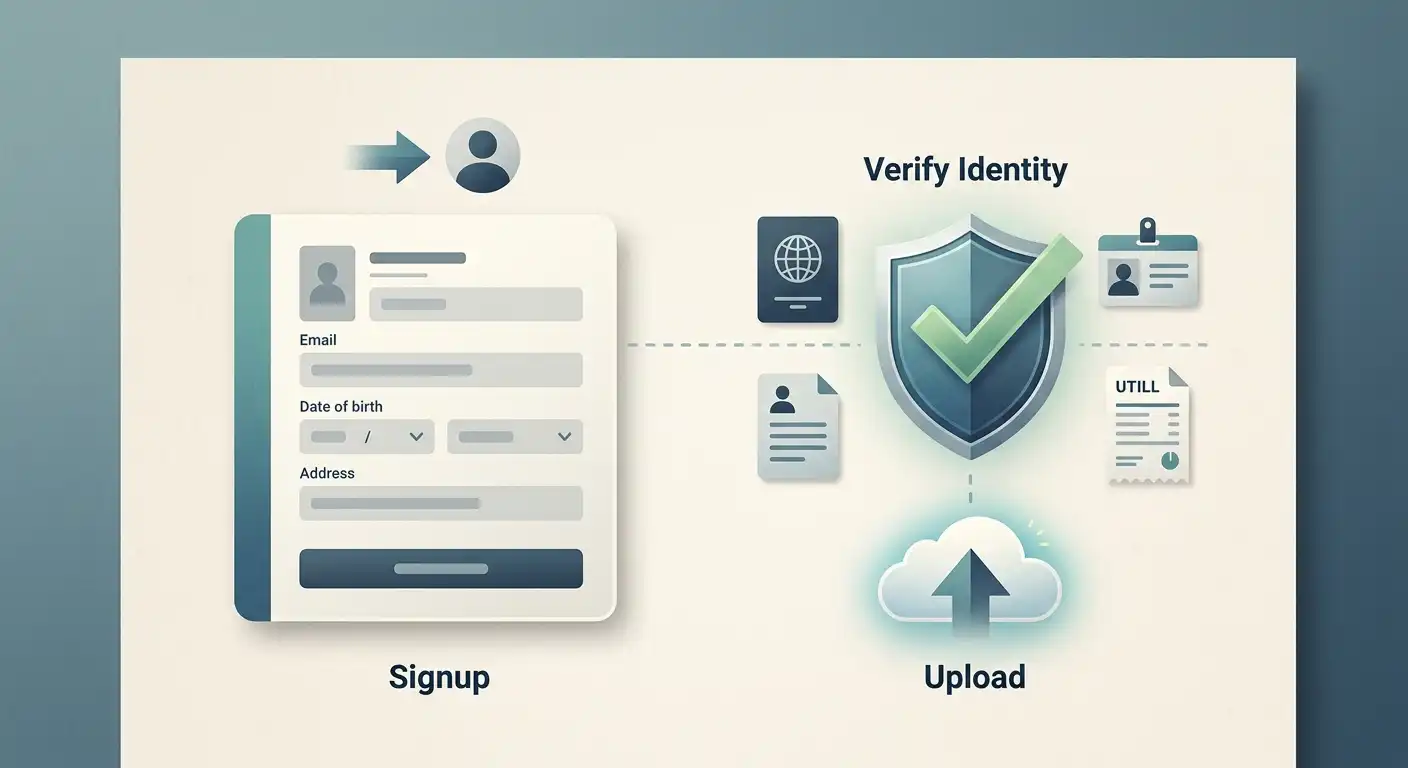
Requirements for documents such as ID, proof of address, or selfies before funds can be released.
Variations in return-to-player percentages for the same game title across different casinos.
A withdrawal cap is not the same as a limit on the balance shown in an account. It sets a ceiling on how much may be paid during a stated period, with any remaining amount potentially waiting for later payment periods. A specialist review reports that some casinos set weekly or monthly withdrawal limits between $5,000 and $10,000. Under such a limit, a $50,000 jackpot may become a multi-year payout plan rather than a single transfer.
The calculation is straightforward in principle: compare the amount owed with the maximum payable in each period, then check how the terms treat the unpaid balance. The practical result can still depend on details such as whether the cap applies per account or per payment method, and whether it resets by week or month. Those conditions should be stated in the operator’s terms. If the wording is unclear, the advertised jackpot amount is not enough to estimate when the full balance could be received.
A cap can also matter when a site describes a large win prominently but gives little attention to payment restrictions. Those are separate figures with separate consequences. The win describes the amount credited; the cap governs the pace at which cash can leave the account.
A specialist review reports that casinos may require identity verification before a first withdrawal. The requested documents can include an identity document, proof of address and, in some cases, a photograph of the account holder holding the identity document. The relevant terms should explain what is required and how documents are submitted.
This requirement affects access to funds, not merely account administration. A balance can appear available while a payment remains conditional on documents being accepted. Names and addresses that differ across account details and supporting records can also create questions that need to be resolved before a request proceeds. The site’s stated process should therefore be read alongside its withdrawal rules, rather than after a win.
The scope of this check is narrow: it concerns what an offshore operator may ask for under its own conditions. It does not establish that the operator is locally accountable, or that a displayed payment policy guarantees a particular result. A policy is only useful to the extent that its requirements and consequences are clear.
A specialist review notes that some game providers give casinos a choice of return-to-player settings for a particular pokie. The same title can therefore operate with different return percentages at different casinos. A familiar game name is not, by itself, evidence that the settings match those seen elsewhere.
This matters when comparing Australian-facing casino sites or their games. A published return figure should be tied to the specific game configuration offered, not assumed from the title alone. If the site does not identify the applicable setting, a comparison based only on the game’s name leaves a material detail unresolved. The possible difference is in the configured return, not in a promise about the result of any individual spin.
These checks do not turn an offshore site into a trusted one. They make the financial and game conditions more legible: the withdrawal ceiling, the documents required to release funds, and the return setting attached to a pokie. Where those terms are absent or ambiguous, the uncertainty remains with the account holder rather than disappearing behind a headline offer.
The amount needed to open a real-money balance is only the first part of the calculation. A deposit makes funds available for play; it does not establish that a later withdrawal will be straightforward, or that the full balance will be available immediately. For Australian players, the payment figures and account checks described by a casino are therefore separate terms to assess.
A specialist review reports minimum deposits of AU$10 to AU$20 at most operators it covers, with some accepting AU$5. Those figures describe entry points, not the cost of playing or the amount needed to make a withdrawal. A low minimum can make an account easy to fund while leaving the conditions for cashing out unchanged. Deposit size alone says little about the overall transaction.
The relevant comparison is between what goes in and what can be accessed later. Before treating a displayed balance as money available to withdraw, the account holder needs to know whether the site requires identity checks, what documents it requests, and whether the payment method affects the route out. The deposit screen answers only the first question in the transaction.
A specialist review reports that casinos commonly ask for identity verification before the first withdrawal. The requested material may include a photograph of an identity document and proof of address; some sites may also ask for a selfie with the identity document. These checks can turn a withdrawal request into a pending process while the account information is reviewed. The balance may appear on screen before the documents have been accepted, so the displayed figure and an approved payout are not the same thing.
The paperwork also has to match the account details. A difference between the name or address registered with the casino and the details shown on submitted documents can create a point requiring clarification. That is an administrative issue, but its financial effect is practical: funds cannot be treated as accessible until the operator completes its checks and processes the request. The stated verification process matters as much as the headline deposit threshold.
A transaction record helps separate the stages: the amount deposited, the balance shown, the withdrawal requested and the amount actually received. Each is a different figure. If the site explains its process clearly, the route from request to payment can be assessed before money is committed. If the terms leave the process unclear, the uncertainty belongs in the cost calculation rather than in an assumption that a displayed balance is cash in hand.
There is also a limit to what familiar Australian safeguards can establish in this setting. BetStop applies to Australian-licensed operators and does not bind offshore sites; there is no Australian-licensed online casino. A payment option or a completed deposit does not change that distinction. The ability to send funds is not evidence that winnings will be paid, just as an account balance is not proof that withdrawal conditions have been met.
For a real-money account, the useful figure is not simply the minimum deposit. It is the amount deposited alongside the documented steps required to make a withdrawal, and the point at which the operator regards the request as complete. Without that sequence, the entry price is visible while the cost of accessing a win remains unresolved.
A no-deposit offer is presented without requiring a deposit to activate it. That label describes the entry condition, not the amount that can ultimately be withdrawn. For an Australian reader assessing an offer described as a no-deposit casino bonus, the cash-out rule is therefore a separate term to identify. A balance shown on screen is not necessarily the balance payable.
A specialist review reports that free-spin offers may limit the winnings eligible for withdrawal. The practical effect is a gap between the amount displayed after play and the amount the terms allow to be cashed out. If winnings exceed the stated cap, the excess may not be payable under the offer. The cap, rather than the headline value of the spins, sets the ceiling relevant to the cash-out calculation.
That distinction matters when comparing descriptions of an Australian no-deposit offer. “Free” concerns the cost of entry; it does not establish that all resulting winnings can be withdrawn. A promotional page may foreground the spins or a potential prize, while the operative limit appears in the offer terms. Without checking that limit, the displayed value says little about the amount available for withdrawal.
The useful comparison is between the winnings credited and the amount permitted to leave the account under the offer. The smaller figure determines the cash-out ceiling where a cap applies. This is not a claim about how often caps appear or what their value is; the terms must be read for the specific offer. A label such as “new casino” does not answer that question, and a code does not replace the conditions attached to the promotion.
No-deposit offers should also be kept distinct from bonuses tied to a deposit. They have different entry conditions, so their terms need to be assessed on their own terms. A no-deposit label does not, by itself, specify a wagering calculation, guarantee a withdrawal, or establish the final amount payable. Those outcomes depend on the rules attached to the offer, including any cash-out cap.
A careful reading should locate the wording that defines eligible winnings and any maximum amount that may be withdrawn from the promotion. The relevant figure may be expressed as a limit on winnings rather than a limit on the account balance. Where the terms are unclear about whether the cap applies before or after other conditions, the headline should not be treated as a reliable calculation of cash received.
The same check applies to free spins described as a no-deposit bonus: the number or presentation of spins does not establish the cash value of any result. The point is narrower than whether the promotion sounds generous. It is whether the terms permit the resulting winnings to be withdrawn, and whether a stated cap reduces that amount.
For a casino offer aimed at Australians, the promotional description is packaging; the cash-out condition is the number that governs the potential payment. Where that condition cannot be found or interpreted, the headline alone cannot support a conclusion about what the offer is worth.
A newly encountered casino site can appear straightforward until a withdrawal is requested. Identity checks may then become a condition of releasing funds, rather than a step completed when an account is opened. A specialist casino review reports that most casinos require verification before a first withdrawal, although the exact process can differ between operators.
The documents described for this check include a photo of an identity document and proof of address. Some operators may also request a selfie showing the account holder holding that identity document. These are separate checks: one establishes identity, another supports the address on the account, and the selfie may help connect the person to the document. A registration that accepts basic details does not establish that the later verification has been completed.
Verification affects timing and access, not the amount shown in an account. If a withdrawal request triggers a document request, the money may remain unavailable until the operator has reviewed what was submitted. That makes the first cash-out a point at which the site’s stated process matters materially: an account balance and a payable amount are not necessarily the same thing while verification is outstanding.
The practical question is therefore not simply whether a site describes a check, but what it requires and when. The stated list should be clear enough to identify the documents needed for identity and address verification, and whether a selfie is part of the process. Any uncertainty about the required material can become a delay at the point when funds are being requested. A vague promise of a quick withdrawal does not answer that question.
A document request should also be read as a condition attached to access to funds, not as a minor administrative detail. The account holder’s name and address need to correspond with the information submitted for the check. Where a site asks for several forms of evidence, each request should be understood separately; supplying identity proof does not, by itself, establish address proof.
For someone assessing a new Australian-facing casino site, verification terms belong beside the withdrawal terms in the same review. The relevant distinction is between the balance displayed and the amount that can actually be withdrawn after the operator has completed its checks. If the process is unclear, the uncertainty is part of the cost of the offer, even when no fee is stated.
The first-withdrawal requirement also limits what can be inferred from an easy sign-up. A short registration form says little about the later document check. Nor does a promotion, reward label or welcome message remove the need to satisfy the operator’s verification conditions. The value of an incentive cannot be assessed independently of the steps required before winnings become accessible.
A careful assessment records which identity and address documents are requested, whether a selfie is mentioned, and whether the site makes completion a precondition for the first withdrawal. Those details do not guarantee that a request will be approved; they establish the stated hurdle. If the requirements are not plain before funds are committed, the final amount available to the account holder remains less certain than the on-screen balance suggests.
Verification Process
Document Submission
Provide a photo of an identity document and proof of address to the operator.
Additional Security
Submit a selfie holding the identity document if requested by the casino.
Information Review
Wait for the operator to ensure submitted details correspond exactly with account registration.
A signup bonus has two separate figures: the amount credited and the turnover required before withdrawal. The multiplier alone does not show the full cost. The key detail is what the operator applies it to: the bonus by itself, or the deposit and bonus combined.
A specialist review uses 35x or lower as a screening benchmark and describes requirements above 40x as punishing. Those are assessments, not universal terms; the written offer sets the actual calculation. A bonus code does not change the arithmetic unless its conditions specify a different multiplier or calculation base.
For a $500 bonus with a 40x wagering requirement applied to the bonus alone:
$500 × 40 = $20,000 in required bets
That is turnover, not a fee and not a forecast of how much will be lost. The amount records the total bets required under the stated condition. In this example, the $20,000 must be wagered before any winnings can be withdrawn. A large credited balance can therefore come with a substantial turnover obligation.
The distinction between turnover and profit matters. A requirement to place $20,000 in bets does not mean the account must end with $20,000, nor does completing the turnover guarantee a positive balance. The calculation establishes the hurdle, not the final cash-out.
Some terms calculate wagering against the deposit plus the bonus. If a $500 deposit receives a $500 bonus and the 35x multiplier applies to the combined $1,000:
($500 + $500) × 35 = $35,000 in required bets
The multiplier is lower than 40x in the first example, but the required turnover is higher because the calculation base is larger. Comparing offers by the multiplier alone would miss that difference.
The relevant wording is often framed as wagering on the “bonus” or on “deposit plus bonus”. That phrase determines the starting figure. If the basis is unclear, the final requirement cannot be calculated reliably from the advertised bonus amount alone.
A practical comparison therefore records three terms together: the bonus value, the multiplier, and the amount to which the multiplier applies. The resulting turnover is the figure that has to be worked through before withdrawal eligibility. A code may make an offer visible, but it does not make its conditions less material. No-deposit offers are a separate structure; their cash-out conditions should not be folded into this deposit-bonus calculation.
An app is a way to access a service, not evidence about the service behind it. A polished interface, a shortcut on a phone’s home screen or a claim of a dedicated app does not establish that a casino is licensed, that its games are fair or that its terms are transparent. The same distinction applies to a newly launched site: newness is a description, not a quality measure.
Crypto branding has the same evidential limit. A payment option says something about how a transaction may be made; it does not establish how a pokie is configured or how a dispute would be handled. Bitcoin is one payment method associated with online gambling, but its presence is not a test of a casino’s standards. Payment convenience and game integrity are separate questions.
A specialist review describes Skrill and Neteller as popular options for their speed and relative anonymity. Those characteristics concern the payment method, not the operator’s licensing or the settings used for a game. Anonymity is also relative: it should not be read as a promise that an account requires no checks or that a transaction cannot be linked to its user.
Game configuration requires its own scrutiny. A specialist review notes that some providers give casinos a choice of return-to-player settings for the same pokie. As a result, a familiar game title does not, by itself, establish that the version at one casino uses the same return percentage as the version elsewhere. An app listing, crypto symbol or provider logo cannot resolve that difference. Published information about the particular game configuration is more relevant, though it still does not predict an individual outcome.
Each spin is generated separately: the Random Number Generator determines the result anew rather than carrying forward a previous spin’s outcome. A run of wins does not make a loss due, and a run of losses does not make a win due. Historical results therefore cannot supply a reliable forecast for the next spin.
BetStop has a defined boundary: it applies to Australian-licensed operators and does not bind offshore sites. It should not be treated as a substitute for checking what controls apply to a particular service.
The practical distinction is between what a feature proves and what it merely presents. An app can indicate an access route; a crypto option can indicate a payment route; an e-wallet can indicate a method with reported speed and relative anonymity. None of those details, alone, establishes game settings, licensing or predictable returns.
A smaller screen does not change the financial effect of a deposit or the time spent on pokies. Mobile access is therefore best assessed by the controls available on the account, rather than by claims about an app or a streamlined interface. The relevant tools are deposit limits, loss limits, session time limits and self-exclusion. These are standard responsible-gambling measures, but their presence alone does not establish how easily they can be set, changed or enforced on a particular service.
The distinction between a control existing and a control being useful is practical. A deposit limit sets a boundary on funds added; a loss limit relates to the amount lost; a session time limit constrains time spent playing. Self-exclusion is a stronger step intended to prevent further access. The terms should state how each measure operates, including whether a limit can be increased immediately or only after a delay. If that process is unclear, the control cannot be treated as a dependable spending plan.
Mobile access can make it easier to return to a session during spare moments, but convenience is not a safeguard. A time limit is meaningful only if it interrupts play as described, while a loss limit matters only if it applies to the account’s activity as expected. The interface itself is not evidence that either control works. Terms and account settings need to be read together, with no assumption that a control available on one service will behave the same way on another.
BetStop is not a substitute for checking the scope of an exclusion. It applies only to Australian-licensed operators and does not bind offshore sites. Since no Australian-licensed online casino operates, registration with BetStop does not block access to offshore casino services. That boundary matters: an exclusion tool’s name does not extend its reach beyond the operators covered by it.
For a mobile user, the useful question is not whether a site can be opened on a phone, but whether limits can be set before play and whether the exclusion process is clear. If those controls are absent or uncertain, access from a pocket-sized screen does not make the underlying risk smaller.
Free spins and free chips are promotional labels, not cash equivalents. Their value depends on what the offer permits and on the results produced during play. A displayed amount or a set of spins therefore does not establish that the same value can be withdrawn, or that any winnings will result.
For pokies, outcomes are generated spin by spin. A Random Number Generator determines each result, and one spin does not influence the next. A run of losses does not make a win due; an earlier win does not make another more likely. The promotional label changes the terms under which play is offered, not the independence of the outcomes.
That distinction matters when comparing offers. A free-spin allocation describes an opportunity to play, while a free-chip offer describes promotional credit. Neither phrase, on its own, specifies the conditions attached to the offer or the final amount available to withdraw. Those details are set by the individual offer terms, so the headline wording is not a reliable measure of cash value.
The same principle applies to claims that free play creates a lower-risk route to a return. It may remove the need to fund a particular play with a deposit, but it cannot turn a random outcome into a predictable one. Promotional play can produce a result; it cannot establish in advance what that result will be.
For anyone assessing an offer associated with an online casino for Australian players, the useful distinction is between the promotional quantity and the financial outcome. Spins or chips are inputs to play, not a promised payout. The relevant terms determine how any result is treated, while the game’s random process determines the spin itself. A generous-looking allocation is still only an offer to play under stated conditions—not a guaranteed amount.
PayID is not a separate bank account or a casino licence. It is an alias layer on Australia’s New Payments Platform (NPP): a transfer can be directed using an email address, mobile number or ABN instead of entering conventional account details. For real-money gambling transactions, the PayID must first be linked to a bank account.
That link does not guarantee a transfer will be accepted. Some Australian banks, including members of the Big Four, have been reported to block PayID payments to known gambling merchants. A specialist review also reports that banks and card issuers are increasingly blocking transactions to known gambling sites. These are reports about changing bank practices, not a promise that every bank will handle a payment the same way. A declined transfer may therefore reflect the bank’s controls rather than a problem with the alias itself.
PayID’s presence as a payment option establishes only that a payment route is offered. It does not establish that a gambling operator is licensed, that its games are fair, or that its return-to-player settings are transparent. In Australia, real-money online casino services are prohibited for operators, and there is no domestic online casino licence.
BetStop applies to Australian-licensed operators; it does not bind offshore sites. Its presence or absence does not change how PayID works, and PayID should not be treated as a safeguard against offshore gambling.
The practical distinction is between the payment identifier and the institution authorising the transfer. PayID supplies the alias; the linked bank account and bank controls determine whether funds move. A payment method’s availability is not a substitute for checking the legal and financial consequences of the service receiving the money.
You must be at least 18 to gamble online in Australia, including on pokies.
Compare the bonus with the wagering required before winnings can be withdrawn. For example, a $500 bonus with a 40x requirement means $20,000 in bets; if the requirement applies to a $500 deposit plus a $500 bonus at 35x, it means $35,000 in bets.
Australian players may legally play on offshore sites that accept them, but companies cannot offer real-money online pokies to people in Australia without a domestic licence, and no such licences have been issued.
Published by the Norco Casino team.