Australia has no domestic online casino licences, so offshore trust claims require a different standard of scrutiny.

The phrase “most trusted online casino Australia” combines two different questions: whether an operator can lawfully serve people in Australia, and whether its conduct deserves confidence. Those questions are not interchangeable. A polished website or a claim of trust does not change the legal position, and legal status alone would not establish that an operator pays winnings fairly. In Australia, the first point is unusually clear: there is no domestic licence for an online casino.
The Interactive Gambling Act 2001 places the restriction on companies providing real-money online casino games to people in Australia. It prohibits services such as online pokies when offered to Australian residents without the required domestic licence, and no such casino licences have been issued. The result is not a local market of licensed online casinos from which a single trusted operator can be selected. A claim that an offshore casino is “trusted in Australia” cannot mean that it holds an Australian online casino licence.
The Australian Communications and Media Authority, or ACMA, is the national regulator responsible for enforcing the Act. Its role is directed at services and operators, not at assessing marketing labels such as “trusted” or “most trusted”. ACMA also blocks access to illegal offshore gambling sites, with internet service providers required to follow its blocklist. This enforcement means that offshore availability is not a stable substitute for domestic authorisation: access may be restricted, and an operator’s willingness to accept Australian customers does not make its service lawful to provide here.
A trust-focused casino shortlist is a useful starting point, but licensing and payment details are only part of deciding whether an online casino suits you. Check the current terms and whether the service is available to you in Australia before signing up.
Roby Casino
Roby Casino is listed with a Curacao eGaming licence held by Roby Games Ltd.
Playfina Casino
Playfina Casino is listed with a Curacao eGaming licence held by Hollycorn N.V. since 2017. Its minimum deposit is A$20–30, depending on the offer.
WinSpirit Casino
WinSpirit Casino is listed with Curacao eGaming licence OGL/2024/923/0383, issued to Antillephone N.V. Its minimum deposit is A$30.
Lucky Dreams
Lucky Dreams is listed with a Curacao licence and accepts a minimum deposit of A$20 via POLi.
Bizzo Casino
Bizzo Casino is listed with a Curacao Gaming Control Board licence held by TechSolutions Group N.V.
House of Pokies
House of Pokies lists an international iGaming licence, though the jurisdiction is not named in the source. PayID payouts are stated as taking 1–24 hours; the minimum deposit is A$30, or A$10 via PayID.
7Bit Casino
7Bit Casino is listed with a Curacao licence and is operated by Dama N.V.
Golden Pokies
Golden Pokies is listed with a Curacao licence.
SkyCrown
SkyCrown is listed with a Tobique Gaming Commission licence. Its stated payout times are around 10–15 minutes for crypto and 1–5 days for fiat; the minimum deposit is A$30.
Ricky Casino
Ricky Casino lists crypto payouts in under an hour and PayID payouts in 1–3 business days. The minimum deposit is A$20, or A$30 to qualify for the bonus.
That distinction matters because responsibility under the law does not fall equally on the operator and the player. The Act targets companies that provide the prohibited service, rather than making an individual player criminally liable merely for playing on an offshore site. Australians may therefore encounter offshore sites that accept them, and playing there does not itself make the player liable under this law. That does not create an Australian licence, however, or convert the operator into a locally regulated casino. “A player is not liable” and “the provider is authorised” are separate propositions.
For someone judging an online casino in Australia, “trusted” therefore needs a narrow definition. It cannot mean locally licensed, because no Australian-licensed online casino exists. It may express a belief about a company’s reputation or its own stated standards, but those are not equivalent to a domestic regulatory status. A headline describing the most trusted online casinos in Australia can sound like a ranking within an established licensed market. That is not the structure of the market described by the law.
The legal baseline also limits what a trust label can establish. An operator might present itself as reputable, but that description does not supply Australian authorisation. Nor does acceptance of Australian customers resolve the question of whether the service is permitted to offer real-money casino games here. The relevant legal restriction concerns the company providing those games, not the wording it uses to describe its business. Trust is an assessment; permission is a legal condition. One cannot stand in for the other.
The distinction should not be overstated in the opposite direction, either. The fact that a site operates offshore does not by itself establish that every claim about its conduct is false. It does mean that the Australian domestic licensing framework for online casinos cannot be used as reassurance about it. The sensible starting point is to separate what can be stated as law from what is an operator’s claim or a user’s judgment. “Trusted casino Australia” is not a legal category and does not identify a locally licensed service.
There is also a practical consequence to the absence of domestic licensing. A player using an offshore casino does not gain the protections associated with choosing an Australian-licensed online casino, because there is no such category to choose from. If a dispute arises, the local licensing status that might otherwise define a regulator’s jurisdiction and a route for local oversight is unavailable. The legal position is therefore not a quiet endorsement of offshore play; it is a boundary between the operator’s restrictions and the player’s lack of individual liability.
A careful reading of “trusted” begins with that boundary. In Australia, it cannot be verified by pointing to an online casino’s domestic licence, since none has been issued. ACMA enforces the law against prohibited services, and access to illegal offshore gambling sites can be blocked. At the same time, the Act’s focus on providers means that a player’s legal position is distinct from the company’s. Those facts explain what the word cannot prove; any further judgment about an offshore operator requires evidence beyond the label.
A site that accepts Australian players has established only that it can receive them, not that its games are fair or that winnings will be paid. Access is a practical fact; trust is a claim about conduct and outcomes. The two should not be treated as interchangeable.
This distinction matters because the visible features of an online casino can be easier to observe than the conditions behind them. A polished interface, familiar game titles or an Australian-facing offer may make a site appear established. None of those features, by itself, shows what return setting applies to a particular pokie or what will happen if a withdrawal is disputed. A label such as “trusted” is not a substitute for evidence about those terms.
A pokie’s advertised name does not necessarily identify its return setting. A specialist review reports that some game providers let casinos choose among multiple RTP settings for the same game. As a result, the version presented at one casino may not have the same stated return percentage as a version elsewhere. The game title alone cannot settle that comparison.
Even a stated RTP is not a forecast of an individual session. Each spin is a separate random event determined by a Random Number Generator. A published return percentage describes a game setting; it does not promise that a particular player, or a particular run of spins, will receive that return. The distinction is basic but financially important: a percentage attached to a game is not a payout commitment.
That leaves several separate questions where a site makes broad claims about trusted online pokies: which version is offered, what return setting applies, and whether the claim can be checked against information specific to that game at that site. If those details are not clear, the title and promotional language do not fill the gap. The word “trusted” does not reveal a setting.
Australian access can be mistaken for a recommendation because it makes a site feel locally relevant. It does not demonstrate that the operator has been independently assessed, that its games use a particular RTP setting, or that a dispute will be resolved in the player’s favour. Availability tells less than it appears to.
There is also a practical limit to access itself. The Australian Communications and Media Authority blocks illegal offshore gambling sites, and internet service providers must follow its blocklist. A site being reachable at one point does not prove that it is dependable or that access will remain unchanged. Conversely, a block is not a review of a site’s game fairness or its handling of a particular payment dispute. It is a separate matter.
The consequences of a disagreement are especially relevant to any assessment of trusted casino sites. If an offshore casino refuses to pay winnings, an Australian player cannot take that complaint to an Australian court for legal recourse against the operator. That makes a site’s own assurances a poor substitute for an enforceable remedy. The distinction is not about whether a site looks professional; it is about what options remain if its account of a transaction differs from the player’s.
Trust language is useful only when it points to something specific that can be examined. A statement about an RTP setting is more informative than a general assurance, but it still needs to identify the game version and the setting in question. A statement about paying winnings is not the same as evidence that a disputed payout can be enforced. A site’s acceptance of Australian players answers neither issue.
The same standard applies to rankings and endorsements. A high position in a list or a broad description such as “most trusted” does not, on its own, explain the basis for that judgement. Without a clear, relevant measure, the ranking is a verdict without its working. It may describe a publisher’s selection, but it does not establish how a particular site will perform when a real dispute arises.
A more careful assessment separates what is observable from what is asserted. The game’s return setting, if stated for the version offered, is a distinct piece of information from the operator’s general reputation. The random nature of each spin remains distinct from both. And the possibility of a payout dispute cannot be made harmless by a reassuring badge or a familiar brand name.
For anyone weighing trusted online pokies in Australia, the useful question is not whether a site uses the language of trust. It is whether each material claim is precise enough to assess—and whether that claim would still matter if the operator did not honour a win. In this market, those are separate tests, and presentation alone does not pass either one.
PayID is an alias service within Australia’s New Payments Platform (NPP). Instead of entering bank account details for a transfer, a payer can use an email address, mobile number or Australian Business Number (ABN) linked to the recipient’s account. The NPP is supported by all major Australian banks and uses end-to-end encryption. Those features describe how a payment instruction is routed and protected; they do not certify the business receiving the money.
To use PayID for real-money play at an online casino, the PayID must first be linked to a bank account. That is a banking setup requirement, not an account approval from a gambling regulator. Nor does a successful transfer establish that a site is authorised to offer online casino games in Australia. The Interactive Gambling Act 2001 prohibits operators from providing those services to people in Australia, and PayID does not alter that position.
The same distinction applies to searches for a trusted PayID casino or a reliable casino payout. A payment method can identify the route funds take into an account. It cannot establish whether game outcomes are fair, whether the published RTP corresponds to the setting actually used, or whether a withdrawal will be paid under the operator’s terms. A familiar bank-transfer interface is not an audit of the recipient.
One specialist affiliate review describes PayID as being treated like other qualifying deposit methods at the sites it recommends. That is a statement about the review’s selection and the payment classification it reports, not a general rule for every operator or a measure of trust. A deposit method’s status at a particular site says nothing by itself about the site’s licensing, fairness or RTP disclosure.
Bank controls can interrupt the transfer before it reaches a merchant. A specialist review reports that some Australian banks, including members of the Big Four, sometimes block PayID transfers to gambling merchants they identify. The restriction is applied at the banking end; it does not prove that the merchant is trustworthy or untrustworthy. It means that a listed payment option may not be usable from every bank account.
This matters when a payment page presents PayID as evidence of speed or reliability. The transfer route, the bank’s decision to permit it, and the operator’s handling of funds are separate stages. A transfer may be technically supported by the NPP while a bank blocks the particular recipient. If it proceeds, the payment still does not verify the operator’s conduct after receipt.
PayID therefore answers a narrow question: which alias can direct a bank transfer through the NPP? It does not answer whether an online casino is legally entitled to serve Australian customers, whether its games use disclosed settings, or whether it will honour a cash-out. Treating payment access as a trust badge merges three different matters—bank infrastructure, game integrity and operator conduct—into one label. The label is convenient; the evidence it implies is not there.
“Best” is a comparison label, not a promise that a casino will pay every win or resolve every dispute. A trusted online casino website cannot be identified by the strength of its own claims alone. The useful question is narrower: which terms can be checked before money is deposited, and what do those terms actually commit the operator to do?
A comparison is more meaningful when it separates evidence from opinion. Published rules can be examined for how they describe account conditions, withdrawal eligibility and the operator’s process for handling complaints. Those details do not establish that a future dispute will be decided fairly. They do, however, make the stated conditions visible and allow differences between sites to be compared rather than replaced with a broad trust label.
Reviews require the same distinction. A trusted casino review may describe an evaluator’s assessment, but it is not itself an enforceable promise from the operator. A favourable verdict cannot remove a restrictive term from the casino’s rules, and repeated praise does not change the consequences if a disagreement arises. The review is one piece of information; the conditions governing the account are another.
For an Australian player, that distinction has a concrete financial consequence. If an offshore casino keeps winnings instead of paying them, Australian players cannot rely on legal recourse in Australia to recover the money. A ranking, review score or “best” badge does not create that remedy. The loss exposure therefore remains part of the comparison, even when a site presents itself as dependable.
The phrase “best trusted online casino” can also collapse separate questions into one. A site may look polished, publish detailed terms or receive positive commentary, but none of those points alone proves that a particular claim will be honoured. A useful assessment records what is stated, what can be checked independently and what remains only an assurance. If the terms are unclear, the uncertainty belongs in the assessment; it should not be converted into a favourable rating.
The same discipline applies to games. Calling a game a trusted online slot says little about the wider conditions attached to the account or the site. A game title cannot establish how a complaint will be handled or whether a disputed balance will be released. “Trusted online casino games” is therefore not a substitute for assessing the terms under which play and payment are offered.
A defensible “best” comparison does not need to claim certainty. It can describe which conditions are clearer, which promises are documented, and where important questions remain unresolved. That is less dramatic than declaring a winner, but more useful for judging the amount of risk attached to a decision. No review can turn an offshore operator’s promise into an Australian remedy.
A bitcoin label describes a payment-related claim, not a measure of trust. It does not establish who operates a casino, what rules govern an account, whether game outcomes are fair or whether a balance can be withdrawn. Calling a service one of the most trusted bitcoin casinos therefore requires evidence beyond the currency named in its marketing.
The distinction matters because “accepts Bitcoin” can conceal several separate conditions. A meaningful payment description would identify whether an account is denominated in bitcoin or another currency, how a deposit is credited, how a withdrawal is calculated, and which fees or conversion rates apply. It would also set out any transaction restrictions. Without those terms, the currency name cannot show the amount that will reach an account or the amount that can later be paid out.
Dogecoin raises the same issue. A claim involving that currency is not confirmation that it is supported, nor does the claim establish how deposits, balances or withdrawals would be handled. Bitcoin and Dogecoin are different assets; treating one as evidence for the other would be an accounting error, not a shortcut.
The same standard applies to any proposed list of trusted bitcoin casinos. A list is not verification merely because it groups operators under a reassuring heading. The relevant question is what evidence supports each claim and whether it covers the specific payment terms, rather than just a logo, promotional phrase or general statement about cryptocurrency.
Cryptocurrency use also does not change an operator’s legal status in Australia. Payment terminology cannot create a local authorisation or remove the legal constraints applying to online casino services. The currency is a feature of a transaction, not a substitute for the rules governing the service.
For an online gambling casino, trust claims should be kept separate from payment claims. A disclosed bitcoin option, if one is offered, would answer only a narrow question about a payment method. It would not, by itself, settle operator accountability, game fairness, withdrawal conditions or the practical ability to enforce a dispute. In financial terms, a deposit route is one line in the transaction record; it is not an audit of the business behind it.
The careful conclusion is limited: cryptocurrency wording alone cannot substantiate a trusted-operator claim. Any assessment would depend on clear, specific terms and independently checkable evidence for the particular service and transaction. Without those, “trusted” remains a label, while the costs and conditions that determine the final amount remain unresolved.
A bonus is a conditional balance, not an amount that can automatically be withdrawn. Its headline value says little about the betting required to meet the offer. The key figure is the wagering requirement: the turnover multiplier applied to either the bonus alone or, under some terms, the deposit plus bonus.
A specialist review uses a requirement of 35x or less as a comparison point and describes anything above 40x as punishing. Those are review criteria, not a guarantee that an offer is favourable. The calculation still depends on the base amount to which the multiplier applies.
Consider a $500 bonus with a 40x requirement applied to the bonus itself. The required turnover is $500 × 40, or $20,000 in bets, before winnings can be withdrawn. That is the amount wagered over time, not a fee paid to the operator. It also is not a prediction of how much will remain: each bet can lose or win, so the balance may fall while the turnover requirement is being completed.
The base changes the result materially. If a 35x condition applies to a $500 deposit plus a $500 bonus, the calculation is ($500 + $500) × 35. The required turnover becomes $35,000. A lower multiplier therefore does not necessarily mean less wagering; the amount multiplied matters as much as the multiplier.
The offer needs to state whether turnover applies to the bonus alone or to the combined deposit and bonus. Without that distinction, a headline multiplier cannot be translated into a usable cash figure. A specialist review’s threshold can help frame a comparison, but the specific offer terms determine the arithmetic.
Bonus Turnover Calculation
Base Amount
Identify if the multiplier applies to the bonus alone ($500) or the deposit plus bonus ($500 + $500 = $1,000).
Multiplier Application
Apply the wagering requirement (e.g., 35x or 40x) to the base amount.
Total Required Betting
Calculate the final turnover: $500 × 40 = $20,000, or ($500 + $500) × 35 = $35,000.
Free spins require a separate check: a specialist review notes that these offers may limit how much of the resulting winnings can be cashed out. In that case, completing any stated wagering condition would not by itself establish the amount ultimately payable. The cap is another term to include in the calculation, not a minor footnote.
For real-money play, the practical comparison is between the cash deposited, the balance included in the turnover base, the multiplier and any cash-out cap. A bonus can enlarge the displayed balance while also increasing the total betting needed to unlock it. The extra balance is only useful to the extent its conditions can be met without wagering more than the resulting funds justify.
A displayed balance and money available in a bank account are different things. Withdrawal conditions determine how much can leave the account, when a request can be processed and what checks must be completed first. A claim of fast withdrawals does not answer any of those questions on its own.
Specialist casino reviews report that some operators set weekly or monthly withdrawal caps of $5,000–$10,000. A $50,000 jackpot subject to such a cap may therefore be paid in instalments rather than as one transfer; some reviews describe the resulting schedule as stretching over years. The cap is a condition on access to winnings, not a measure of how quickly the operator approves an individual request. The precise limit and the period over which it applies need to be read together.
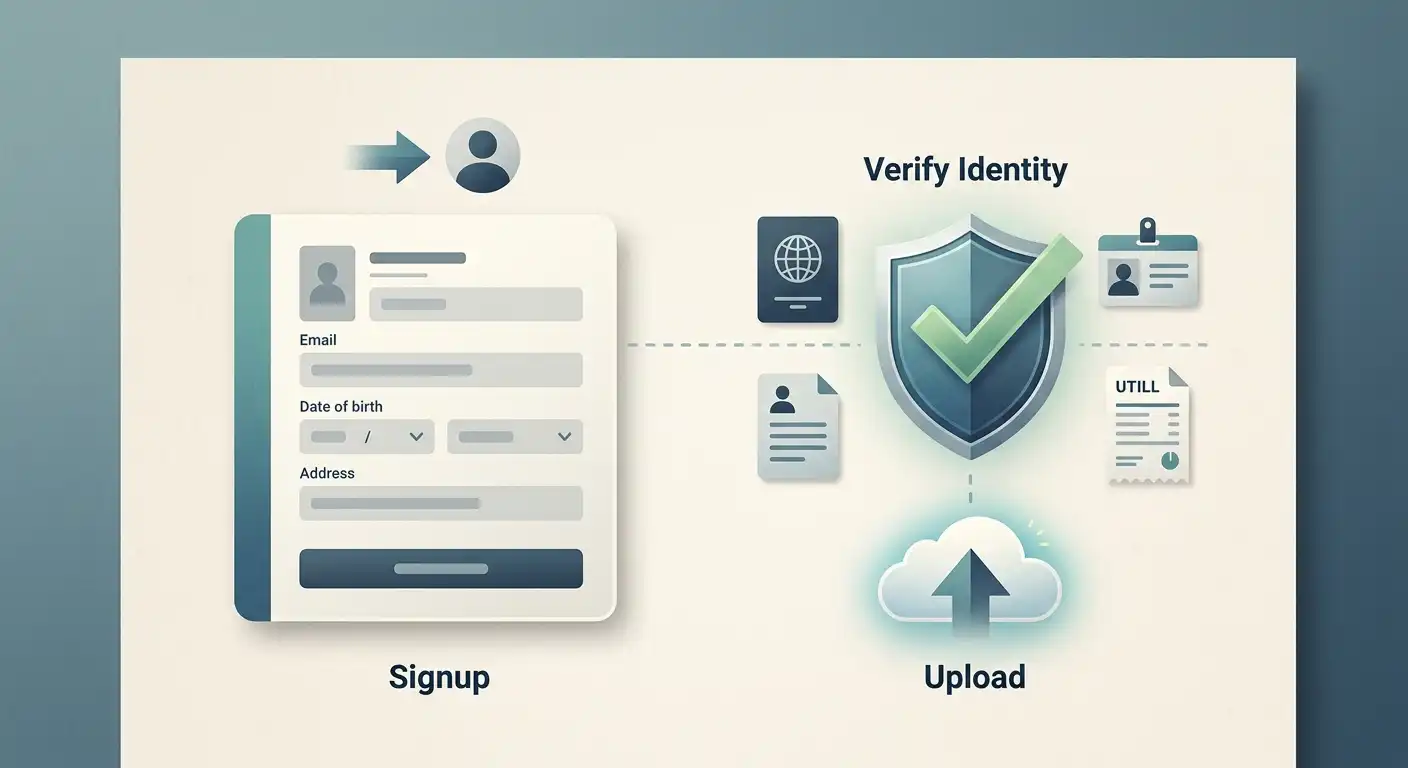
Verification can also affect the first withdrawal. Specialist reviews report that casinos commonly request identity and address documents before releasing funds. This may mean a photograph of an identity document and proof of address, with some operators also asking for a selfie holding the identity document. The account name, submitted documents and payment details may need to match the operator’s requirements. Until checks are complete, a withdrawal request may remain pending; a stated processing speed does not remove that condition.
The useful comparison is therefore not just “instant” against “slow”. It is the maximum payable in each period, whether the cap applies to a single request or total withdrawals, what documents are required, and whether verification must be completed before play or only before cash-out. If those terms are unclear, the amount and timing of a payout cannot be assessed from the headline claim.
The payment method is a separate part of the process. An e-wallet may be offered as a withdrawal route, but its availability does not establish that a casino will approve a request quickly or pay the full balance at once. The operator’s rules still determine the withdrawal cap and verification requirements.
BetStop is a self-exclusion service for Australian-licensed operators. It does not bind offshore casinos, so registering with BetStop does not block access to those sites. Withdrawal planning and gambling controls should not be treated as substitutes for one another: a payout cap can restrict access to funds, but it does not limit losses or ensure that play stops.
Casinos commonly require identity and address documents, such as a photograph of an identity document and proof of address. Some operators may additionally require a selfie holding the identity document to complete checks before funds are released.
A casino’s use of cryptocurrency is a payment feature, not evidence of trustworthiness. It does not establish who operates the service, whether its games are fair, or whether a withdrawal will be honoured. The same distinction applies to a platform described as trusted: the label is a claim, not a finding.
Crypto-related wording can make a service sound easier to assess than it is. A coin logo, a deposit option or a statement about blockchain use may describe part of a payment process, but none answers the practical questions that determine financial exposure. The relevant terms include which assets are accepted, how deposits and withdrawals are handled, what fees or conversion rules apply, and whether access to funds is subject to conditions. Those details need to be clear and independently checkable; a general promise of secure or rapid handling does not supply them.
The phrase “most trusted crypto casinos” also implies a comparison. A meaningful comparison requires the same kind of evidence for each service, assessed on the same basis. Without that, an order of preference is presentation, not a measurable result. A polished site or confident wording cannot substitute for documented ownership, clear transaction conditions or credible evidence about game operation.
A trusted online crypto casino would need to support its claims with information that can be checked, not merely repeat trust language. Even then, evidence about one feature should not be stretched into a conclusion about the whole service. A transparent payment process does not prove fair play; published game information does not establish that withdrawals will be paid. Trust is not a single technical attribute.
The useful distinction is between a claim and the scope of what supports it. If a statement concerns payments, it should be assessed as a payment statement. If it concerns fairness, it needs evidence relevant to game outcomes. If it promises dependable service, the wording should be backed by terms that explain what happens when a transaction or withdrawal is disputed. Broad assurances leave those boundaries undefined.
Crypto branding can therefore identify a payment theme, but it cannot carry the burden of proving a casino reliable. The word “trusted” has value only when attached to a specific, verifiable condition—and that condition should not be mistaken for a guarantee of every other part of the service.
An app is an access method, not a separate category of gambling service. Whether play is presented through a mobile browser or an installed application does not change the rules that apply to online pokies in Australia. The legal age for gambling, including online pokies, is 18.
Mobile access can make gambling available across more moments of the day. That changes the practical importance of limits, not the underlying terms of play. Deposit limits constrain money placed into an account; loss limits set a boundary on losses; session time limits restrict time spent playing; and self-exclusion is an option for stopping access. These are responsible-gambling controls, not evidence that a service is lawful or that its outcomes are favourable.
The useful comparison between mobile interfaces is therefore not a claim that one is the “top trusted” choice. It is whether meaningful controls can be located and understood before play, and whether the conditions attached to them are clear. A limit that cannot be found or whose operation is unclear has little value as a budgeting tool. The distinction is financial: controls define boundaries, while an app’s appearance says nothing about whether those boundaries are effective.
BetStop has a specific limit: it applies to Australian-licensed operators and does not bind offshore sites. Since there is no Australian-licensed online casino, BetStop should not be treated as a universal block on access to offshore casino services. A self-exclusion setting offered by an individual service is not the same as a national exclusion mechanism, and its reach should not be assumed to extend beyond that service.
“Trusted casino app” is not a useful conclusion on its own. The label does not establish a local licence, an effective exclusion mechanism, or responsible limits. Nor does smooth mobile access resolve the legal position of real-money casino services offered to people in Australia. The distinction between presentation and protection is straightforward: an interface can display controls, but the controls matter only within their actual scope.
A mobile decision can be assessed in concrete terms: the age threshold, the available deposit and loss boundaries, session-time controls, and the reach of self-exclusion. If those conditions are unclear, the interface offers no reliable basis for treating access as controlled. A smaller screen changes the layout; it does not change the financial exposure.
A “100% trusted” label cannot establish what a pokie will return or predict its next result. Trust is not a percentage that can be applied to every spin, and a confident-sounding claim does not reveal which return-to-player (RTP) setting is active.
A specialist review reports that some game providers give casinos a choice of RTP settings for the same pokie. As a result, the title alone may not identify the return percentage in use at a particular casino. The relevant setting needs to be stated clearly and tied to the specific game version; otherwise, a published figure may not describe the version actually offered.
Even a disclosed RTP does not forecast an individual session. Each spin is generated separately by a Random Number Generator (RNG). Previous wins or losses do not make a particular result due, and a run of outcomes does not determine what comes next. RTP is therefore not a promise that a player will receive a corresponding share of money back during a short period of play.
The distinction matters when comparing claims about trusted pokies in Australia. A site’s use of PayID, for instance, cannot establish the RTP setting or show that a game’s outcomes are fair. Payment access and game-return information answer different questions. A trust label that combines them without evidence is packaging, not a calculation.
A useful comparison starts with the exact pokie, its stated RTP setting, and whether that information matches the game being offered. If the setting is not disclosed, the return cannot be assessed from the title or a broad “best” claim. If it is disclosed, it still describes a return measure, not a guaranteed result for any particular player or session.
That is the limit of a blanket assurance: it may sound absolute, but it cannot remove variation between settings or the randomness of individual spins. A meaningful claim must specify what is being assessed. Without that, “100% trusted” says nothing measurable about a pokie’s return or the outcome of the next spin.
Published by the Norco Casino team.