The guide separates Australian legal protections from offshore access and explains how payment, verification and offer conditions affect real-money play.

“Australian pokies” can describe the games people in Australia look for, but the phrase does not identify a locally licensed online casino. The distinction is legal, not cosmetic: a player’s location and an operator’s right to provide real-money games are separate matters.
Under the Interactive Gambling Act 2001, companies cannot legally offer real-money online pokies to people in Australia without a domestic licence. No domestic online-casino licences have been issued. There is therefore no Australian-licensed online casino, regardless of how a website labels its games or presents its services.
This also explains why “Australian” in a website’s wording should not be read as proof that its operator is Australian or authorised to provide online pokies here. A site may use Australian currency, refer to local players or accept registrations from Australia. None of those details changes the licensing position. The relevant question is whether the operator holds a domestic online-casino licence; there is no such licence available for these services.
The Act targets the companies offering the prohibited service, not individual players. Australians are not made criminally liable merely for playing on an offshore site that accepts them. That distinction does not make the operator’s offer lawful in Australia, nor does it turn an offshore casino into a locally regulated one. The legality of the company’s conduct and the position of the player are not the same test.
Choosing an online pokies site is easier when you can check the details that are available before deciding where to play. Use this list as a starting point, and verify the current terms and licensing information yourself.
Roby Casino
Roby Casino is listed as operating under a Curacao eGaming licence held by Roby Games Ltd.
Playfina Casino
Playfina Casino is listed under a Curacao eGaming licence held by Hollycorn N.V., dating from 2017. Its minimum deposit is A$20–30, depending on the offer.
WinSpirit Casino
WinSpirit Casino is listed under Curacao eGaming licence OGL/2024/923/0383, issued to Antillephone N.V. The minimum deposit is A$30.
Lucky Dreams
Lucky Dreams is listed as operating under a Curacao licence. Its minimum deposit is A$20 when using POLi.
Bizzo Casino
Bizzo Casino is listed under a Curacao Gaming Control Board licence held by TechSolutions Group N.V.
House of Pokies
House of Pokies lists an international iGaming licence, though the jurisdiction is not named in the available information. PayID payouts are listed at 1–24 hours; the minimum deposit is A$30, or A$10 via PayID.
7Bit Casino
7Bit Casino is listed as operating under a Curacao licence and is operated by Dama N.V.
Golden Pokies
Golden Pokies is listed as operating under a Curacao licence.
SkyCrown
SkyCrown is listed under a Tobique Gaming Commission licence. Its stated payout times are around 10–15 minutes for crypto and 1–5 days for fiat; the minimum deposit is A$30.
Ricky Casino
Ricky Casino lists crypto payouts in under an hour and PayID payouts in 1–3 business days. The minimum deposit is A$20, or A$30 to qualify for the bonus.
The Australian Communications and Media Authority (ACMA) is the primary domestic regulator responsible for enforcing the Act. Its role is directed at the rules governing interactive gambling services. The absence of Australian online-casino licences is not a gap a website can fill by citing a foreign approval or using local-facing language; a foreign licence is not a domestic licence.
For that reason, “best Australian online pokies” is not a category of locally licensed products. It is a description people may use for online games they hope to access from Australia. The wording alone says nothing about the operator’s legal status, the terms attached to play or the protections available. It is more useful to separate those questions than to treat “Australian pokies” as a certification.
The age threshold is straightforward: gambling in Australia, including online pokies, is restricted to people aged 18 or older. Meeting that age requirement does not alter the operator-side prohibition. Age eligibility and the legality of a company’s service are separate conditions.
The practical summary is narrow. Real-money online pokies cannot lawfully be offered to people in Australia by a company without a domestic licence; no Australian online-casino licences have been issued; and the Act’s operator focus means the player is not treated as the party committing that offence simply by playing offshore. Any later assessment of a particular site belongs to a different question from what the term “Australian pokies” means under the law.
A site loading in a browser does not create Australian oversight or a local route to resolve a dispute. Offshore operators sit outside Australia’s domestic online-casino licensing system. If one refuses to pay winnings, Australian players have no legal recourse in Australia. That is the material difference between finding a site and having a remedy when its decision is contested.
Access can also be interrupted. The Australian Communications and Media Authority (ACMA) blocks illegal offshore gambling sites, and internet service providers must comply with its blocklist. A site that is reachable at one point may therefore become inaccessible after a block. Availability is not evidence that the operator has been approved or that access will continue.
BetStop does not close this protection gap. The service applies to Australian-licensed operators; it does not bind offshore sites. A person who has self-excluded through BetStop may still be able to access an offshore operator that accepts Australian customers. The two systems do not share the same boundary, so a BetStop exclusion should not be treated as a control over offshore accounts.
Claims that a site is trusted, locally focused or suitable for Australian players do not change the jurisdiction. Nor does a familiar payment option establish that an operator is licensed, fair or accountable in Australia. Those are separate questions, and the absence of Australian legal recourse remains decisive if a payment dispute arises.
The practical assessment is therefore narrower than a ranking of Australian-facing sites. Before treating an offshore account as dependable, its limits should be clear: ACMA may block access, BetStop does not apply to it, and a refusal to pay cannot be pursued through Australian legal recourse. A polished interface or an accessible account does not supply those protections.
A balance shown on an account is not necessarily an amount that can be withdrawn immediately. For Australian residents, real-money online pokies are offered by offshore services: the Interactive Gambling Act 2001 prohibits operators from providing these games to people in Australia without a domestic licence, and no such licences have been issued. The financial terms that matter after a session are therefore the operator’s cash-out rules, rather than the size of a displayed balance alone.
A specialist review of offshore casinos reports that some operators set weekly or monthly withdrawal ceilings in the range of $5,000 to $10,000. Those figures are not a market-wide rule; they describe terms that may apply at particular sites and can change. The relevant limit is the one in the operator’s current withdrawal conditions, including whether it applies by week or by month.
The distinction has a direct effect on timing. The same review notes that a $50,000 jackpot subject to such a cap could become a multi-year payout plan. The arithmetic is simple, but the calendar depends on the specific ceiling and how the operator defines each withdrawal period. A large balance does not remove that constraint. Nor does a displayed jackpot establish that the whole sum will be transferred in one payment.
The cap should be read as a maximum permitted cash-out over a stated period, not as a guaranteed payment schedule. The terms may also set out how requests are handled, but the cap itself answers only how much can be withdrawn within the applicable period. A win can therefore have a nominal value and a separate practical value: the latter depends on the amount that can leave the account, and when.
For a real-money session, the relevant comparison is not simply the balance before and after play. It is the amount ultimately eligible for withdrawal under the account rules, less any portion delayed by a cap or held until verification is complete. Terms that are easy to overlook while playing become the controlling figures at cash-out.
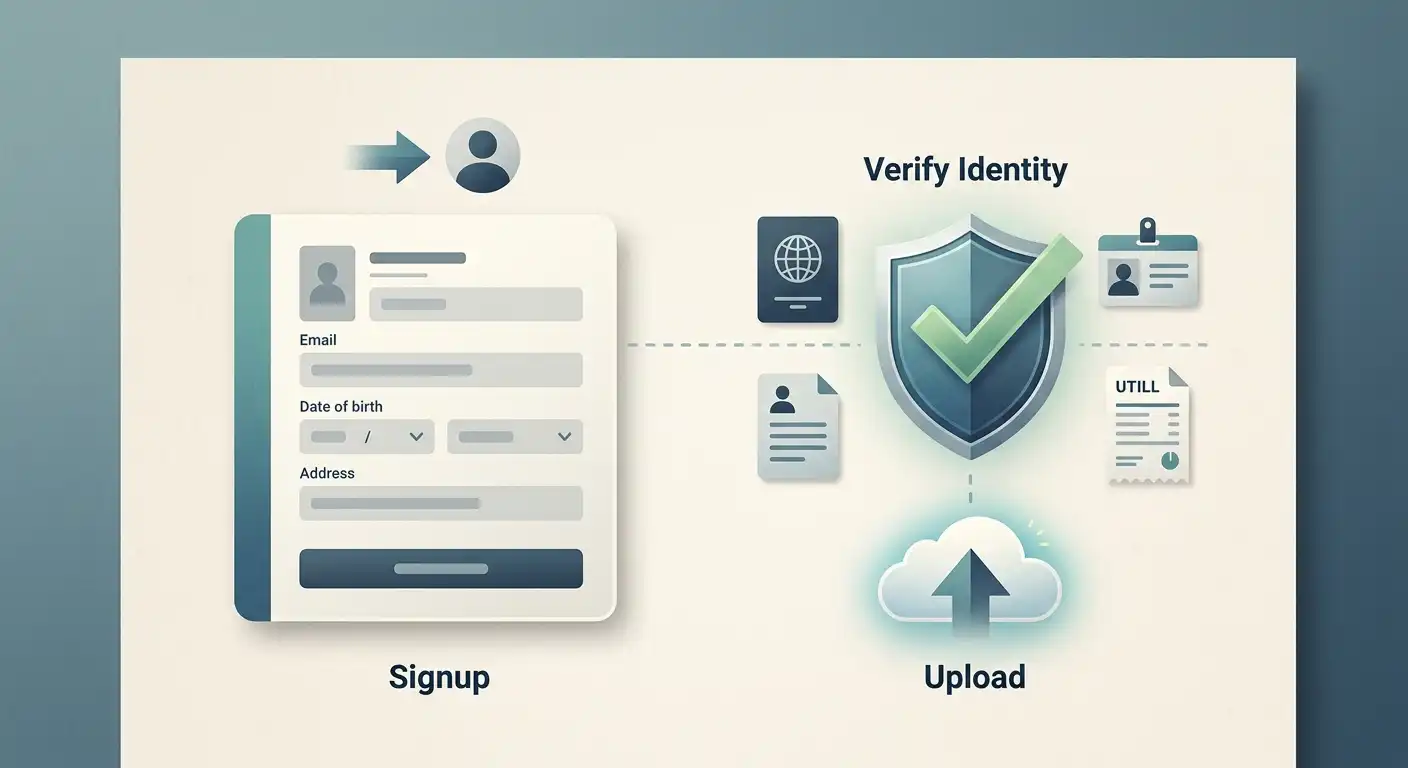
A specialist review reports that many offshore casinos require identity checks before a first withdrawal. The requested documents can include a photograph of an identity document and proof of address; some operators may also ask for a selfie with the identity document. The exact list depends on the operator, so the account’s verification requirements need to be established before a withdrawal request is made.
Identity and address proof are not interchangeable. A name on an account may be insufficient if the operator also requires a document showing the account holder’s address. If a selfie is requested, that is an additional step, not a substitute for the underlying documents. The practical point is that verification can involve several separate items, and an incomplete submission may leave the cash-out unresolved.
The operator’s rules should be checked for the accepted document types, the required information to remain visible, and the method for submitting files. Personal details should match across the account and documents; a mismatch can create a further verification question. These are administrative conditions, but they govern access to the balance as directly as the withdrawal cap does.
Identity and address documents should be ready before the first withdrawal is requested. Treating verification as a task to complete only after a win places the document review on the critical path between the account balance and a payment. That does not establish how long an individual review will take, which depends on the operator and the submission. It does establish that the money may not be available for withdrawal until the checks are satisfied.
Withdrawal limits and verification requirements answer different questions. The cap sets a ceiling on how much can be withdrawn in a period; verification establishes whether the account holder has completed the operator’s identity checks. Meeting one condition does not automatically meet the other. A request may fit within the stated cap and still await document approval, or documents may be accepted while a large balance remains subject to the cap.
For Australian residents considering real-money play offshore, these terms do not amount to local consumer protection. The Australian legal framework does not provide a domestic online-casino licence for such services. The figures and document requests reported by specialist reviews are therefore descriptions of individual offshore operators’ conditions, not guarantees that every site applies the same rules.
The cost of a win is consequently measured in more than the amount displayed on screen. It includes the operator’s cash-out ceiling, the number of payment periods needed to release a larger balance, and the documents required before the first withdrawal can proceed. When those conditions are unclear, the account balance is not a reliable measure of money available to the account holder.
PayID is an alias for a bank account, not a separate balance or a source of funds. It sits on Australia’s New Payments Platform (NPP), allowing a transfer to be addressed using an email address, mobile number or Australian Business Number (ABN) instead of conventional account details. The money still moves from the linked bank account.
The NPP is supported by all major Australian banks and uses end-to-end encryption. That describes the payment infrastructure; it does not mean every bank will process every kind of transfer. A bank can apply its own controls to a payment, including one identified as going to a gambling merchant. So the practical question is not only whether a payment page displays PayID, but whether the bank account behind the alias can send the transfer to that recipient.
For real-money gambling transactions, PayID must first be linked to a bank account. The alias does not remove that account-level connection. It changes how the recipient is addressed, while the bank remains involved in the transfer. A payment request therefore cannot be treated as detached from the bank’s policies or its checks on the destination.
Some Australian banks, including members of the Big Four, have been reported to block PayID transfers to known gambling merchants. That possibility is described in a specialist review, rather than being a fixed rule for every bank, account or transaction. A block can make an otherwise available payment route unusable. The relevant distinction is between PayID being part of the NPP and a particular bank permitting a particular gambling-related transfer.
A declined payment is not evidence that PayID itself is unavailable across the banking system. Nor does successful processing establish that a gambling operator is licensed, that a game is fair, or that its return-to-player (RTP) setting is disclosed. These are separate questions. Payment compatibility answers only whether funds can be transferred through that route at that time.
That separation matters because payment branding can look more substantial than it is. PayID uses familiar Australian banking identifiers, but an alias is not an approval stamp for the merchant receiving the funds. Encryption protects data in transit; it does not verify the recipient’s legal status or the terms governing a game. A smooth transfer confirms a completed payment, not the quality or legal standing of the service on the other side.
The route also differs from a card payment in mechanics: PayID directs a bank transfer through the NPP using an alias. It is not a card number and does not create a separate wallet balance. An online payment page may present it as one of several deposit choices, but the underlying bank link remains essential. If a bank declines a transfer, repeating the same instruction does not change the bank’s decision or the recipient’s classification.
PayID should therefore be assessed as a payment method, not as a trust signal. Its role is to address a transfer through the NPP; acceptance depends on the bank and the recipient relationship. Support for PayID says nothing, by itself, about licensing, fairness, RTP transparency or whether a withdrawal will later be paid. Those matters cannot be inferred from the deposit screen.
The same distinction applies to comparisons with other payment names. A method appearing beside PayID on a cashier page does not establish that it works for every transaction or every account. The method’s label is only one element of the payment process; the bank link, recipient details and the bank’s decision govern whether the transfer proceeds. For PayID, the concise accounting is: an alias identifies the destination, the linked account supplies the funds, and the bank may still stop the payment.
A no-deposit offer removes the initial payment, not necessarily the conditions attached to a cash-out. The headline may refer to bonus credit or free spins, while the terms can require wagering before any resulting balance becomes withdrawable. The relevant figure is the turnover multiplier and, just as importantly, the amount to which that multiplier applies.
A specialist review describes 35x or lower as a more manageable wagering requirement and anything above 40x as punishing. Those are review criteria, not a guarantee that an offer is worthwhile. A multiplier has no useful meaning on its own: the terms need to state whether it applies to bonus funds, winnings, or another defined amount. If that basis is unclear, the cost cannot be calculated reliably.
The arithmetic is straightforward once the basis is stated. Turnover is the qualifying amount multiplied by the wagering requirement. A higher multiplier means more bets must be placed before the condition is met; it does not mean that the required amount will be recovered. Each pokie spin is an independent random event, so completing turnover is not a prediction of a winning balance. It is a contractual hurdle.
“No deposit” can also obscure the distinction between receiving an offer and being able to withdraw from it. A credit may appear in an account without being cash available for withdrawal. The offer terms determine what must happen first, whether the full balance is eligible, and whether a separate cap applies. For free-spin offers, a specialist review notes that a cash-out cap may limit winnings. That limit is separate from turnover: meeting a wagering condition does not, by itself, remove a cap.
A useful comparison therefore records the offer’s actual conditions rather than its label: the wagering multiplier, the amount it applies to, the qualifying games or activity stated in the terms, any expiry condition, and any cash-out restriction. If a condition is absent or ambiguous, the advertised value cannot be treated as the amount that can be withdrawn. Bonus codes do not change that calculation; they are a route to an offer, not evidence that its conditions are favourable.
The same care applies to deposit-related offers. A deposit may unlock a bonus while also creating a wagering obligation, and the terms must identify the relevant calculation base. Deposit minimums are reported in specialist reviews as varying across operators, so a low entry amount would not establish that the associated offer has a low turnover cost. The price of the offer is the required play and the restrictions on any resulting balance, not merely the amount paid to activate it.
These conditions do not change the legal status of the service. Under the Interactive Gambling Act 2001, operators cannot provide real-money online pokies to people in Australia. An offer’s turnover terms describe a promotion; they do not make the underlying service lawful or provide local protection. For a purely financial assessment, the practical distinction remains simple: a bonus is not cash until its stated conditions allow withdrawal, and the multiplier is only one part of those conditions.
A signup bonus is not the same as cash available to withdraw. Its headline value describes the promotional credit; the wagering condition determines how much must be staked before the winnings become eligible for withdrawal. The calculation depends on the amount to which the multiplier applies, so the multiplier alone does not show the full commitment.
Bonus Calculations
Bonus-only base
For a $500 bonus with a 40x wagering requirement, the required bets are calculated as $500 × 40 = $20,000.
Combined base
For a $500 deposit plus a $500 bonus with a 35x wagering requirement, the required bets are ($500 + $500) × 35 = $35,000.
An affiliate review sets out one bonus-only calculation: a $500 bonus with a 40x wagering requirement creates $20,000 in required bets. The arithmetic is $500 multiplied by 40. Until that turnover is completed, the review says, no winnings can be withdrawn. The advertised $500 is therefore the base for a substantial betting obligation, not a $500 cash payout.
A different calculation applies when the terms count the deposit and bonus together. In the example given by the affiliate review, a $500 deposit plus a $500 bonus produces a $1,000 wagering base. At 35x, that means $35,000 in bets before the requirement is met. The lower multiplier does not make this calculation lighter: the amount being multiplied is larger.
| Calculation basis | Wagering calculation | Required bets |
|---|---|---|
| Bonus only | $500 × 40 | $20,000 |
| Deposit plus bonus | ($500 + $500) × 35 | $35,000 |
These are distinct examples, not interchangeable descriptions of one offer. The first multiplier applies to the bonus alone; the second applies to the combined deposit and bonus. A comparison based only on the headline amount or the multiplier would miss that difference.
The operative wording is the definition of the wagering base. Terms should be read for whether turnover is calculated on the bonus, the deposit, or both, and for what must happen before winnings can be withdrawn. If the base is unclear, the total betting commitment cannot be calculated reliably. The cleanest comparison is the required turnover in dollars, not the promotional amount in isolation.
A larger headline bonus can therefore carry a larger obligation, but size alone does not determine the result. The base and multiplier work together. In the combined example, the calculation reaches $35,000 despite the lower multiplier; in the bonus-only example, it reaches $20,000. Those figures describe the stated examples, not a standard term for Australian online pokies offers. The relevant number is the one produced by the specific offer’s written calculation.
A free-spin offer can produce a balance that looks larger than the amount ultimately available to withdraw. The key distinction is between winnings recorded after the spins and winnings permitted to leave the account. A specialist review reports that some free-spin offers place a cap on cashable winnings. Under such a term, the cap—not the screen balance—sets the maximum payout attributable to the offer.
That distinction matters whether the promotion is described as free spins, free play or free pokies. The word “free” describes the entry mechanism, not necessarily the final amount payable. A spin may return a win, but the offer’s conditions can restrict how much of that return becomes withdrawable. The value shown during play is therefore not, by itself, a measure of the cash-out.
The calculation is simple in principle. First identify the winnings generated under the offer. Then compare that amount with the stated cash-out cap. If winnings exceed the cap, the excess does not form part of the amount available to withdraw under that offer. If winnings fall below it, the cap does not increase them; it is a ceiling, not a promised payout. The distinction is less exciting than a promotional headline, but more useful to a balance sheet.
A free-spin promotion should therefore be read as a set of separate conditions rather than as a single advertised benefit. The number or value of spins describes the play offered; a cash-out cap describes the limit on resulting winnings. They answer different questions. Treating the spin allocation as cash, or assuming every displayed win is withdrawable, collapses those terms into one figure and can overstate the offer’s value.
The cap also changes how outcomes should be compared. Two offers with similar free-spin wording may not produce equivalent cashable value if their withdrawal limits differ. The relevant comparison is not simply how many spins are offered, but what portion of any resulting winnings can be retained as withdrawable funds. Where a cap applies, a larger win does not necessarily mean a larger payout once the limit is reached.
This is a narrower issue than wagering attached to a cash bonus. The concern here is the ceiling placed on winnings from free spins, not how much must be wagered before a bonus balance can be released. Both terms affect the amount that may eventually be withdrawn, but they operate differently: one limits eligible winnings, while the other concerns turnover.
For anyone assessing Australian free online pokies or a free-spin promotion, the decisive figure is the stated cash-out cap and the wording that defines which winnings it covers. Without that distinction, “free” can describe the spins accurately while saying very little about the amount that can be taken out.
A search for Australian casino pokies can mix two different settings: online services and pokies operated in physical venues. The venue rules discussed here concern gaming machines on site; they do not describe online games or establish that an online casino is locally licensed.
A report published by regionriverina.com.au describes a requirement taking effect from 1 July: a venue operating more than 20 gaming machines must have a dedicated responsible gambling officer (RGO) present while those machines are running. The threshold is based on the number of machines at the venue, and the duty applies during operating hours for them. It is a staffing requirement, not a feature of an Australian pokies machine itself.
The report also describes a one-month transition period for venues to remove signage and put the RGO arrangements in place. That grace period concerns implementation of the venue measures; it should not be read as a general deadline for online operators or players.
A separate part of the reported requirements is an incident register. Venues are to record relevant occurrences, including situations in which a patron’s behaviour suggests gambling harm may be affecting them or putting them at risk. The register creates a record of an observed incident rather than changing how a machine operates or determining the outcome of a session.
These distinctions matter when terms such as “Australian pokies machines” are used loosely. A machine in a club or other venue falls within venue operations and reporting. The word “pokies” in an online context refers to a different product category, even when the language is similar. Venue staffing and record-keeping requirements are therefore not evidence about an online service’s regulatory status, game fairness or payout conditions.
For venue operators, the practical points are operational: whether the machine count crosses the stated threshold, whether the responsible officer is on duty while machines operate, and whether incidents indicating possible harm are recorded. For readers comparing online and venue-based play, those rules should remain in their proper lane. A reporting obligation attached to a physical venue does not convert online pokies into venue machines, and it does not supply protection for an online session.
A mobile label describes a way of reaching a service; it does not establish what the service is legally entitled to offer in Australia. The Interactive Gambling Act 2001 prohibits operators from providing real-money online casino games, including pokies, to people in Australia. A phone app or mobile-friendly page does not change that position.
The same distinction applies to claims about the top Australian pokies sites or the best Australian pokies app. A polished screen, a familiar app-store format or a shortcut saved to a phone says nothing by itself about an operator’s status, the game’s terms or the way a cash-out would be handled. Those are separate matters, not features inferred from mobile access.
For offshore services, access on a phone should not be mistaken for local protection. The Australian Communications and Media Authority (ACMA) enforces the Act, and internet providers must follow its directions to block listed illegal gambling sites. A site appearing on a mobile screen is not evidence that it is locally licensed or that an Australian authority can resolve a dispute over winnings.
BetStop has a similarly specific scope: it applies to Australian-licensed operators and does not bind offshore sites. It therefore cannot be treated as a universal block on mobile gambling access. Deposit limits, loss limits, session time limits and self-exclusion are responsible-gambling tools, but their presence on a screen does not turn a prohibited service into a locally licensed one.
The practical test for any “Australian pokies app” claim is therefore not how well the interface fits a handset. It is whether the claim implies a lawful Australian online-casino product where no domestic online-casino licences have been issued. Mobile presentation is a technical format, not a licence, a guarantee of fair terms or a route to Australian legal recourse.
No ranking of mobile pokies follows from an app icon, a responsive page or a claim of convenience. Such details can describe access, but not the legal position or the financial terms that matter when money is involved. The label “top” is not a measurable attribute; without substantiated comparisons, it is packaging rather than evidence.
A recent release is a description of timing, not a measure of return. A new pokie does not become more likely to pay because it has just appeared, and a familiar title does not become less likely to pay because it has been available longer.
Each spin is an independent event determined by a Random Number Generator. Previous results do not set the outcome of the next spin. A run of losses is not evidence that a win is due, just as a recent win does not make another one more likely. The “new” label changes none of those mechanics.
Return settings are a separate issue. A specialist review reports that some providers let casinos choose among multiple RTP settings for the same pokie. As a result, the title alone may not establish which return setting applies at a particular casino. The figure, where disclosed, needs to be checked against the specific game version rather than inferred from the provider or release date.
That distinction matters when comparing new Australian pokies: novelty is visible in a title or promotion, while the relevant return setting may not be. A release date cannot substitute for that information, and neither detail predicts the result of an individual spin. Where the applicable setting is not stated, the label “new” supplies no financial evidence.
Yes, Australians are not committing an offence simply by playing on an offshore site that accepts them. However, companies cannot legally offer real-money online pokies in Australia without a domestic licence, and no Australian online-casino licences have been issued.
Each spin is an independent random event determined by a Random Number Generator. However, some providers let casinos choose between different RTP settings for the same game, so its return percentage can vary between casinos.
There is no Australian-licensed online casino, and an offshore site is not covered by Australian online-casino licensing. If an offshore casino refuses to pay, Australian players have no legal recourse in Australia; ACMA may also block access to the site.
It is the amount you must bet, expressed as a multiple of a bonus, before you can withdraw winnings. For example, a $500 bonus with a 40x requirement means you must wager $20,000.
Written by the editors at Norco Casino.