Live-streamed tables do not change the Australian legal position; bonus turnover, withdrawals, verification and other claims need separate scrutiny.

A live-dealer casino uses a streamed, human-run table rather than presenting every outcome through a digital game interface. The dealer and table are shown on screen while play is conducted online. That format changes how the activity appears, but it does not place it outside the rules for online casino gambling in Australia.
The relevant framework is the Interactive Gambling Act 2001. It prohibits companies from providing real-money online casino services to people in Australia unless they hold the required domestic authorisation. The prohibition covers casino-style services, including table games, rather than only games that use a screen-generated result. No Australian licences for online casinos have been issued. There is therefore no Australian-licensed online casino offering a lawful domestic route to real-money live-dealer play.
That distinction matters when assessing a page described as the best live dealer casino online in Australia in 2026. The wording may describe an offshore service that accepts Australian customers, but it cannot mean that the service holds an Australian online-casino licence. A foreign licence, if an operator has one, is not a domestic authorisation. Nor does a live stream, a recognisable dealer or a polished table interface alter the legal status of the service for a person physically located in Australia.
Choosing a live dealer casino means checking more than the game selection: licensing and practical payment details can also help frame your options. Use this list as a starting point and confirm the details that matter to you before signing up.
Roby Casino
Roby Casino is listed with a Curacao eGaming licence held by Roby Games Ltd. That licensing detail is the main verified point available for this reference card.
Playfina Casino
Playfina Casino is listed under a Curacao eGaming licence held by Hollycorn N.V., dating from 2017. Its minimum deposit is A$20–30, depending on the offer.
WinSpirit Casino
WinSpirit Casino is listed with Curacao eGaming licence OGL/2024/923/0383, issued to Antillephone N.V. Its stated minimum deposit is A$30.
Lucky Dreams
Lucky Dreams is listed with a Curacao licence. Its stated minimum deposit is A$20 when depositing via POLi.
Bizzo Casino
Bizzo Casino is listed with a licence from the Curacao Gaming Control Board, held by TechSolutions Group N.V. The licensing information is the main verified detail available here.
House of Pokies
House of Pokies is described as holding an international iGaming licence, though the source does not name the jurisdiction. Its minimum deposit is A$30, or A$10 when using PayID, and PayID payouts are stated as taking 1–24 hours.
7Bit Casino
7Bit Casino is listed as operating under a Curacao licence, with Dama N.V. as its operator. That is the main verified detail available for this reference card.
Golden Pokies
Golden Pokies is listed with a Curacao licence. No further operator-specific details are available here.
SkyCrown
SkyCrown is listed with a Tobique Gaming Commission licence. Its stated minimum deposit is A$30; payout estimates are around 10–15 minutes for crypto and 1–5 days for fiat.
Ricky Casino
Ricky Casino lists crypto payouts as taking under an hour and PayID payouts as taking 1–3 business days. Its minimum deposit is A$20, or A$30 to qualify for the bonus.
The law is directed at the companies providing the prohibited service. Its central question is whether an operator is offering real-money online casino games to people in Australia, not whether the games are streamed or generated by software. A live table should therefore be understood as part of the same online-casino category for this purpose. The format is not a workaround to the Australian restriction.
“Available” can refer to several different things: a website may appear in search results, its pages may load, or its registration flow may accept details from an Australian customer. None of those observations establishes that the service is locally licensed. Access and legal authorisation are separate issues.
The regulator responsible for enforcing the Interactive Gambling Act 2001 is the Australian Communications and Media Authority (ACMA). Its enforcement includes restricting access to offshore gambling websites that breach the law. Australian internet service providers are required to act on ACMA’s blocklist, so a listed site may not be reachable through a standard connection. A blocked address may still be discussed or visible elsewhere online; that does not make the operator compliant or create a local licence.
The practical result is not a domestic market of competing, licensed live-dealer casinos. A page that presents offshore operators as options for Australian residents is describing services outside the local licensing framework. It should not be read as a list of Australian-regulated venues, regardless of whether it uses terms such as “best”, “trusted” or “available”. Those labels do not establish a legal status.
This is also why a comparison based only on the visible product can miss the material issue. A live stream can show a dealer and a table, but it cannot by itself establish that the business may lawfully offer real-money gambling to Australians. Likewise, a site’s willingness to accept an account or display Australian-facing content is not proof of domestic approval. The legal position follows the service and its operator, not the presentation of the table.
The statutory restriction described here concerns companies that provide the service. It should not be confused with a claim that an Australian player is committing an offence simply by accessing an offshore site. The operator-facing prohibition and the individual player’s position are distinct questions. That distinction does not convert an offshore casino into a locally licensed service or supply the protections associated with a domestic regulatory framework.
For the purpose of identifying what kind of service is being discussed, the key test is straightforward: if real money is involved and the activity is an online casino table, the live-dealer format does not change the category. A live-dealer casino online is still an online casino service. The location of the dealer or studio does not establish that the company is authorised to provide it to someone in Australia.
A foreign licence can describe the operator’s status under another jurisdiction’s rules. It does not replace an Australian licence, and no Australian online-casino licences have been issued. Accordingly, the phrase “licensed casino” needs a jurisdiction attached to it. Without that distinction, a foreign credential can be mistaken for domestic approval when it is not.
The same care applies to claims about regulation. ACMA’s role is to enforce the Australian law, including measures that restrict access to illegal offshore gambling websites. It is not a domestic online-casino licensing body that approves a roster of live-dealer sites. There is no local licence to verify for an online casino in this market. Treating an offshore operator’s own statements as equivalent to Australian authorisation would collapse two different regulatory questions into one.
A listing headed “best live dealer online casino” can serve as a description of a comparison page, but it should not imply that the named services are approved for real-money play in Australia. The domestic legal position rules out that interpretation. A ranking, review or “top” label is editorial language, not a decision by ACMA and not a licence.
The useful distinction is between a description of the product and a statement about its legal availability. The product description may identify a streamed table with a human dealer. The availability claim would need to account for the restriction on companies supplying real-money online casino services to people in Australia and the absence of domestic licences. These are not interchangeable statements.
Access controls add another complication. Because ACMA can place illegal offshore gambling sites on its blocklist and internet providers must implement that list, a site’s reachability may vary. A page that opens at one point does not establish that the service is lawful, and an inaccessible page does not alter the underlying prohibition. Technical access is not a substitute for regulatory status.
For readers comparing information about live-dealer services, the most accurate starting point is therefore not the visual format or the promotional label. It is the distinction between an offshore service and a locally authorised one. In Australia, there is no locally licensed online casino to offer real-money live-dealer tables. Any page discussing offshore sites should be read with that limit in view, rather than as a catalogue of domestically regulated choices.
A live-dealer bonus is not measured by its advertised value alone. The relevant figure is the turnover required before a withdrawal can be requested, and that figure depends on both the wagering multiplier and the amount to which it applies. An offer can therefore look substantial while attaching a larger betting obligation than its headline suggests.
Calculating Bonus Turnover
Identify the base
Determine if the wagering multiplier applies only to the bonus amount or to the combined deposit and bonus.
Apply the multiplier
Multiply the identified base by the wagering requirement (e.g., $500 bonus × 35x = $17,500 required turnover).
Verify conditions
Check which specific bets qualify toward the turnover and if there is a time limit for completion.
The terms should state whether the multiplier applies to the bonus only or to the deposit plus bonus. Those are different calculations. A multiplier of 35x on a $500 bonus means $17,500 in required bets. If the same multiplier applies to a $500 deposit and a $500 bonus, the base is $1,000 and the required turnover is $35,000.
A specialist review suggests treating wagering requirements of 35x or less as a more manageable benchmark, and describes requirements above 40x as punishing. That is an assessment, not a universal rule: the total obligation still depends on the base, and the value of a lower multiplier can be reduced by restrictive conditions elsewhere in the offer.
A separate example makes the effect visible. A $500 bonus at 40x requires $20,000 in bets when the multiplier applies to the bonus alone. Completing that turnover is not the same as receiving $20,000, or even withdrawing the bonus amount. Turnover records qualifying bets; it does not guarantee a particular balance after those bets.
For any welcome offer, the useful sequence is straightforward: establish the amount counted as the base, multiply it by the stated wagering requirement, then check which bets qualify. If the base is not clearly defined, the apparent value cannot be translated into a reliable turnover figure.
The distinction matters particularly when a promotion describes a match between a deposit and a bonus. The displayed bonus may be only one part of the calculation. If the terms apply the multiplier to both components, the deposit increases the wagering base too. A reader comparing two offers by bonus size alone would miss that difference.
The remaining terms determine whether the calculated turnover is achievable under the offer. Check whether every wager counts, whether only specified categories qualify, and whether the promotion imposes a period for completing play. These details must be read from the offer’s own terms; a multiplier without its base and qualifying conditions is incomplete arithmetic.
A no-deposit promotion removes the deposit from the initial calculation, but that does not establish what can be withdrawn. The terms may still attach a wagering requirement, restrict eligible play or cap winnings that can be cashed out. The label describes how the promotion begins, not the amount ultimately available to withdraw.
Free-spin promotions illustrate the same distinction. A specialist review notes that such offers may limit the winnings eligible for cash-out. The balance shown after play can therefore differ from the amount permitted for withdrawal under the promotion. Any cap should be treated as part of the offer’s value calculation, not as a minor footnote.
This applies to a live-dealer welcome offer as much as to other bonus formats: its category does not disclose its financial conditions. The bonus base, turnover rule, qualifying activity and cash-out terms determine the outcome. If one of those is unclear, the headline amount cannot settle the comparison.
A practical comparison records four items: the bonus amount, the wagering base, the multiplier and any cash-out cap. The first three establish the turnover obligation; the cap sets a ceiling on eligible winnings where one applies. Together they show whether the nominal bonus survives the conditions attached to it.
The arithmetic should be completed before treating promotional credit as spendable money. A large bonus with a high multiplier may require substantial turnover, while a smaller offer may have a lower obligation; neither conclusion follows from the headline alone. The exact terms decide it.
No calculation can turn an unclear clause into a favourable one. Where the terms do not state whether the deposit is included, which activity counts or what cap applies, the amount required and the amount withdrawable remain uncertain. The sensible comparison is therefore based on the written conditions, not on the promotional label.
“Live dealer” describes a category of casino-style games, not a complete specification of what a particular service provides. The label alone does not establish which games are offered, how a table is run, what rules apply or whether the same format is available across different platforms. Those details need to be assessed separately rather than inferred from a general category name.
That distinction matters when comparing descriptions. A page may refer broadly to live-dealer games without identifying any particular title or setting. The wording does not, by itself, confirm a game catalogue, a table’s rules, or the conditions attached to participation. A more detailed claim needs to be supported by details specific to the game or service being described.
The same caution applies to terms such as “online casino live dealer games” and “live tables”. They are broad labels, not evidence of a uniform product. Two services using similar language may not offer the same selection or formats. Without a named title and clear accompanying terms, a comparison between their game coverage would have no sound basis.
A useful description should separate three things: the category being discussed, the particular game claimed to be available, and the rules or settings that govern it. Evidence for one does not settle the others. For instance, identifying a game would not, on its own, establish its table limits or rules; those require their own clear specification. Likewise, broad wording about a platform cannot establish that every game associated with the category is offered there.
This is a scope issue, not a minor detail. Game names can suggest familiar formats, but familiarity is not proof that a specific version is present or that it follows a particular set of rules. Terms that sound interchangeable may also describe different arrangements. A sound comparison therefore needs precise labels and game-level information, not a category heading doing the work of a full description.
For casino games presented as live dealer, the standard for a useful claim is straightforward: it should identify what is being described and distinguish that from assumptions about the wider category. General references can establish only that the subject is the live-dealer segment. They cannot substantiate claims about particular titles, providers, table options, rules or other features.
Accordingly, the category can be discussed without turning it into a catalogue. Naming games or describing their rules without support would create a level of certainty the broad label does not provide. The responsible boundary is to treat “live dealer” as a general classification and leave game-specific claims to descriptions that identify and document the relevant details.
Bitcoin and other cryptocurrencies are a separate payment category, not another name for PayID. PayID uses an alias linked to a bank account to route a transfer through Australia’s New Payments Platform. That tells nothing about whether a casino accepts Bitcoin, another cryptocurrency, or any crypto deposit at all.
A payment claim needs to be specific. A general reference to “alternative payments” does not establish crypto support, and a Bitcoin symbol displayed beside other payment logos is not sufficient confirmation on its own. Acceptance should be treated as unconfirmed unless the operator’s current payment terms explicitly identify the cryptocurrency, explain how deposits are credited and set out the applicable conditions.
The distinction matters because a payment method can affect the practical cost and availability of a transaction. For crypto, relevant terms would include which currencies and networks are supported, whether deposits are converted into Australian dollars or another account currency, and what exchange rate applies. The operator’s terms should also explain any deposit minimum, network charge, confirmation requirement, and whether refunds or withdrawals use the same currency. Without clear answers, the displayed balance may not represent the amount ultimately available in a bank account.
A claim that a site accepts Bitcoin also does not establish that every live table, account type or promotion can be funded with it. Payment eligibility may be narrower than a headline suggests. The relevant terms are those governing the specific account and transaction, not a generic payment badge or promotional banner.
Nor does crypto acceptance settle questions about legality, licensing, fairness or protection if a payment dispute arises. Cryptocurrency is only a payment method. It does not change the legal treatment of online casino services in Australia, and a crypto logo is not evidence of regulatory approval. Real-money online casino services are prohibited for operators serving people in Australia under the Interactive Gambling Act 2001; the use of a different payment rail does not alter that position.
There is also a practical difference between a deposit being accepted and a withdrawal being completed. A payment page may describe incoming transfers without explaining how winnings can be paid out, which currency is used, or whether conversion costs apply. Those are separate conditions and should not be inferred from the deposit claim.
The safe reading of a crypto-payment statement is therefore narrow: it may indicate that a named cryptocurrency can be used for a specified transaction, subject to the operator’s written terms. It does not establish broader payment access or make an otherwise prohibited service lawful in Australia. When the currency, conversion method and withdrawal route are not stated clearly, the claim has no dependable value for calculating the final amount received.
A displayed balance is not the same as an amount available for withdrawal. A useful review separates the balance shown on screen from the operator’s payout conditions: the withdrawal ceiling, the period to which it applies, and the documents required before a first cash-out. Without those details, a headline win gives no reliable picture of when the funds could be received.
A specialist review reports that some casinos set weekly or monthly withdrawal limits between $5,000 and $10,000. Under a $5,000 monthly ceiling, a $50,000 win would take ten months to pay out, assuming the ceiling applies in full each month and no other restriction delays payment. The same win under a $10,000 monthly ceiling would take five months on that assumption. These are calculations from the stated caps, not a claim that every operator uses them. The applicable period and any separate conditions need to be checked in the operator’s own terms.
The wording matters. A limit described as “per transaction” may not answer how much can be withdrawn over a week or month. Conversely, a monthly cap does not establish that a payout will arrive on the day a request is made. A live-dealer casino review should therefore report the actual cap and its time basis separately, rather than compressing them into a general label such as “fast withdrawals.” If the terms leave the cap unclear, the payout amount cannot be assessed from the advertised offer alone.
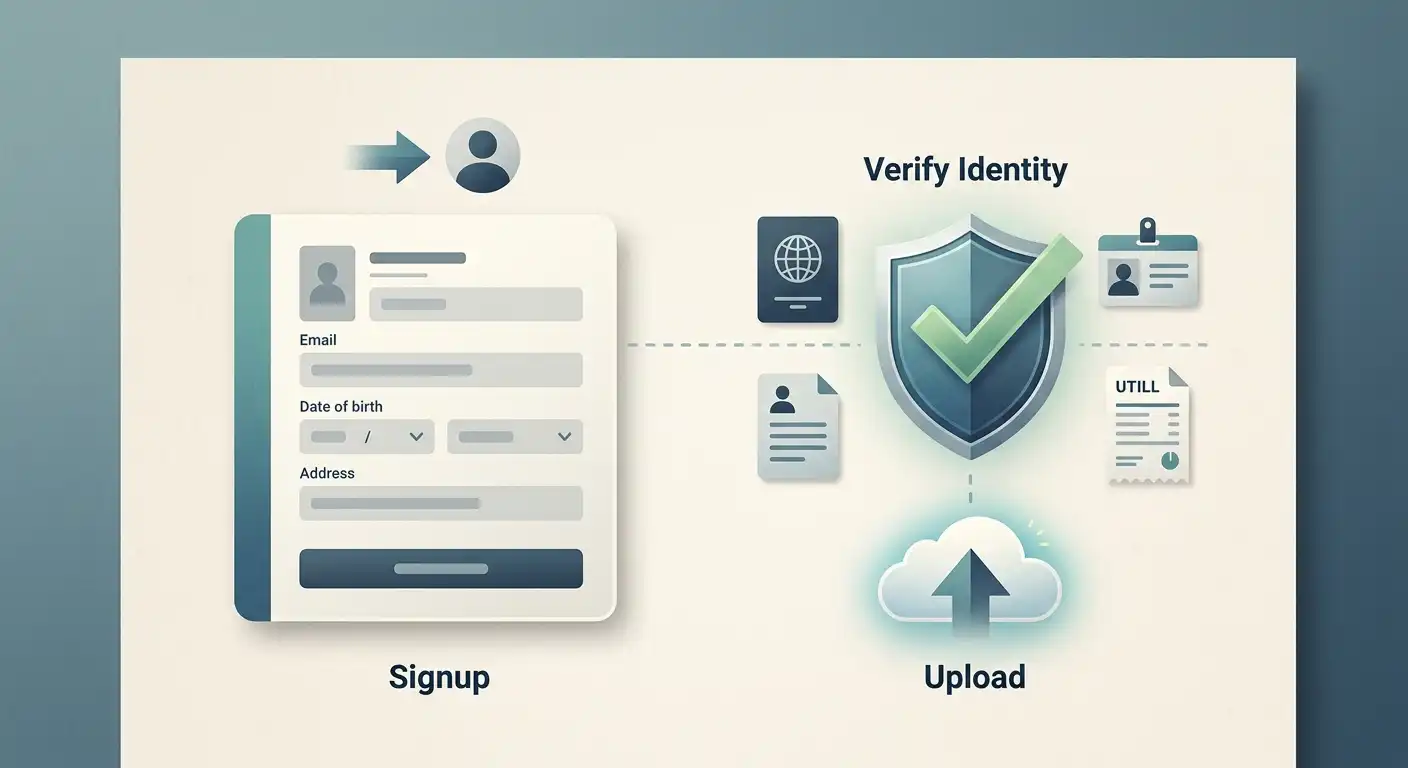
Identity checks are another condition that can stand between a displayed balance and a completed withdrawal. A specialist review reports that casinos may ask for verification before the first withdrawal. The requested documents can include a photo of identity documents, proof of address and, in some cases, a selfie with the identity document. Those requirements should be established before funds are deposited; discovering them only at cash-out can create delay, particularly if a document is missing or does not meet the operator’s requirements.
A practical review records which documents are required, when they must be submitted and whether the operator’s terms explain how verification affects processing. It should not imply that a live dealer casino provider determines the payout rules: the relevant conditions are those set by the operator handling the account. Nor does a “free” label establish that a balance can be withdrawn; the payout conditions still need to be read.
For a like-for-like comparison, the useful figures are the maximum withdrawal, the period covered by that maximum and the amount of a hypothetical win that could be paid within it. Verification requirements belong beside those figures, not in a footnote. That keeps the review focused on accessible funds rather than the larger number displayed before the conditions are applied.
Mobile access is a separate question from whether a casino advertises live-dealer roulette. A service may describe itself as mobile-friendly, but that label alone does not establish whether it works through a phone browser, a dedicated app or both. Nor does it confirm that the same functions are available across devices. Those are technical claims, not consequences of the words “mobile casino”.
The distinction matters when assessing a live roulette service on a phone. A page that opens on a small screen does not, by itself, demonstrate that every part of the service works there. An app listing, a responsive-looking page or a general claim about mobile access is not proof of consistent performance. Without operator-specific technical evidence, compatibility should not be treated as established.
Mobile access also does not establish the quality or scope of a live table. It says nothing by itself about the available roulette formats, table rules, stream quality or interface controls. Those are separate features, and they should not be inferred from a mobile label. The device used to view a service does not change the terms that govern it.
For people in Australia, the legal position is not changed by using a phone instead of a computer. The Interactive Gambling Act 2001 prohibits operators from providing real-money online casino games to people located in Australia, and no Australian-licensed online casino is available. The law places the obligation on operators rather than making an individual player liable for playing offshore. ACMA works to restrict access to illegal offshore gambling sites, and internet providers must follow its blocking directions. A mobile connection is not an exception to those rules.
That distinction also limits what “accessible” can mean. A service appearing in an app store, opening on a device, or being described as available internationally does not establish that it may lawfully provide real-money casino play in Australia. Technical access and legal permission are different matters; neither proves the other.
Accordingly, claims about a live-dealer casino working on mobile should be read as claims about a particular operator’s technology, not as evidence of Australian licensing or lawful availability. No particular browser, operating system, app, device model or mobile roulette feature can be assumed from the category name alone. The useful standard is narrow: a mobile claim requires specific, current technical support to substantiate it, while the Australian legal restrictions remain unchanged.
A blackjack label identifies the subject, not the terms of a particular table. It does not establish how a hand is dealt, which decisions are available, how a natural is settled or whether additional wagers are offered. Nor does the phrase “live dealer” prove what the stream, table interface or dealer interaction includes. Those details need to be stated for the specific game; they cannot be inferred from its category.
That distinction matters when assessing claims about a live-dealer blackjack casino. A general description of blackjack is not evidence that a particular online casino offers a particular version, table or rule set. A provider name, even if displayed elsewhere on a site, would not by itself confirm the game’s rules or the terms attached to a session. Without game-specific information, comparisons of table options, betting conditions or dealer procedures would be guesswork.
The same applies to claims about fairness or player advantage. A game title alone gives no basis for a numerical assessment, and no return figure should be assumed from the presence of a live dealer. The relevant details would need to be published for the exact game and configuration being considered. Marketing language cannot substitute for them.
There is also a separate Australian restriction. Under the Interactive Gambling Act 2001, providing real-money online casino games, including blackjack, to people physically located in Australia is illegal for operators. The game’s format does not change that position: a live presentation does not turn an online casino game into a permitted service.
Accordingly, blackjack-specific claims should be kept narrow. A listing may use the words “live dealer” and “blackjack”, but those words alone do not establish the rules, available decisions, table limits, side wagers, provider or payout characteristics. Any assessment that goes further requires game-level terms, not a category label. Where those terms are not set out, the defensible description is simply that the claim is unsubstantiated—not that a particular feature is present or absent.
A casino site, a bonus attached to its offer and the software behind a game are separate things. A statement about one does not establish anything about the others. The distinction matters because promotional wording can place them side by side, making separate claims look like one assurance.
A bonus is an offer made at site level. Its conditions describe the operator’s promotion; they do not identify the software used or establish how a game behaves. Likewise, a site’s reference to live-dealer software is not evidence that a particular bonus is available, or that the site’s other claims have been independently checked. Each claim needs to be assessed on its own terms.
The same separation applies to software descriptions. A name or label attached to software does not, by itself, establish the rules, table options, game selection or return characteristics available at a particular site. Nor does it show that every game offered there uses the same software. Those details cannot be inferred from a broad statement about the platform.
This is also why a site-level promotional claim should not be treated as proof of software quality, fairness or transparency. The bonus and the software concern different parts of the service. Neither is a substitute for evidence about the other, and neither changes the legal position of real-money online casino services in Australia.
A useful way to read any combined claim is to separate its parts: what the site says it offers, what conditions govern the bonus, and what the software statement actually identifies. If a description does not specify a feature, it cannot support a conclusion about that feature. A polished interface or a named software category is not a technical specification.
The distinction is narrow but important. Site-level wording can describe an offer; software wording can describe a technical component. Treating them as interchangeable turns association into evidence. In this category, that is a weak basis for any financial decision.
There is no Australian-licensed online casino, and a foreign licence does not provide Australian authorisation. If an offshore casino refuses to pay, Australian players have no legal recourse in Australia.
Most operators set minimum deposits at AU$10–AU$20, while some accept AU$5. PayID is treated like other qualifying deposit methods, so check the operator’s minimum deposit for its PayID option.
Each spin is an independent random event determined by a Random Number Generator. However, some providers let casinos choose between different RTP settings for the same game, so the return percentage can vary between casinos.
Compare the bonus value with the total wagering needed before winnings can be withdrawn. For example, a $500 bonus with a 40x requirement means $20,000 in bets; if the requirement applies to a $500 deposit plus a $500 bonus at 35x, it means $35,000 in bets.
It is the turnover multiplier that determines how much you must bet before bonus-related winnings can be withdrawn. A $500 bonus at 40x requires $20,000 in bets; requirements above 40x are considered punishing.
Published by the Norco Casino team.